Barbell Exercise Ball Bench Press

Overview
- Primary Focus:
- Chest.
- Equipment:
- Barbell and exercise ball.
- Difficulty:
- Advanced.
General Information
Barbell Exercise Ball Bench Press is a compound exercise that primarily targets the chest and also engages the triceps, shoulders, and core. It is an advanced-level movement that combines the loading capacity of a barbell press with the instability of an exercise ball, demanding significant stabilizer activation throughout the lift.
Performing a bench press on an exercise ball instead of a flat bench removes the rigid support surface, forcing the core and hip stabilizers to work continuously to maintain balance. The upper back rests on the ball while the feet are planted firmly on the floor, creating a bridge position that must be held steady under load. This additional stability demand makes the movement considerably harder than a standard Barbell Bench Press, even at lighter weights.
The chest is the primary mover during the pressing phase, with the triceps and anterior deltoids assisting through lockout. Because the ball allows a slight natural arch and some freedom of shoulder blade movement, many lifters find this variation comfortable on the joints while still delivering a strong pectoral stimulus.
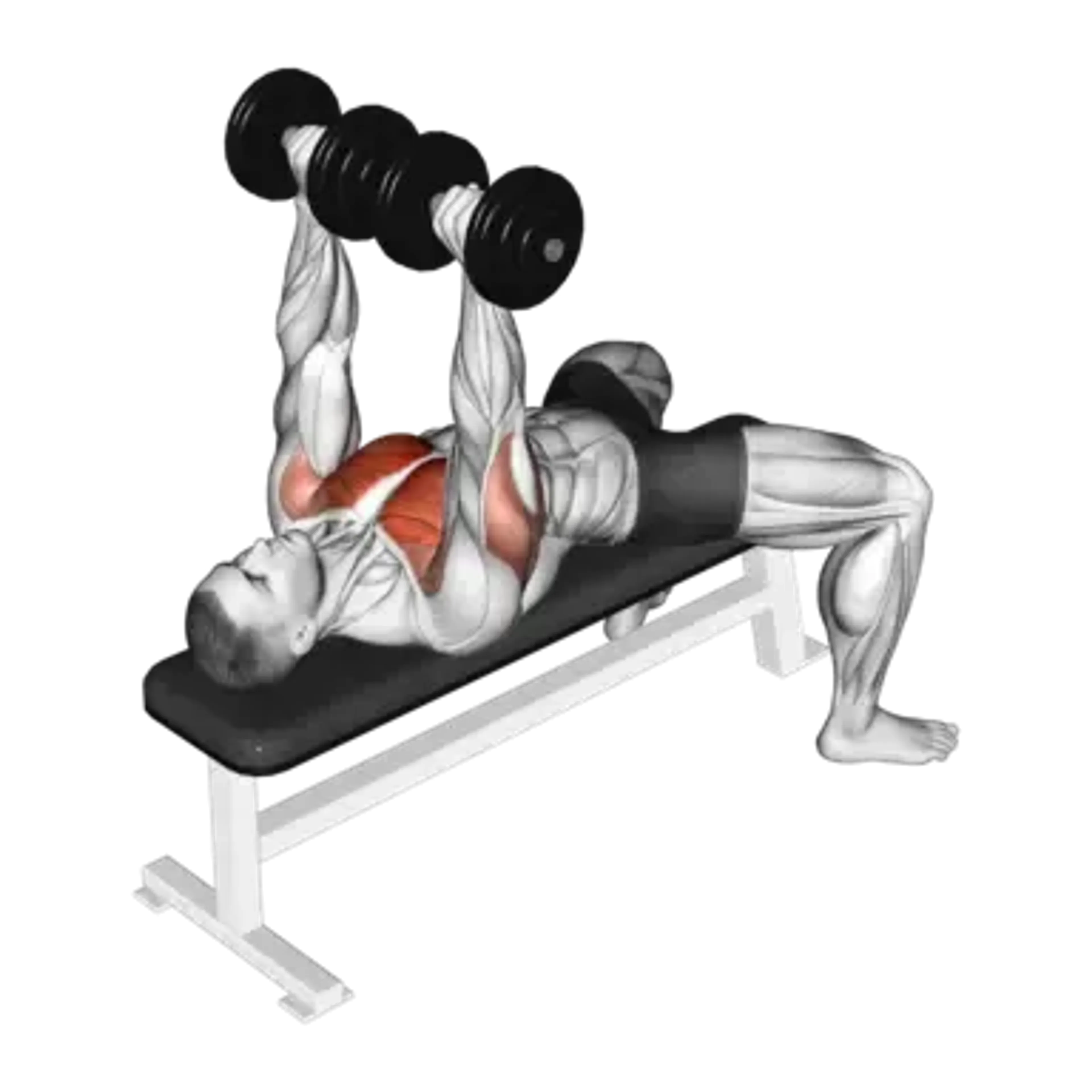
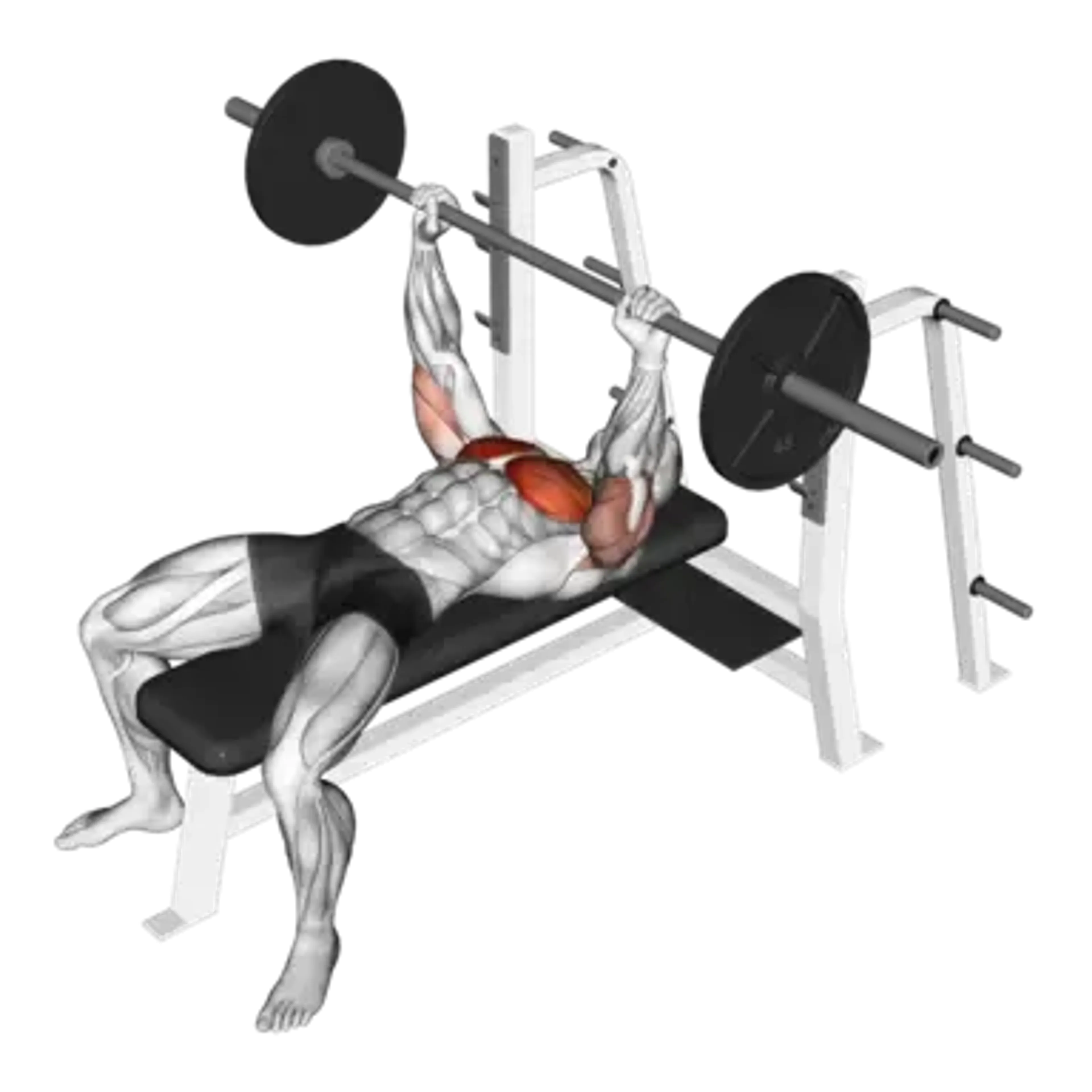
This exercise is best suited for experienced lifters who already have solid bench press technique and good core control. It works well as a secondary pressing movement or as a tool for developing trunk stability under load. Those newer to pressing should master the Barbell Bench Press or Dumbbell Exercise Ball Bench Press before attempting this variation.
Mind-muscle connection is critical here. Focus on driving through the chest while keeping the hips elevated and the ball steady. If the ball shifts or the hips drop, the weight is too heavy. The instability element should enhance muscle recruitment, not compromise pressing mechanics.
Muscles Worked
- Pectoralis Major
- Primary
- Triceps Brachii (Lateral Head)
- High
- Triceps Brachii (Long Head)
- High
- Deltoid
- Medium
- Rectus Abdominis
- Medium
- Serratus Anterior
- Medium
- Erector Spinae
- Low
- External Oblique
- Low
- Gluteus Maximus
- Minimal
Instructions
- Sit on the exercise ball with a barbell racked or handed to you, then walk your feet forward until your upper back and shoulders rest securely on the ball.
- Plant your feet flat on the floor at roughly shoulder width, with knees bent at about 90 degrees.
- Bridge your hips up so your torso is parallel to the floor, forming a straight line from knees to shoulders.
- Hold the barbell with an overhand grip slightly wider than shoulder width, arms extended above your chest.
- Brace your core and squeeze your glutes to stabilize the ball beneath you.
- Lower the barbell in a controlled arc toward your mid-chest, keeping your elbows at roughly a 45-degree angle from your torso.
- Lightly touch or bring the bar just above your chest without bouncing.
- Press the barbell back up by driving through your chest and extending your arms fully.
- Maintain the hip bridge and a stable ball position throughout every repetition.
- Complete all reps, then carefully sit up on the ball or have a spotter assist you in racking the weight.
Common Mistakes
Injuries
Barbell Exercise Ball Bench Press is a high risk exercise when performed with proper technique, and the risk increases substantially with poor form or excessive loading. The unstable surface introduces a real possibility of losing balance, which can lead to serious injury if a loaded barbell shifts unexpectedly.
The shoulders are the most vulnerable joint in this movement. Flaring the elbows out too wide or lowering the bar too high on the chest places excessive stress on the anterior shoulder capsule and rotator cuff. Keep the elbows tucked at roughly 45 degrees and avoid going excessively deep if shoulder mobility is limited.
The lower back can also be strained if the hips sag during the press, creating hyperextension under load. Maintaining a firm glute contraction and braced core throughout the set protects the lumbar spine. If you cannot hold the bridge position, the weight is too heavy.
Always use a spotter for this exercise and start with significantly less weight than you would use on a flat bench. If you experience any shoulder pain, wrist discomfort, or cannot maintain a stable position on the ball, regress to the Dumbbell Exercise Ball Bench Press or a standard Barbell Bench Press.
Alternative Exercises

Frequently Asked Questions
- Q: How much weight should I use compared to a regular bench press?
Start with roughly 50-60% of your flat bench press weight. The instability significantly reduces how much you can safely press, and the goal is controlled movement rather than maximal loading.
- Q: Can I do this without a spotter?
It is strongly recommended to always use a spotter for this exercise. If a spotter is not available, consider using the dumbbell variation instead, as dumbbells can be safely dropped to the sides if you lose balance.
- Q: What size exercise ball should I use?
Use a ball that allows your upper back to rest comfortably while your knees stay at about 90 degrees with feet flat on the floor. For most adults, a 55-65 cm ball works well. The ball should be fully inflated and rated for the combined load of your body weight plus the barbell.
- Q: Is this better than a flat bench press for chest development?
Not necessarily. The flat bench allows heavier loading, which is generally better for pure strength and hypertrophy. This variation is more useful for developing core stability under load and adding variety to a pressing program.
Overview
- Primary Focus:
- Chest.
- Equipment:
- Barbell and exercise ball.
- Difficulty:
- Advanced.