Dumbbell Exercise Ball Pullover

Overview
- Primary Focus:
- Back.
- Equipment:
- Dumbbell and exercise ball.
- Difficulty:
- Intermediate.
General Information
Dumbbell Exercise Ball Pullover is a compound exercise that primarily targets the lats and also engages the chest and triceps long head. It is an intermediate-level movement that replaces the traditional flat bench with an exercise ball, adding a significant core stability demand to the classic Dumbbell Pullover.
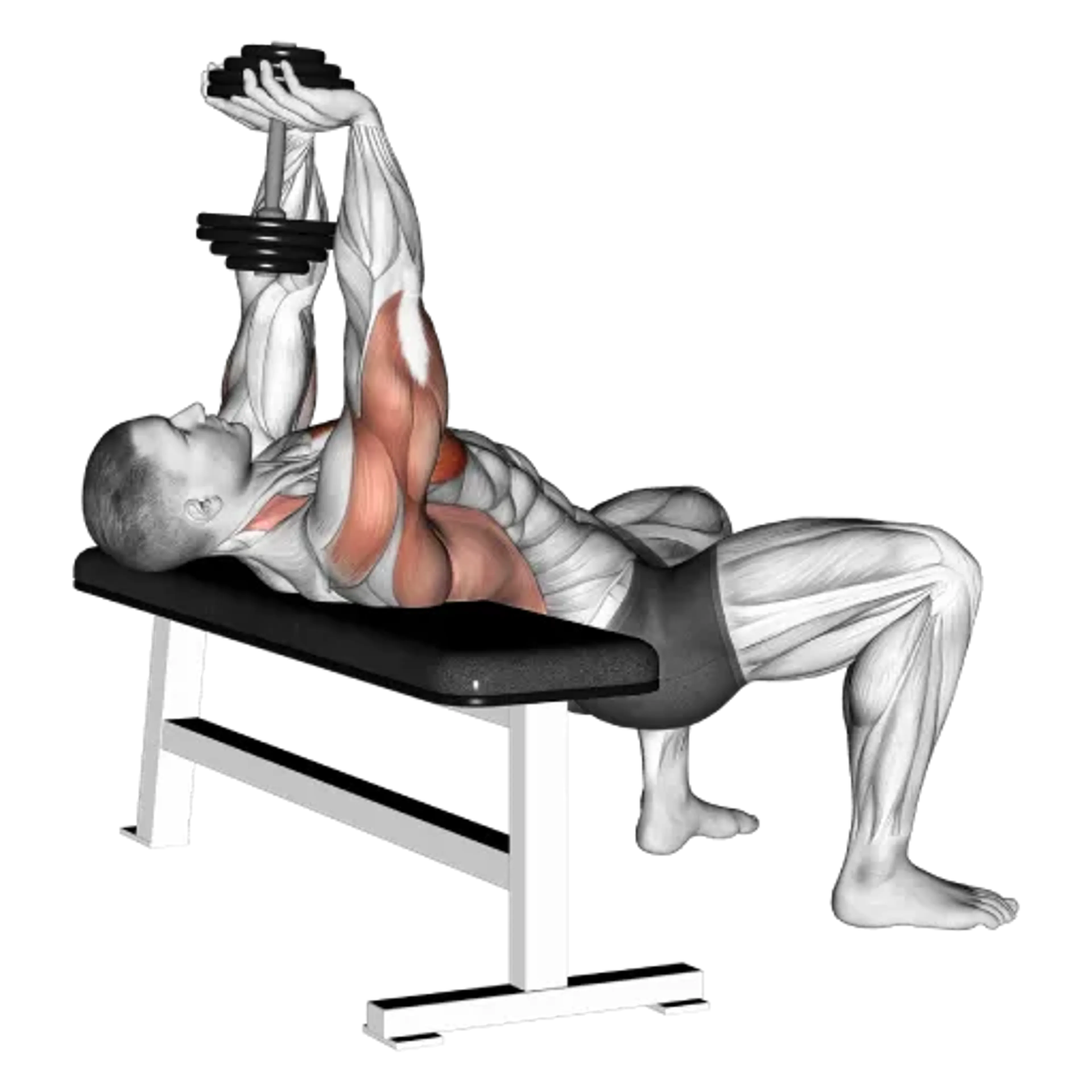
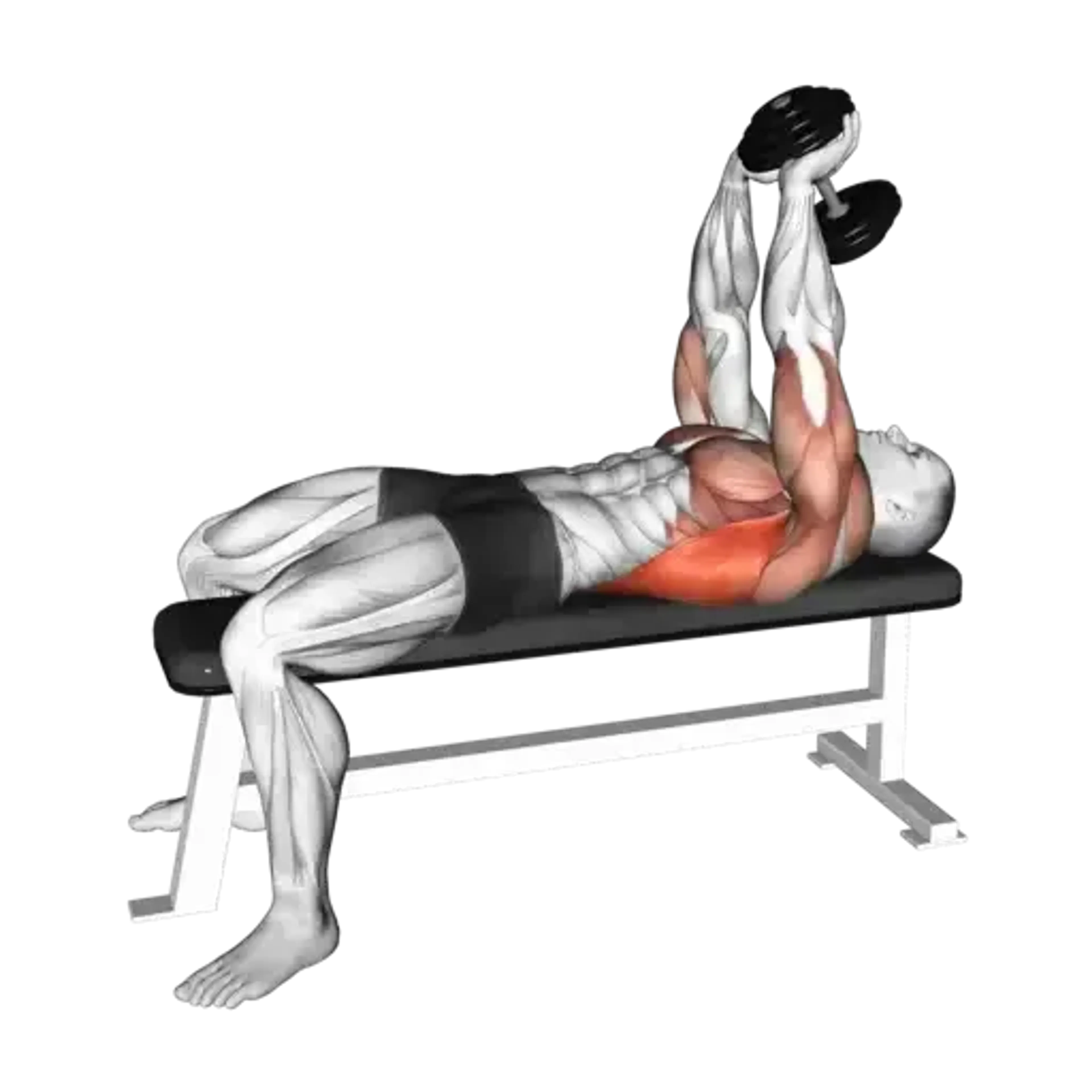
The lifter lies with the upper back supported on the exercise ball, feet flat on the floor, and hips bridged to form a straight line from knees to shoulders. From this position, a single dumbbell is held overhead with both hands and lowered behind the head in an arc, then pulled back to the starting position. The sweeping overhead motion stretches the lats and serratus anterior at the bottom and contracts them forcefully as the weight returns to the top.
Using an exercise ball instead of a bench introduces instability that requires the glutes, core, and hip stabilizers to work throughout the set. If the hips drop or the body shifts laterally, the movement breaks down, so maintaining a rigid bridge position is essential. This makes the exercise both a back builder and a functional core challenge.
This variation is a strong choice for lifters who want to improve shoulder mobility, lat development, and torso stability simultaneously. It also works well as a finishing movement on back or chest days. Keep the weight moderate and prioritize a full stretch at the bottom with a controlled pull back to the top. The mind-muscle connection should focus on driving the dumbbell back using the lats rather than pressing it up with the arms.
Muscles Worked
- Latissimus Dorsi
- Primary
- Pectoralis Major
- High
- Triceps Brachii (Long Head)
- High
- Deltoid
- Medium
- Serratus Anterior
- Medium
- Teres Major
- Medium
- Gluteus Maximus
- Low
- Rectus Abdominis
- Low
- Rhomboid Major
- Low
Instructions
- Sit on an exercise ball and walk your feet forward, rolling down until your upper back and shoulders are supported on the ball. Your feet should be flat on the floor, knees bent at roughly 90 degrees.
- Bridge your hips up so your torso forms a straight line from knees to shoulders.
- Hold a single dumbbell with both hands, gripping it by one end with palms pressing against the underside of the top weight plate.
- Press the dumbbell directly above your chest with arms extended and a slight bend in the elbows. This is the starting position.
- Keeping the slight elbow bend fixed, slowly lower the dumbbell in an arc behind your head.
- Continue lowering until you feel a deep stretch in the lats and chest, with the upper arms roughly in line with or slightly below your head.
- Reverse the motion by contracting the lats to pull the dumbbell back over your chest to the starting position.
- Maintain the hip bridge throughout the entire set. Do not let your hips sag at any point.
- Repeat for the desired number of repetitions.
Common Mistakes
Injuries
Dumbbell Exercise Ball Pullover is a medium risk exercise when performed with proper technique. The overhead position places considerable demand on the shoulder joint, and the unstable surface adds a balance component that requires attention.
The shoulder is in a vulnerable position at the bottom of the arc, where the joint is under significant stretch and load simultaneously. Individuals with a history of shoulder impingement, labral tears, or rotator cuff issues should approach this exercise with caution or avoid it altogether. Limiting the depth of the stretch to a comfortable range greatly reduces the risk of shoulder strain.
The lower back can also be compromised if the hips drop during the movement. A sagging bridge increases lumbar extension under load, which is a recipe for strain. Keep the glutes actively engaged throughout the set. If you find it difficult to maintain the bridge, reduce the weight or switch to a flat bench variation until hip and core strength improves. Stop the exercise if you experience any sharp pain in the shoulders or lower back.
Alternative Exercises


Frequently Asked Questions
- Q: Why use an exercise ball instead of a bench?
The exercise ball forces the core, glutes, and hip stabilizers to work constantly to maintain the bridge position. This turns a standard lat exercise into a full-body stability challenge and can improve functional strength and coordination.
- Q: What weight should I start with?
Begin with a weight that is noticeably lighter than what you would use for a bench pullover. The instability of the ball makes the exercise harder, so a 20 to 30 percent reduction in load is a reasonable starting point.
- Q: Can this exercise help with shoulder flexibility?
The controlled overhead stretch at the bottom of the movement can improve shoulder flexion range of motion over time. However, it should complement rather than replace dedicated mobility work.
- Q: Should I feel this more in my back or chest?
Both muscles contribute, but the emphasis shifts depending on elbow angle and how far behind the head you lower the weight. A straighter arm and deeper stretch tends to emphasize the lats more, while a slight elbow bend with a shallower range shifts more work to the chest.
Overview
- Primary Focus:
- Back.
- Equipment:
- Dumbbell and exercise ball.
- Difficulty:
- Intermediate.