Dumbbell Exercise Ball Seated Curl
Overview
- Primary Focus:
- Biceps.
- Equipment:
- Dumbbell and exercise ball.
- Difficulty:
- Beginner.
General Information
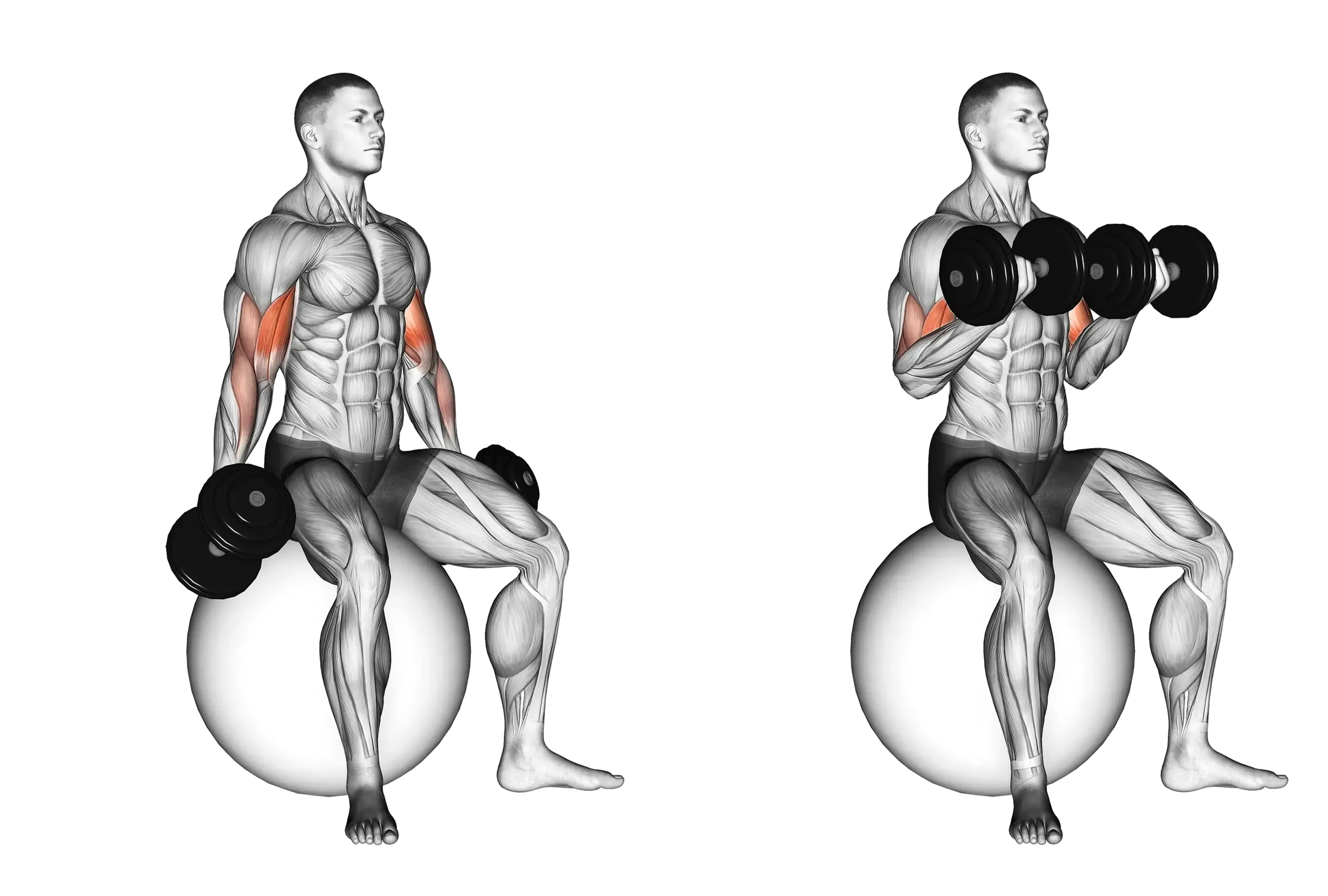
Dumbbell Exercise Ball Seated Curl is an isolation exercise that primarily targets the biceps and also engages the forearms. It is a beginner-level movement that combines a standard seated curl with the instability of an exercise ball, making it an effective option for developing arm strength while challenging core stability.
Performing curls while seated on an exercise ball forces the body to recruit stabilizing muscles throughout the torso and hips to maintain balance. This added demand means the lifter cannot rely on momentum or body sway as easily as they might on a flat bench, which promotes stricter form and a stronger mind-muscle connection with the biceps.
The exercise follows the same supinated-grip curling motion as a traditional Dumbbell Seated Curl, with both dumbbells curling simultaneously from a fully extended position at the sides to a contracted position near the shoulders. Because the ball shifts slightly under load, lighter weights are typically recommended compared to a stable bench variation.
This movement is well suited for warm-up sets, high-rep hypertrophy work, or rehabilitation programs where improving proprioception and joint stability is a priority. It also works as a finishing exercise after heavier compound pulling movements.
Beginners benefit from the seated ball position because it teaches upright posture under load. More experienced lifters can use it as an accessory to add variety or to address imbalances between strict and momentum-driven curling patterns.
Muscles Worked
- Biceps Brachii
- Primary
- Brachialis
- High
- Brachioradialis
- Medium
- Flexor Carpi Radialis
- Low
- Rectus Abdominis
- Low
- Deltoid
- Minimal
- Extensor Carpi Radialis
- Minimal
Instructions
- Sit upright on an exercise ball with your feet flat on the floor, roughly shoulder-width apart, and hold a dumbbell in each hand with arms fully extended at your sides, palms facing forward.
- Brace your core and press your feet firmly into the floor to stabilize yourself on the ball.
- Keeping your upper arms stationary, curl both dumbbells upward by flexing at the elbows.
- Continue curling until the dumbbells reach shoulder height and the biceps are fully contracted.
- Squeeze the biceps briefly at the top of the movement.
- Slowly lower the dumbbells back to the starting position under control, fully extending the elbows.
- Maintain an upright torso throughout the entire set and avoid rocking on the ball.
- Repeat for the desired number of repetitions.
Common Mistakes
Injuries
Dumbbell Exercise Ball Seated Curl is a low risk exercise when performed with proper technique. The seated position and relatively light loads typical of this variation keep joint stress minimal, though the unstable surface introduces a few considerations worth noting.
The primary area of concern is the elbow joint. Using excessive weight or swinging the dumbbells can place undue stress on the biceps tendon and the medial elbow structures. Keep the load manageable and focus on controlled movement through the full range of motion to protect these tissues.
Because the exercise ball is inherently unstable, there is a small risk of losing balance, especially if the feet are positioned too close together or the ball is not the correct size. Ensure the ball is firm, appropriately sized so the thighs are roughly parallel to the floor, and placed on a non-slip surface.
If you experience any sharp pain in the elbows or wrists, reduce the weight or switch to a stable bench variation such as the Dumbbell Seated Curl. Individuals recovering from lower back issues should confirm they can maintain a neutral spine on the ball before adding arm work.
Alternative Exercises
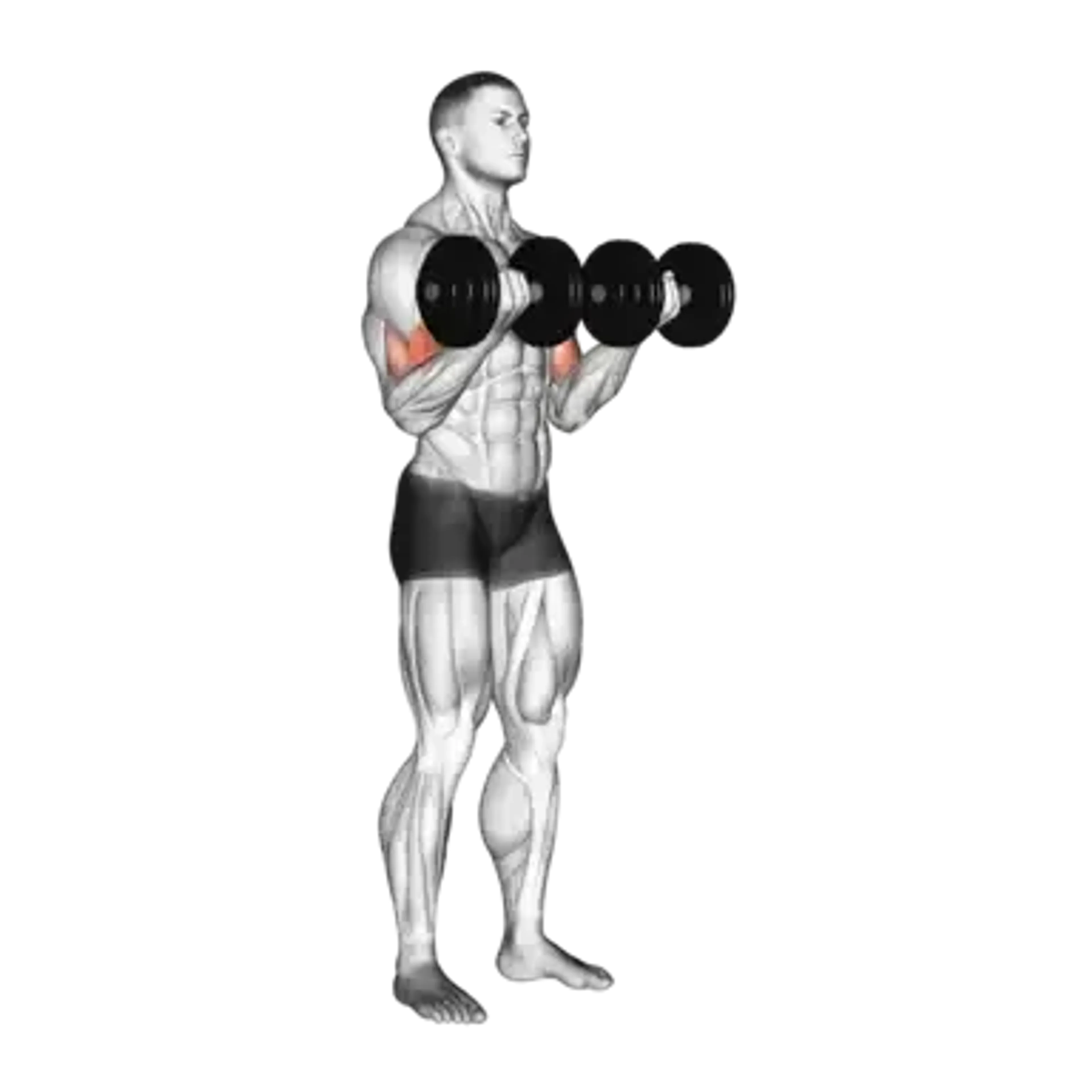
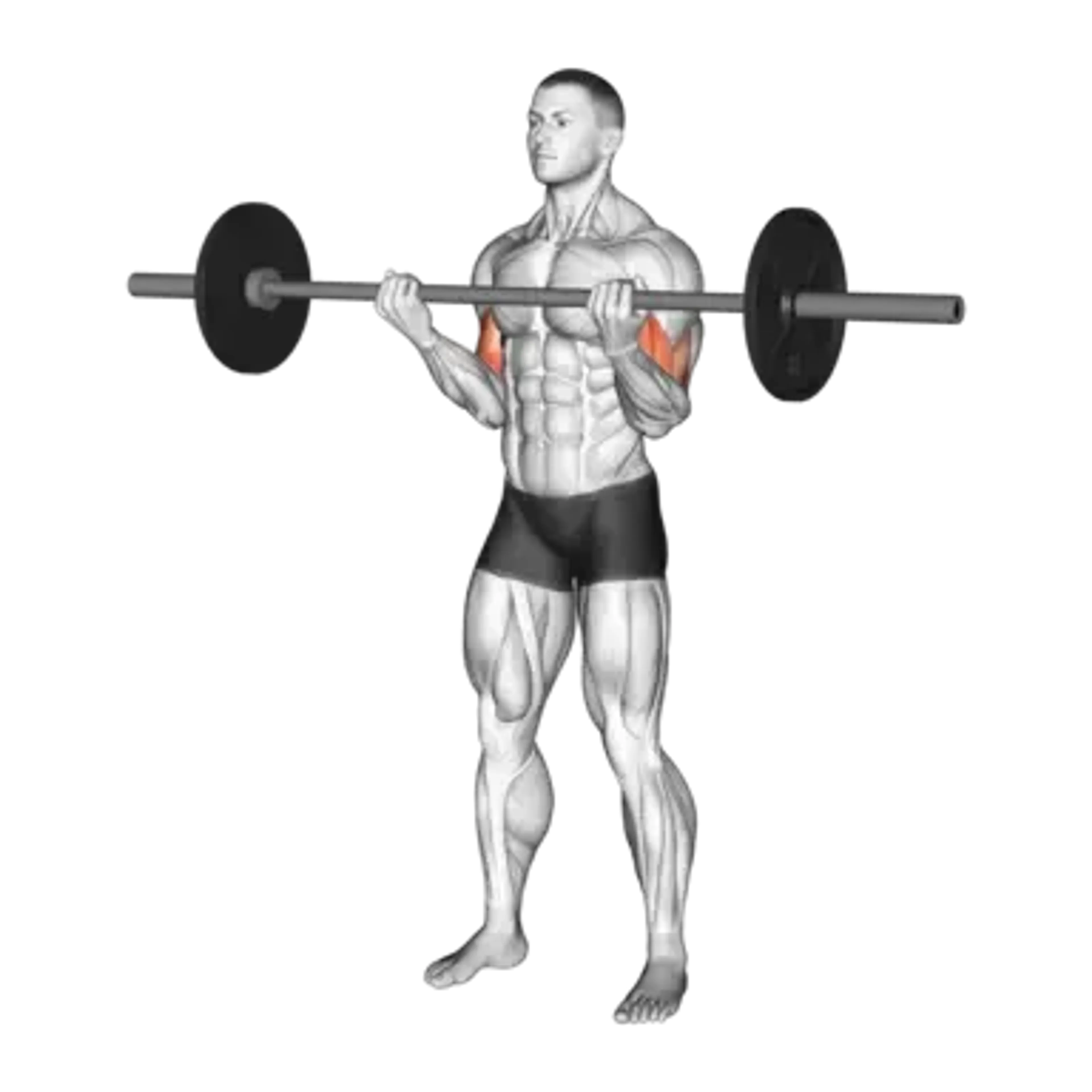
Frequently Asked Questions
- Q: Why use an exercise ball instead of a bench for curls?
The unstable surface forces your core and stabilizer muscles to work harder to maintain balance. This can improve proprioception and trunk stability over time, though it typically means using lighter loads than a bench variation.
- Q: What weight should I start with?
Begin with a weight that is roughly 10 to 20 percent lighter than what you would use for a standard seated curl. The reduced stability demands stricter form and makes the same weight feel more challenging.
- Q: Can I do this exercise one arm at a time?
Yes. The Dumbbell Exercise Ball Alternating Curl is a direct single-arm variation that allows you to focus on each bicep independently while seated on the ball.
- Q: How do I keep from rolling off the ball?
Plant your feet firmly at shoulder width or slightly wider, keep your core braced, and avoid jerking the weights. A slightly deflated ball also provides a more stable seating surface.
Overview
- Primary Focus:
- Biceps.
- Equipment:
- Dumbbell and exercise ball.
- Difficulty:
- Beginner.