Dumbbell Exercise Ball Single-Arm French Press

Overview
- Primary Focus:
- Triceps.
- Equipment:
- Dumbbell and exercise ball.
- Difficulty:
- Intermediate.
General Information
Dumbbell Exercise Ball Single-Arm French Press is an isolation exercise that primarily targets the triceps, with a strong emphasis on the long head. It is an intermediate-level movement performed while lying back on an exercise ball, which adds a core stability demand to what is otherwise a focused single-arm overhead triceps extension.
The single-arm execution addresses strength imbalances between the left and right triceps, ensuring each arm works independently against the load. The overhead position places the long head of the triceps in a stretched position at the bottom of the movement, which is critical for maximizing its contribution to elbow extension. This makes the exercise especially effective for building triceps size and overhead pressing strength.
Lying back on the exercise ball rather than a flat bench changes the stability equation significantly. The ball requires continuous engagement of the core, glutes, and legs to maintain a solid bridge position. This additional demand makes the exercise more functional and transfers well to movements that require pressing strength under less-than-perfect conditions. It also reduces the tendency to use excessive weight, which helps keep form strict.
This exercise pairs well with heavier compound triceps work like dips or close-grip presses. Use it as a secondary or finishing movement with moderate loads and controlled tempos to maximize the stretch and contraction of the triceps long head.
Muscles Worked
- Triceps Brachii (Long Head)
- Primary
- Triceps Brachii (Lateral Head)
- High
- Triceps Brachii (Medial Head)
- High
- Deltoid
- Medium
- Rectus Abdominis
- Medium
- External Oblique
- Low
- Pectoralis Major
- Low
- Erector Spinae
- Minimal
Instructions
- Sit on an exercise ball and walk your feet forward until your upper back and shoulders are supported on the ball, forming a bridge position.
- Keep your hips elevated and your core braced so your torso is roughly parallel to the floor.
- Hold a dumbbell in one hand and extend that arm straight up above your chest with a neutral grip.
- Slowly lower the dumbbell by bending the elbow, bringing it toward the side of your head.
- Keep the upper arm as vertical as possible throughout the descent.
- Lower until you feel a deep stretch in the triceps, with the elbow bent beyond 90 degrees.
- Press the dumbbell back up by extending the elbow until the arm is fully straight.
- Squeeze the triceps at the top before starting the next rep.
- Complete all reps on one arm before switching to the other side.
- Keep your hips level and avoid letting the ball shift laterally during the set.
Common Mistakes
Injuries
Dumbbell Exercise Ball Single-Arm French Press is a medium risk exercise when performed with proper technique. The overhead position places the elbow joint in a vulnerable angle under load, and the single-arm setup on an unstable surface adds balance complexity.
The elbow is the primary area of concern. Lowering the dumbbell too aggressively or using excessive weight can strain the triceps tendon and the structures around the elbow joint. Always control the eccentric portion and avoid bouncing out of the bottom position. If you have a history of elbow tendinitis, begin with very light weight and monitor for any discomfort.
The shoulder joint is also under some stress, as the arm is held overhead while managing both the dumbbell and the instability of the ball. Make sure the ball is firmly planted and not on a slippery surface. If maintaining the bridge position is difficult, regress to a seated single-arm triceps extension on a stable bench until your core strength and balance improve. Stop immediately if you feel pain in the elbow or shoulder during any part of the range of motion.
Alternative Exercises
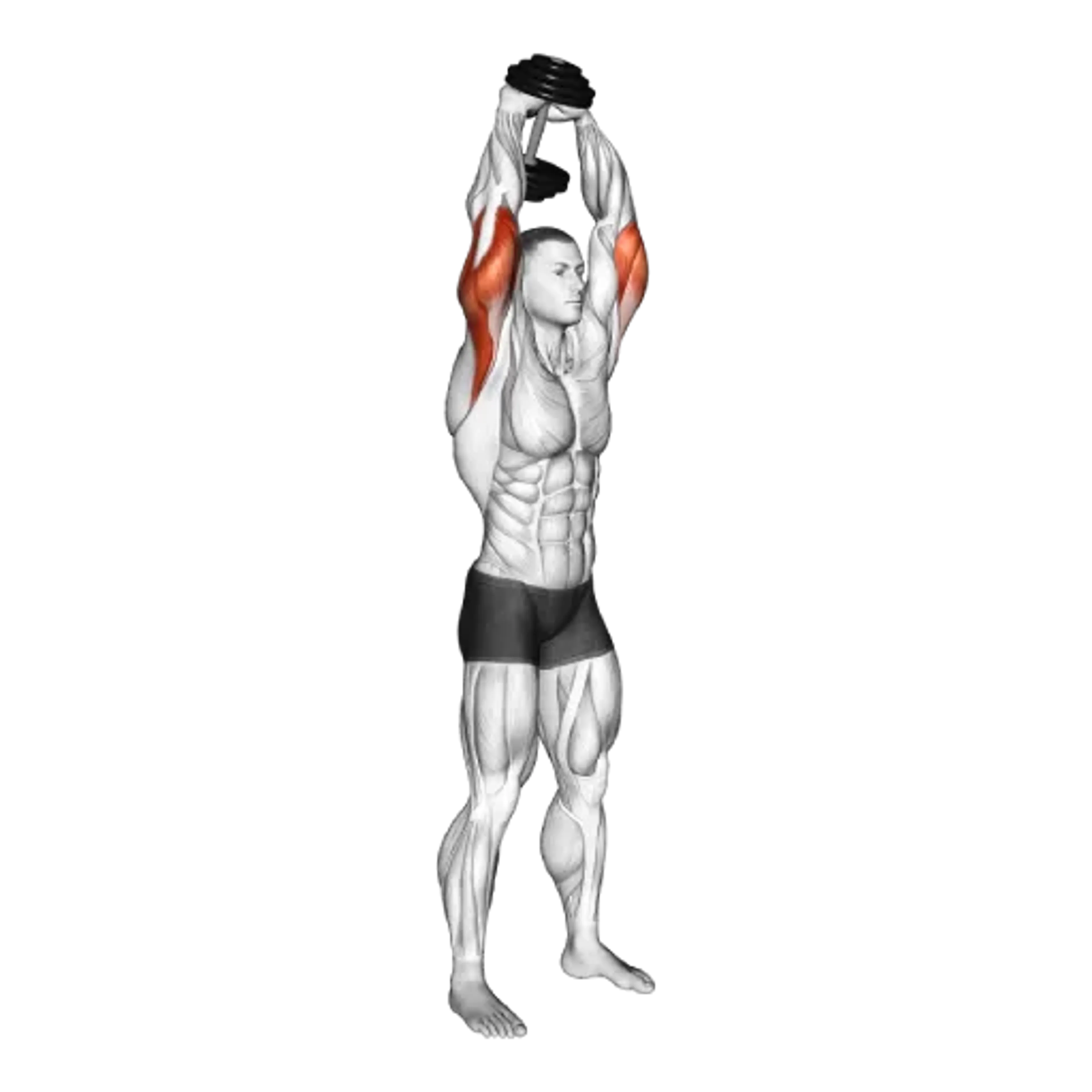 Intermediate
Dumbbell Overhead Triceps Extension
Dumbbell
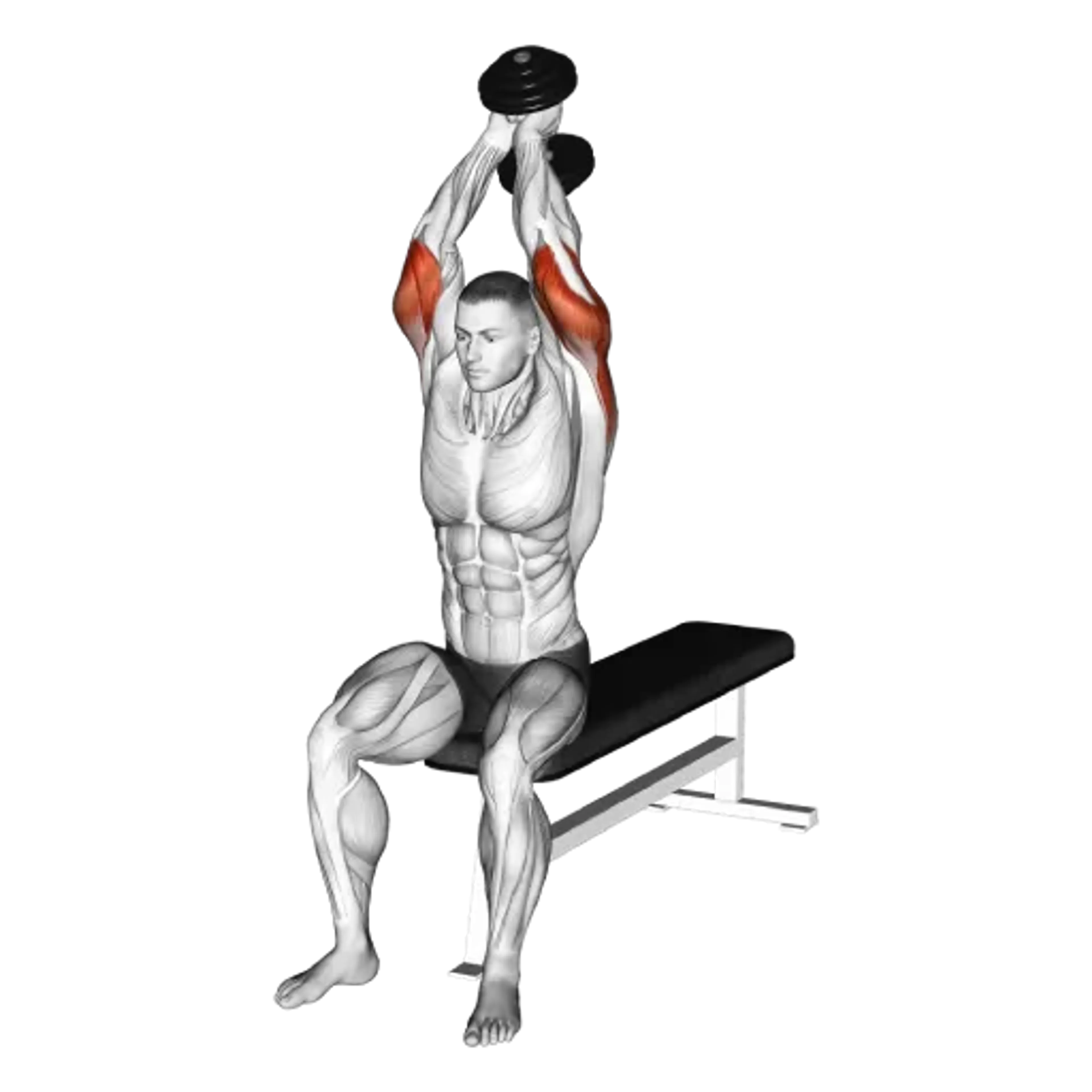 Intermediate
Dumbbell Seated Triceps Extension
Dumbbell · Bench
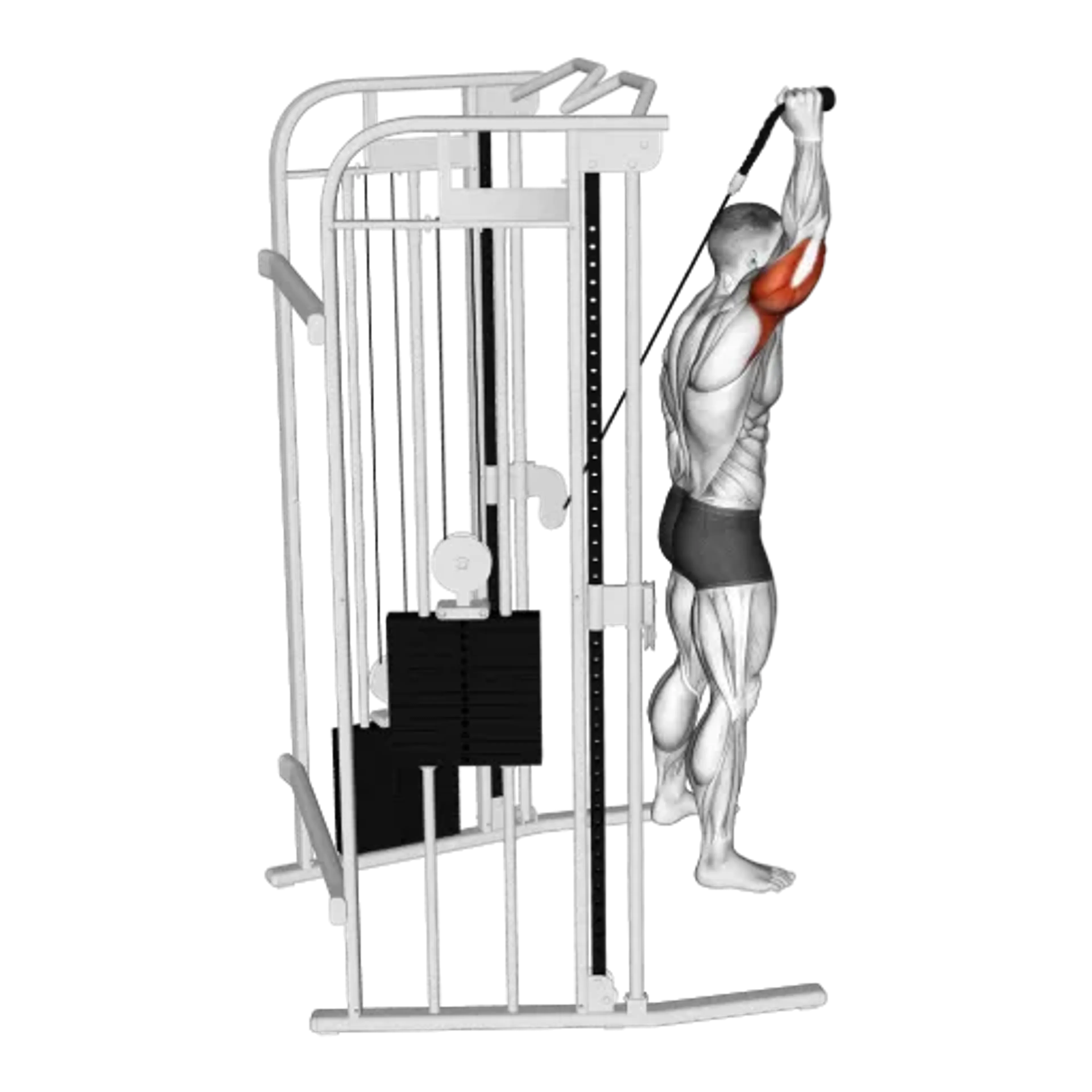 Intermediate
Cable Single-Arm Overhead Triceps Extension
Cable
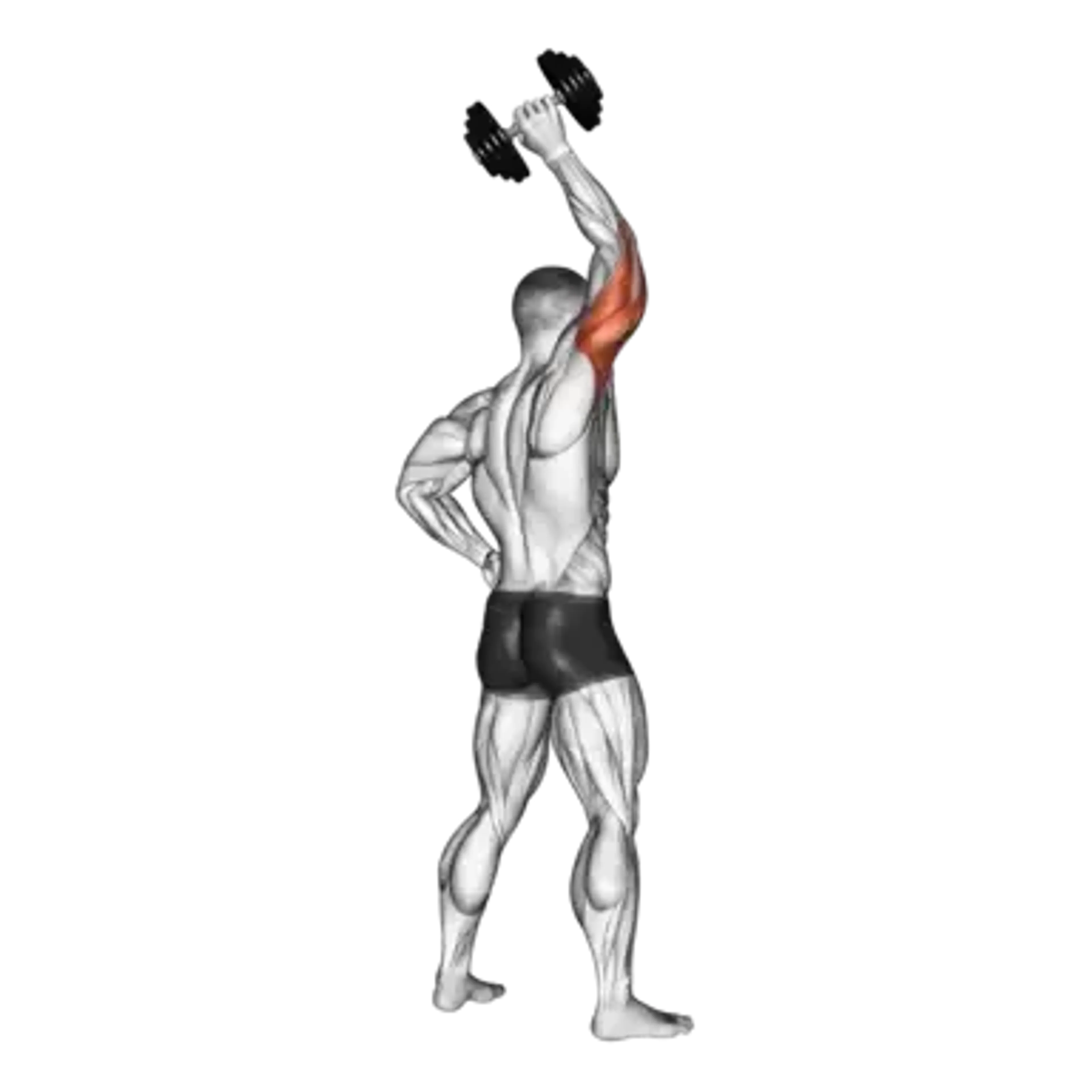 Intermediate
Dumbbell Single-Arm Triceps Extension
Dumbbell
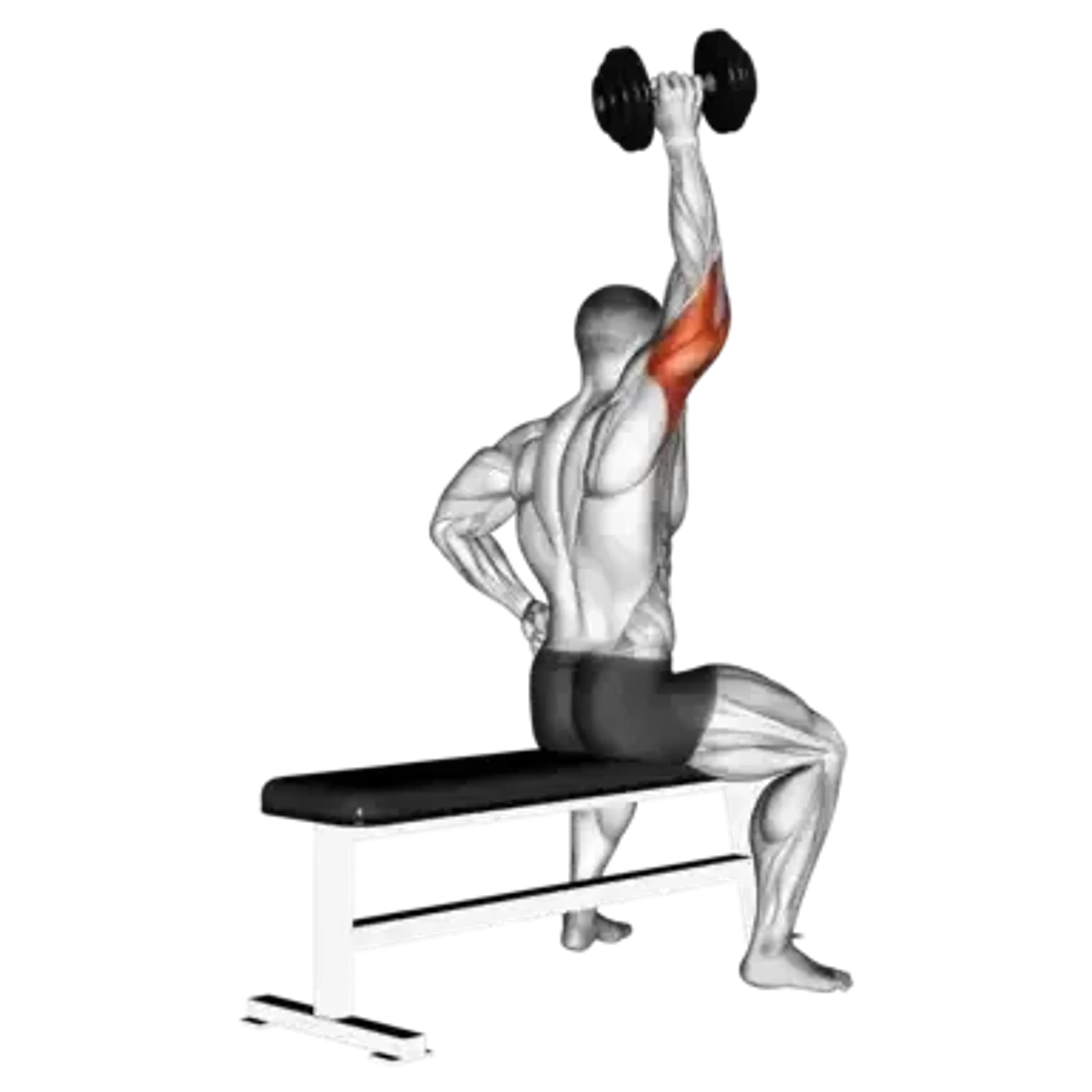 Intermediate
Dumbbell Seated Single-Arm Triceps Extension
Dumbbell · Bench
Frequently Asked Questions
- Q: Why do this single-arm instead of with both arms?
Single-arm execution ensures each triceps works independently, preventing the stronger side from compensating for the weaker one. It also allows for a slightly greater range of motion.
- Q: How does the exercise ball change this compared to a flat bench?
The ball requires constant core engagement to maintain the bridge position, which increases total body activation. It also limits the weight you can safely use, which often results in better form and a more effective triceps contraction.
- Q: What is the ideal rep range for this exercise?
Sets of 8 to 12 reps per arm work well for most lifters. The overhead stretch and single-arm format respond better to moderate reps with controlled tempos than to heavy, low-rep sets.
- Q: Can I use this as my main triceps exercise?
It can serve as a primary triceps movement, but most lifters will benefit from pairing it with a heavier compound movement like dips or close-grip bench press for well-rounded triceps development.
Overview
- Primary Focus:
- Triceps.
- Equipment:
- Dumbbell and exercise ball.
- Difficulty:
- Intermediate.
Alternative Exercises
- Intermediate
Dumbbell Overhead Triceps Extension
Dumbbell
- Intermediate
Dumbbell Seated Triceps Extension
Dumbbell · Bench
- Intermediate
Cable Single-Arm Overhead Triceps Extension
Cable
- Intermediate
Dumbbell Single-Arm Triceps Extension
Dumbbell
- Intermediate
Dumbbell Seated Single-Arm Triceps Extension
Dumbbell · Bench