Exercise Ball Dead Bug

Overview
- Primary Focus:
- Core.
- Equipment:
- Exercise ball.
- Difficulty:
- Beginner.
General Information
Exercise Ball Dead Bug is an isolation exercise that primarily targets the core. It is a beginner-level movement that teaches anti-extension control and contralateral coordination in a low-risk supine position.
The standard Dead Bug is already one of the best introductory core exercises available. Adding an exercise ball between the hand and opposite knee creates a feedback mechanism that forces you to actively press into the ball, increasing abdominal engagement. This pressing action helps beginners understand how to brace the core without relying on verbal cues alone.
The movement involves lying on your back, holding the ball between one hand and the opposite knee, then extending the free arm and leg away from the body while maintaining a flat lower back. The alternating limb pattern challenges coordination and trains the core to resist rotation and extension simultaneously.
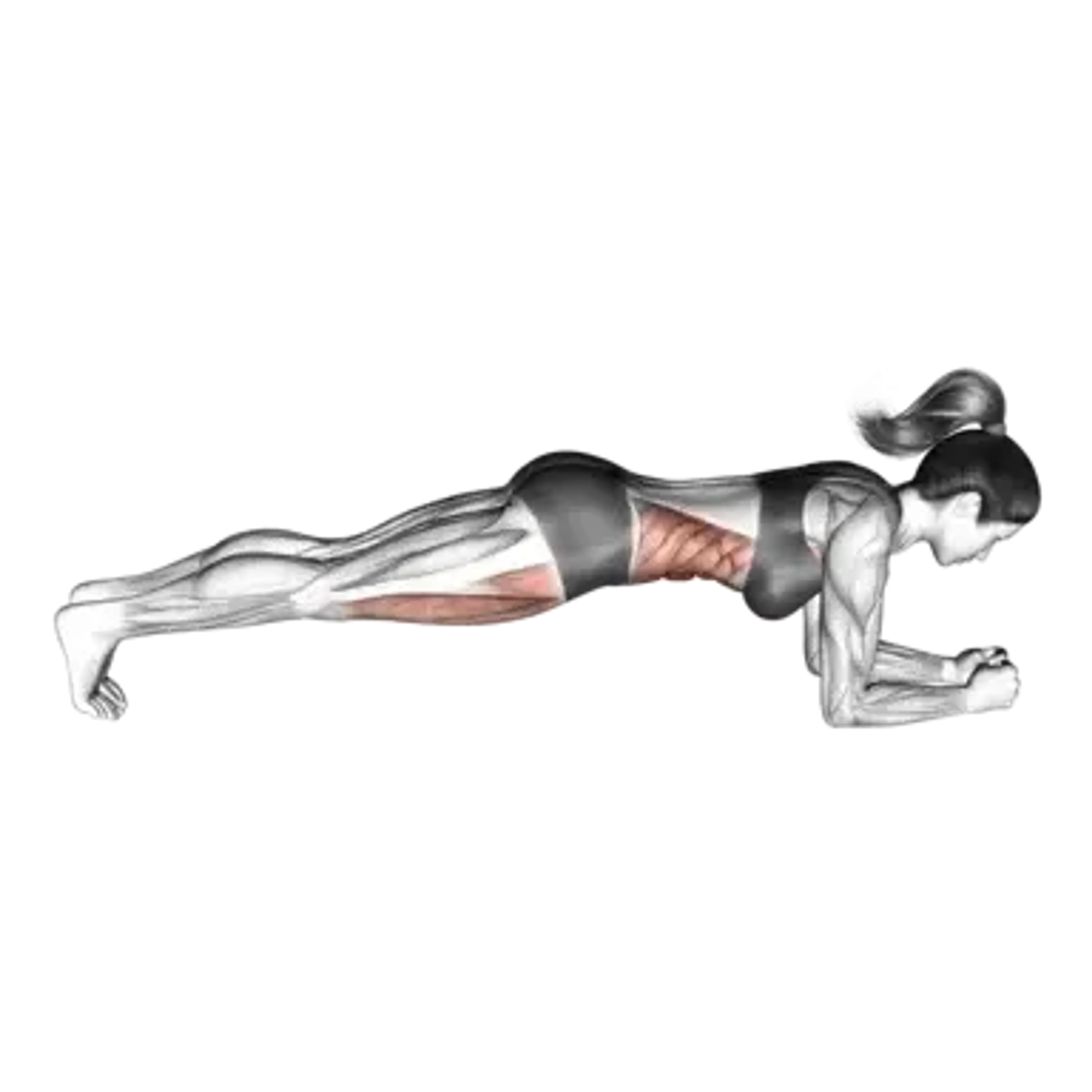
This exercise is particularly valuable for people rehabilitating from lower back issues, warming up before heavier lifting, or building a foundation of core stability before progressing to more demanding movements like the Exercise Ball Plank or Exercise Ball Rollout.
The key to getting the most out of this exercise is maintaining constant pressure on the ball and keeping the lower back pressed firmly into the floor throughout every rep. If your back arches off the ground, you have extended the limbs too far.
Muscles Worked
- Rectus Abdominis
- Primary
- Rectus Abdominis (Lower)
- Primary
- External Oblique
- High
- Erector Spinae
- Medium
- Deltoid
- Low
- Rectus Femoris
- Low
- Tensor Fasciae Latae
- Low
- Triceps Brachii (Long Head)
- Minimal
Instructions
- Lie on your back with your knees bent at 90 degrees and your arms reaching toward the ceiling.
- Place an exercise ball between your right hand and left knee, pressing both into the ball firmly.
- Press your lower back into the floor and brace your core.
- Slowly extend your left arm overhead and your right leg straight out, hovering it just above the floor.
- Keep pressing the ball firmly between your right hand and left knee throughout the movement.
- Pause briefly at full extension with your lower back still flat on the floor.
- Return the extended arm and leg to the starting position.
- Complete the prescribed reps on one side, then switch the ball to the opposite hand and knee and repeat.
Common Mistakes
Injuries
Exercise Ball Dead Bug is a low risk exercise when performed with proper technique. The supine position eliminates spinal loading, and the controlled tempo makes it accessible for nearly all fitness levels.
The main concern is lower back strain from allowing the lumbar spine to arch off the floor during limb extension. If you extend the arm or leg too far before you have the core strength to maintain a neutral spine, the lower back compensates by hyperextending. The fix is simple: reduce the range of motion until you can keep your back flat.
Shoulder discomfort can occasionally occur if you reach aggressively overhead with a stiff thoracic spine. If overhead reaching is uncomfortable, limit how far the arm travels until mobility improves.
This exercise is widely used in physical therapy settings precisely because of its low injury risk. If you experience any discomfort, reduce the range of motion or remove the ball entirely and perform the standard Dead Bug until you are comfortable with the movement pattern.
Alternative Exercises


Frequently Asked Questions
- Q: What is the benefit of using an exercise ball compared to a regular dead bug?
The ball creates a tactile cue that encourages you to press the hand and knee together, which increases deep core activation. This co-contraction makes bracing more intuitive, especially for beginners.
- Q: How do I know if I am doing the exercise correctly?
Your lower back should remain pressed into the floor the entire time. If you slide your hand between your back and the floor and feel a gap during limb extension, you are extending too far.
- Q: Can this exercise help with lower back pain?
Yes. The dead bug pattern is commonly prescribed in rehabilitation settings because it strengthens the core in a spinal-neutral position without placing load on the lumbar spine. Consult a healthcare provider if you have an active injury.
- Q: How many reps should beginners aim for?
Start with 8 to 10 reps per side, focusing on slow, controlled movement. Increase reps or slow the tempo as the exercise becomes easier.
Overview
- Primary Focus:
- Core.
- Equipment:
- Exercise ball.
- Difficulty:
- Beginner.