Exercise Ball Rollout

Overview
- Primary Focus:
- Core.
- Equipment:
- Exercise ball.
- Difficulty:
- Intermediate.
General Information
Exercise Ball Rollout is a compound exercise that primarily targets the core and also engages the shoulders, lats, and triceps. It is an intermediate-level movement that challenges anti-extension strength by requiring the abdominals to resist spinal hyperextension as the body extends forward over the ball.
The movement begins from a kneeling position with the forearms or hands resting on the exercise ball. The lifter then rolls the ball forward by extending the arms and hips while maintaining a rigid torso. This lengthened position places enormous demand on the rectus abdominis, which must work eccentrically to control the descent and concentrically to pull the body back to the starting position.
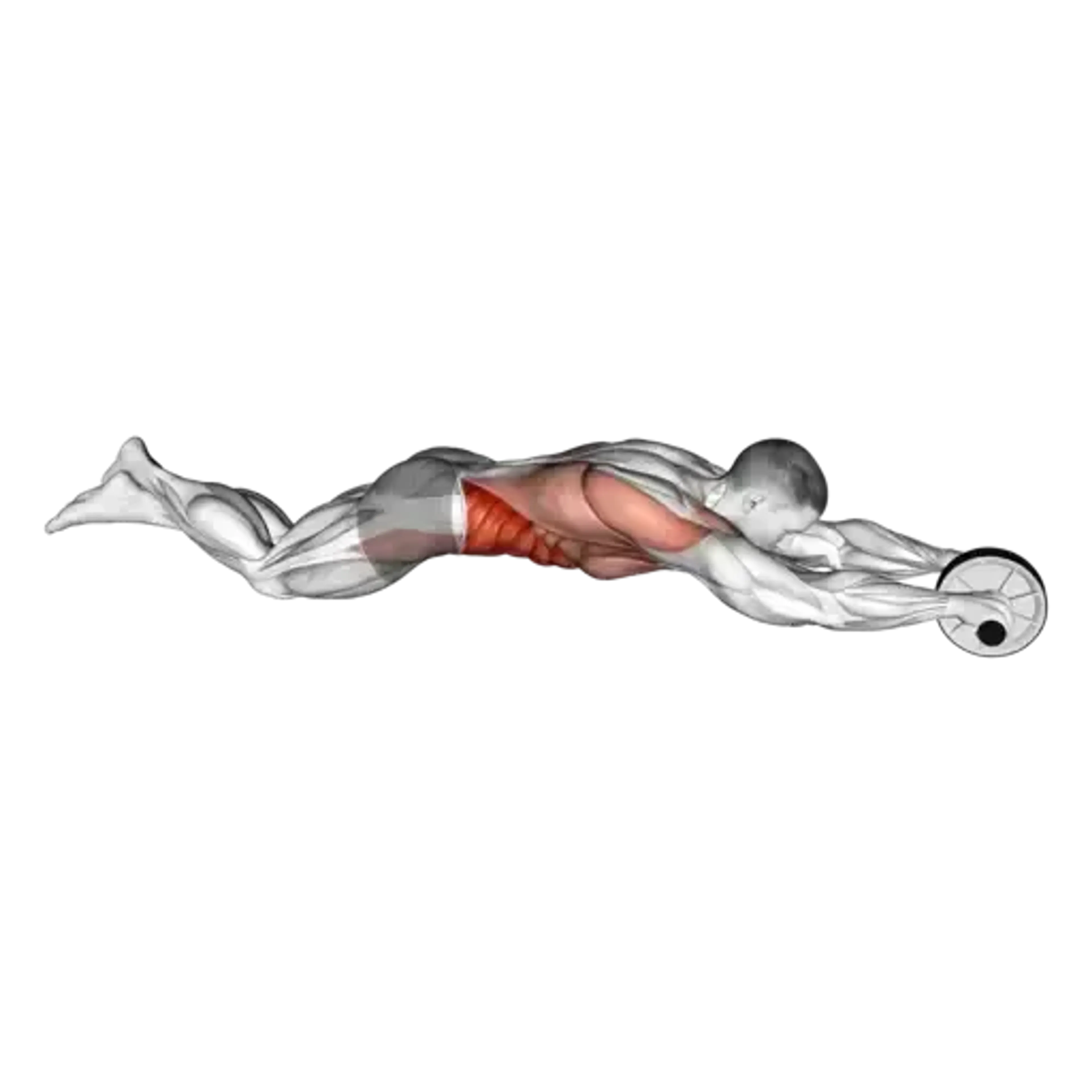
The exercise ball rollout is often considered a more accessible entry point than the Ab Wheel Rollout because the larger, softer surface of the ball provides more stability and a shorter effective lever arm. This makes it an excellent progression for those who have mastered the basic plank but are not yet strong enough for the ab wheel. The ball also allows for slight lateral adjustments, which can help beginners find the correct movement path.
Beyond raw abdominal strength, this exercise develops excellent shoulder stability and scapular control. The deltoids and serratus anterior must work isometrically to keep the arms in position as the ball moves forward. This overhead stability component makes the exercise valuable for overhead athletes and anyone looking to improve shoulder health.
The rollout can be scaled by adjusting the distance the ball travels. Beginners should start with a short range of motion and gradually increase the extension as strength improves. For additional challenge, performing the movement from a standing position or adding a slight lateral arc targets the obliques more aggressively.
Muscles Worked
- Rectus Abdominis
- Primary
- Rectus Abdominis (Lower)
- Primary
- External Oblique
- High
- Deltoid
- Medium
- Erector Spinae
- Medium
- Latissimus Dorsi
- Low
- Serratus Anterior
- Low
- Triceps Brachii (Long Head)
- Low
- Rectus Femoris
- Minimal
Instructions
- Kneel on the floor and place your forearms on top of the exercise ball with your elbows bent at approximately 90 degrees.
- Position your knees hip-width apart and brace your core by drawing your navel toward your spine.
- Slowly roll the ball forward by extending your arms and allowing your body to lean forward in a controlled manner.
- Continue rolling out until your arms are nearly fully extended and your body forms a straight line from knees to elbows.
- Do not allow your hips to sag or your lower back to arch during the extension.
- Pause briefly at the furthest point you can control.
- Contract your abdominals and pull the ball back toward your knees by flexing at the hips and shoulders.
- Return to the starting position and repeat for the prescribed number of repetitions.
Common Mistakes
Injuries
Exercise Ball Rollout is a medium risk exercise when performed with proper technique. The primary concern is the lower back, which can be compromised if the core fails to maintain rigidity during the extended position.
When the abdominals are not strong enough to resist extension, the lumbar spine drops into hyperextension. This places shearing forces on the vertebrae and can aggravate disc issues or cause muscular strain in the erector spinae. To prevent this, only roll out as far as you can while keeping a neutral or slightly posteriorly tilted pelvis. If your lower back begins to arch, you have gone too far.
The shoulders are also under load during this exercise, particularly in the extended position. Individuals with existing shoulder impingement or rotator cuff issues may find the overhead position uncomfortable. Keeping the rollout range shorter and ensuring the shoulders stay packed and away from the ears can help mitigate this.
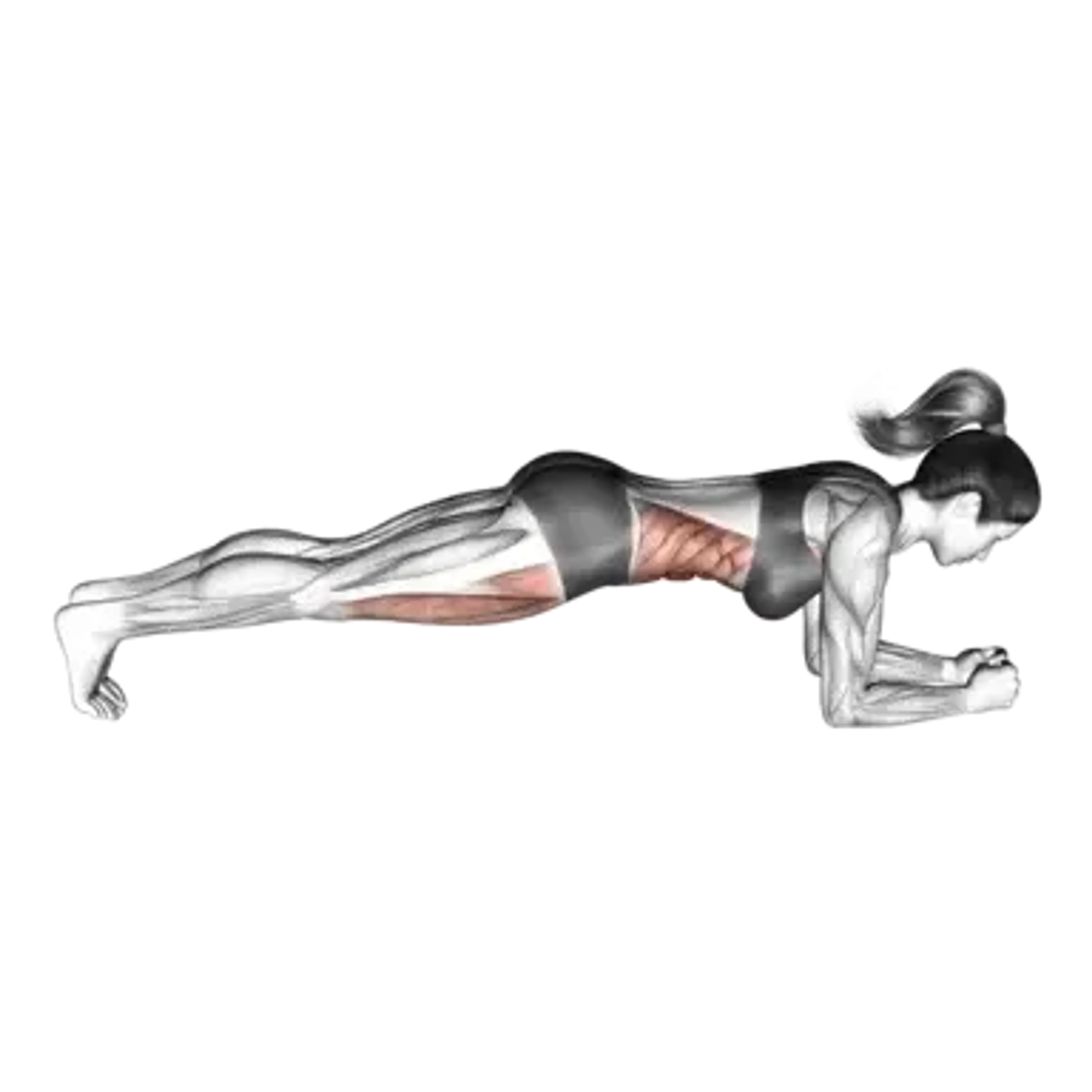
A sensible regression is the Exercise Ball Plank, which builds the isometric core strength needed before adding the dynamic rolling component. Stop immediately if you feel sharp pain in the lower back or shoulders.
Alternative Exercises


Frequently Asked Questions
- Q: How is this different from an ab wheel rollout?
The exercise ball provides a larger and more stable surface, which makes the movement slightly easier to control. The ab wheel requires more shoulder stability and allows for a longer range of motion, making it a more advanced progression.
- Q: Can beginners do this exercise?
Beginners can attempt this exercise by limiting the rollout distance. If holding a plank on the ball for 30 seconds is comfortable, the rollout can be introduced with a very short range of motion and gradually extended over time.
- Q: Should I feel this in my lower back?
You should feel a stretch and mild tension in the lower back, but the primary sensation should be in the abdominals. If your lower back is the limiting factor, reduce the rollout distance or regress to a plank variation until core strength improves.
- Q: How many reps should I aim for?
Start with three sets of 8 to 10 controlled repetitions. Quality of movement matters far more than volume in this exercise. Increase reps only after you can maintain perfect form throughout every set.
Overview
- Primary Focus:
- Core.
- Equipment:
- Exercise ball.
- Difficulty:
- Intermediate.