Exercise Ball Lying Hip Lift

Overview
- Primary Focus:
- Glutes.
- Equipment:
- Exercise ball.
- Difficulty:
- Intermediate.
General Information
Exercise Ball Lying Hip Lift is an isolation exercise that primarily targets the glutes and also engages the hamstrings and lower back. It is an intermediate-level movement that uses an exercise ball to add instability, increasing the demand on stabilizer muscles throughout the posterior chain.
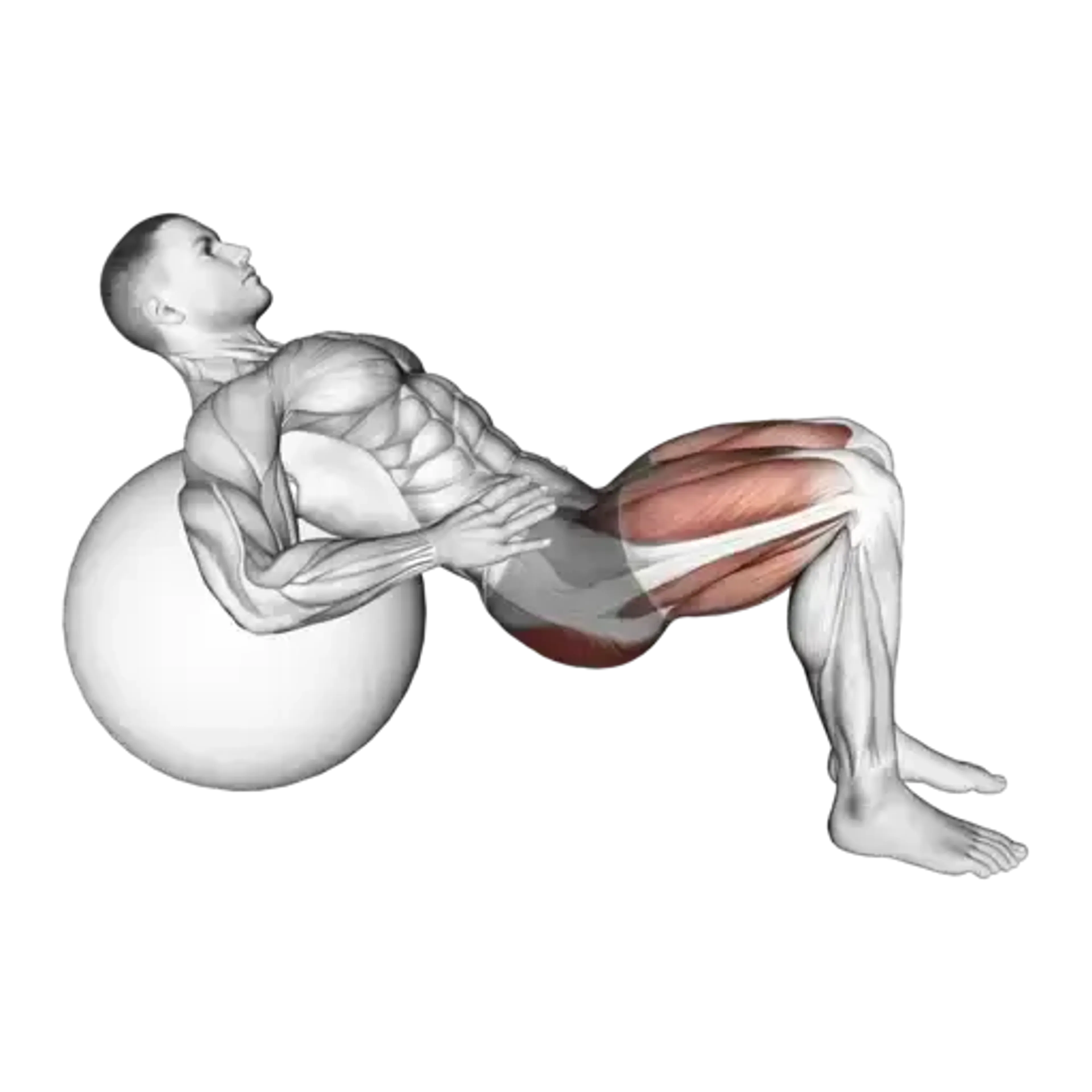
This exercise is performed by lying supine with the feet or calves resting on an exercise ball and driving the hips upward into a bridge position. The unstable surface forces the glutes and hamstrings to work harder to maintain balance compared to a standard glute bridge performed on the floor. The result is greater muscle fiber recruitment in both the gluteus maximus and the deep stabilizers of the hip and core.
The lying hip lift on an exercise ball is particularly useful for individuals looking to build glute strength without heavy loading on the spine. It fits well into warm-up sequences, rehabilitation protocols, or as an accessory movement in a lower-body training session. Athletes and general fitness enthusiasts can both benefit from the balance and coordination demands this variation introduces.
Because the ball can roll, the lifter must maintain constant tension through the glutes and hamstrings throughout the entire range of motion. This makes the exercise excellent for developing a strong mind-muscle connection with the posterior chain. Those who find the standard bodyweight hip thrust too easy but are not yet ready for heavily loaded barbell variations will find this a productive middle ground.
The exercise can be progressed by performing single-leg variations or by slowing the eccentric phase. It pairs well with other exercise ball glute movements such as the Exercise Ball Leg Curl for a comprehensive posterior chain workout.
Muscles Worked
- Gluteus Maximus
- Primary
- Biceps Femoris
- High
- Semitendinosus
- High
- Erector Spinae
- Medium
- Rectus Abdominis
- Medium
- Gluteus Medius
- Low
- Rectus Femoris
- Low
- External Oblique
- Minimal
Instructions
- Lie face up on the floor with your arms at your sides and palms flat on the ground.
- Place both calves on top of the exercise ball so that your legs are extended and the ball supports your lower legs.
- Brace your core and squeeze your glutes to prepare for the lift.
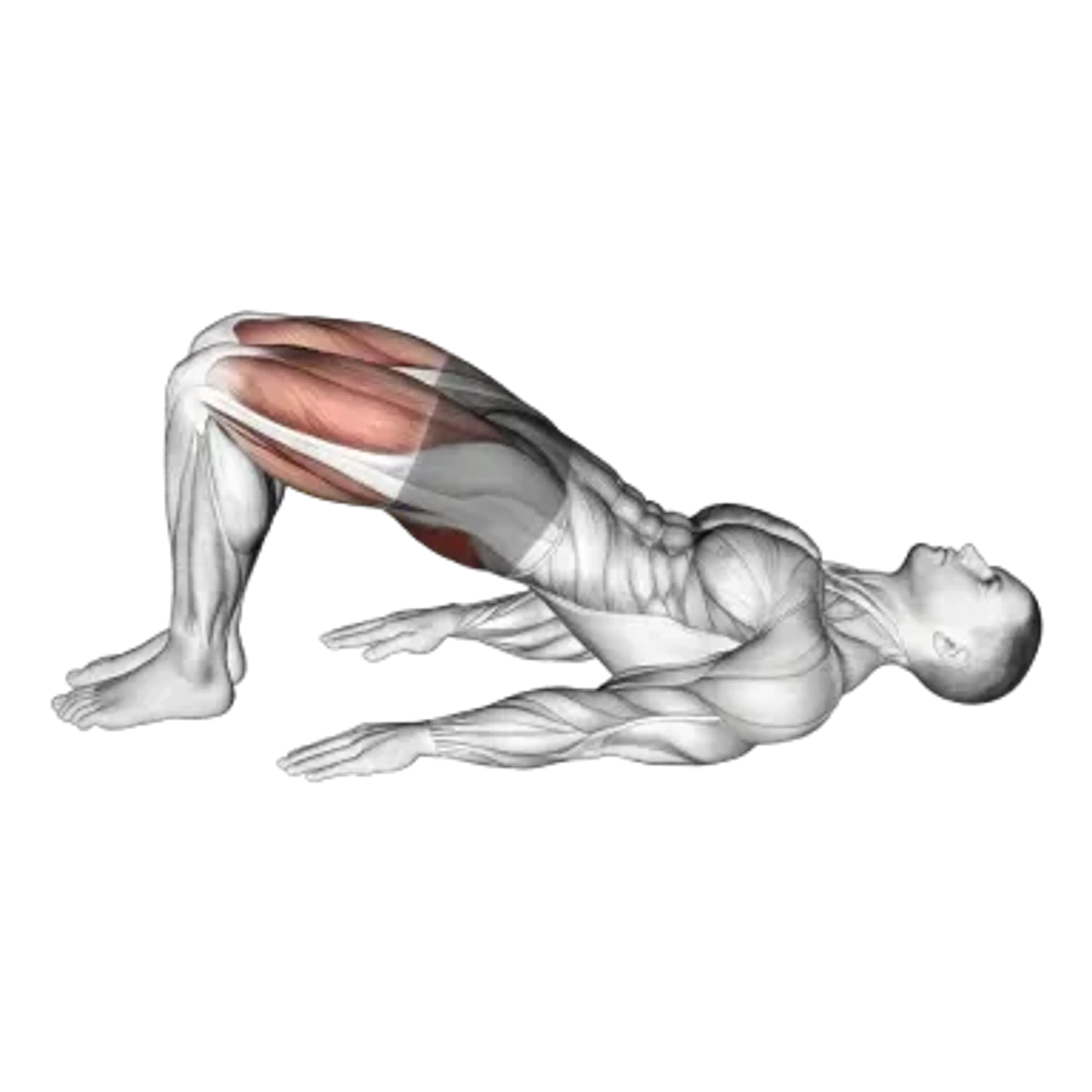
- Press your calves into the ball and drive your hips upward until your body forms a straight line from shoulders to ankles.
- Hold the top position for one to two seconds, focusing on a strong glute contraction.
- Slowly lower your hips back toward the floor in a controlled manner without fully resting between reps.
- Keep your arms pressed into the floor for stability throughout the movement.
- Repeat for the prescribed number of repetitions, maintaining steady breathing throughout.
Common Mistakes
Injuries
Exercise Ball Lying Hip Lift is a low risk exercise when performed with proper technique. The movement does not load the spine directly and the range of motion is relatively short, making it accessible for most fitness levels.
The primary area of concern is the lower back. If the hips are driven too high or the lumbar spine hyperextends at the top, excessive stress can be placed on the spinal erectors. To prevent this, focus on squeezing the glutes to drive the movement rather than arching through the lower back. The top position should be a straight line from shoulders to ankles, not an exaggerated arch.
Hamstring cramping is another common issue, especially for those with tight or underdeveloped hamstrings. If cramping occurs, reduce the range of motion and ensure adequate warm-up before performing the exercise. Progressing from a standard floor-based glute bridge before introducing the ball is a sensible regression.
Stop the exercise immediately if you feel sharp pain in the lower back, hips, or knees. If balance on the ball is too challenging, start with your feet on the ball rather than your calves to shorten the lever arm and reduce difficulty.
Alternative Exercises


Frequently Asked Questions
- Q: How is this different from a standard glute bridge?
The exercise ball adds an unstable surface, which forces the stabilizer muscles around the hips and core to work harder. This increases overall muscle recruitment compared to performing the same movement on a flat floor.
- Q: Can I do this exercise with one leg?
Yes. Once you can comfortably perform 15 or more reps with both legs, progress to a single-leg variation by extending one leg straight up while keeping the other on the ball. This significantly increases the difficulty.
- Q: Where should I place my feet on the ball?
Rest your calves on top of the ball rather than your feet. This creates a longer lever arm and greater instability, which increases the demand on the glutes and hamstrings.
- Q: How many sets and reps should I do?
Three to four sets of 12 to 15 repetitions is a solid starting point. Focus on controlled movement and a full squeeze at the top rather than chasing high rep counts.
Overview
- Primary Focus:
- Glutes.
- Equipment:
- Exercise ball.
- Difficulty:
- Intermediate.