Exercise Ball Sit-Up

Overview
- Primary Focus:
- Core.
- Equipment:
- Exercise ball.
- Difficulty:
- Beginner.
General Information
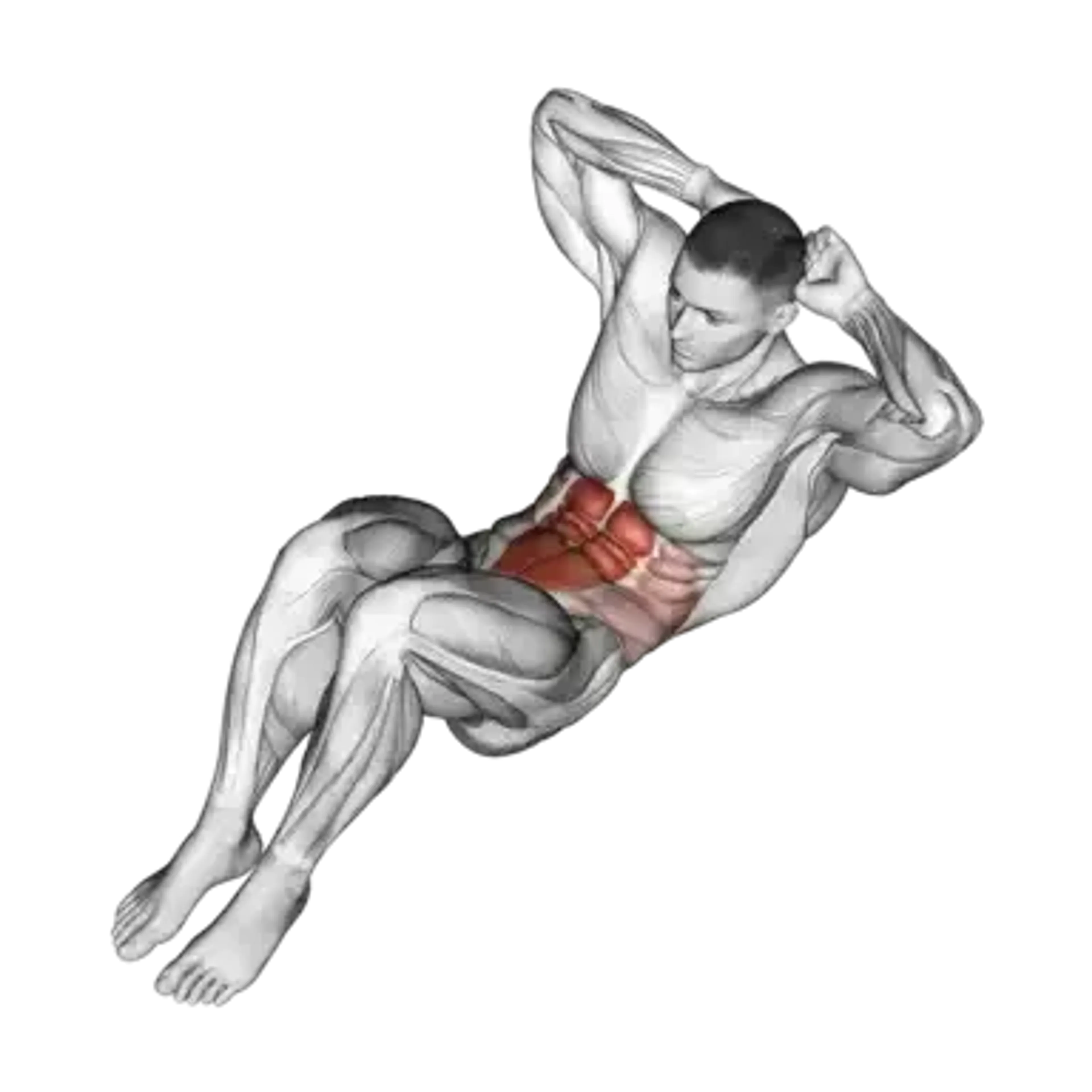
Exercise Ball Sit-Up is a compound exercise that primarily targets the rectus abdominis and also engages the hip flexors and obliques. It is a beginner-level movement that offers a fuller range of motion than the standard floor sit-up by allowing spinal extension over the curved surface of the ball.
Unlike the Exercise Ball Crunch, which focuses on a shorter curling motion, the sit-up version brings the torso all the way up to an upright seated position. This recruits the hip flexors more significantly and demands greater overall effort from the anterior chain. The exercise ball provides lumbar support during the eccentric phase, making the descent more controlled and comfortable.
This exercise fits well into beginner and intermediate core routines. It is particularly useful for individuals who find floor sit-ups uncomfortable on the tailbone or lower back. The ball cushions the spine while still allowing a challenging movement pattern. It also works as a progression from the Exercise Ball Crunch once that movement becomes too easy at bodyweight.
Focus on controlling the lowering phase to maximize time under tension. Let your upper back and shoulders drape over the ball at the bottom, then drive upward by contracting the abdominals rather than jerking with the arms. Keeping the hands behind the ears rather than interlocked behind the head helps prevent neck strain. For additional challenge, hold a weight plate at the chest or try the Exercise Ball V-Up.
Muscles Worked
- Rectus Abdominis
- Primary
- Rectus Abdominis (Lower)
- Primary
- Rectus Femoris
- High
- External Oblique
- Medium
- Sartorius
- Medium
- Erector Spinae
- Low
- Tensor Fasciae Latae
- Low
- Serratus Anterior
- Minimal
Instructions
- Sit on the exercise ball and walk your feet forward until your lower back and mid-back rest on the ball.
- Plant your feet flat on the floor at roughly shoulder width for stability.
- Place your hands lightly behind your ears or crossed over your chest.
- Lower your upper body back over the ball until your shoulders and upper back are fully extended.
- Contract your abdominals and sit up by curling your torso forward, bringing your chest toward your knees.
- Continue until you reach an upright seated position on the ball.
- Pause briefly at the top, then slowly reverse the motion, lowering yourself back over the ball with control.
- Keep your feet firmly planted and avoid shifting the ball forward or backward during the movement.
Common Mistakes
Injuries
Exercise Ball Sit-Up is a low risk exercise when performed with proper technique. The ball cushions the lumbar spine and allows a natural curve during the eccentric portion, reducing compressive forces compared to a flat surface.
The primary concern with sit-ups in general is excessive hip flexor involvement, which can pull on the lumbar spine and cause discomfort. If you feel strain in the lower back rather than the abdominals, shorten the range of motion or switch to the Exercise Ball Crunch until core strength improves.
Neck strain is another common issue. Avoid interlocking the fingers behind the head and pulling forward. The hands should only lightly touch the ears or rest across the chest. If neck discomfort persists, this is usually a sign that the abdominals are fatiguing and the body is compensating.
Stop immediately if you experience sharp or shooting pain in the lower back. Individuals with herniated discs or active lumbar issues should consult a medical professional before performing full sit-up variations.
Alternative Exercises
Frequently Asked Questions
- Q: What is the difference between a ball crunch and a ball sit-up?
The Exercise Ball Crunch involves a shorter range of motion, lifting only the shoulder blades off the ball. The sit-up brings the torso fully upright, involving more hip flexor engagement and greater overall abdominal demand.
- Q: Is this safe for someone with lower back pain?
The ball provides more lumbar support than a flat surface, but the full sit-up range of motion still places demand on the lower back. Those with back pain should start with the shorter crunch variation and progress gradually.
- Q: Can this replace floor sit-ups entirely?
It can. The exercise ball version offers a greater range of motion and more comfortable lumbar support. Many trainees find it a superior alternative to the standard floor sit-up for both comfort and effectiveness.
- Q: How do I keep the ball from sliding on a smooth floor?
Place the ball on a rubber mat or yoga mat to prevent it from sliding. You can also position it against a wall for additional stability when first learning the movement.
Overview
- Primary Focus:
- Core.
- Equipment:
- Exercise ball.
- Difficulty:
- Beginner.