EZ Bar Exercise Ball French Press

Overview
- Primary Focus:
- Triceps.
- Equipment:
- Ez bar and exercise ball.
- Difficulty:
- Intermediate.
General Information
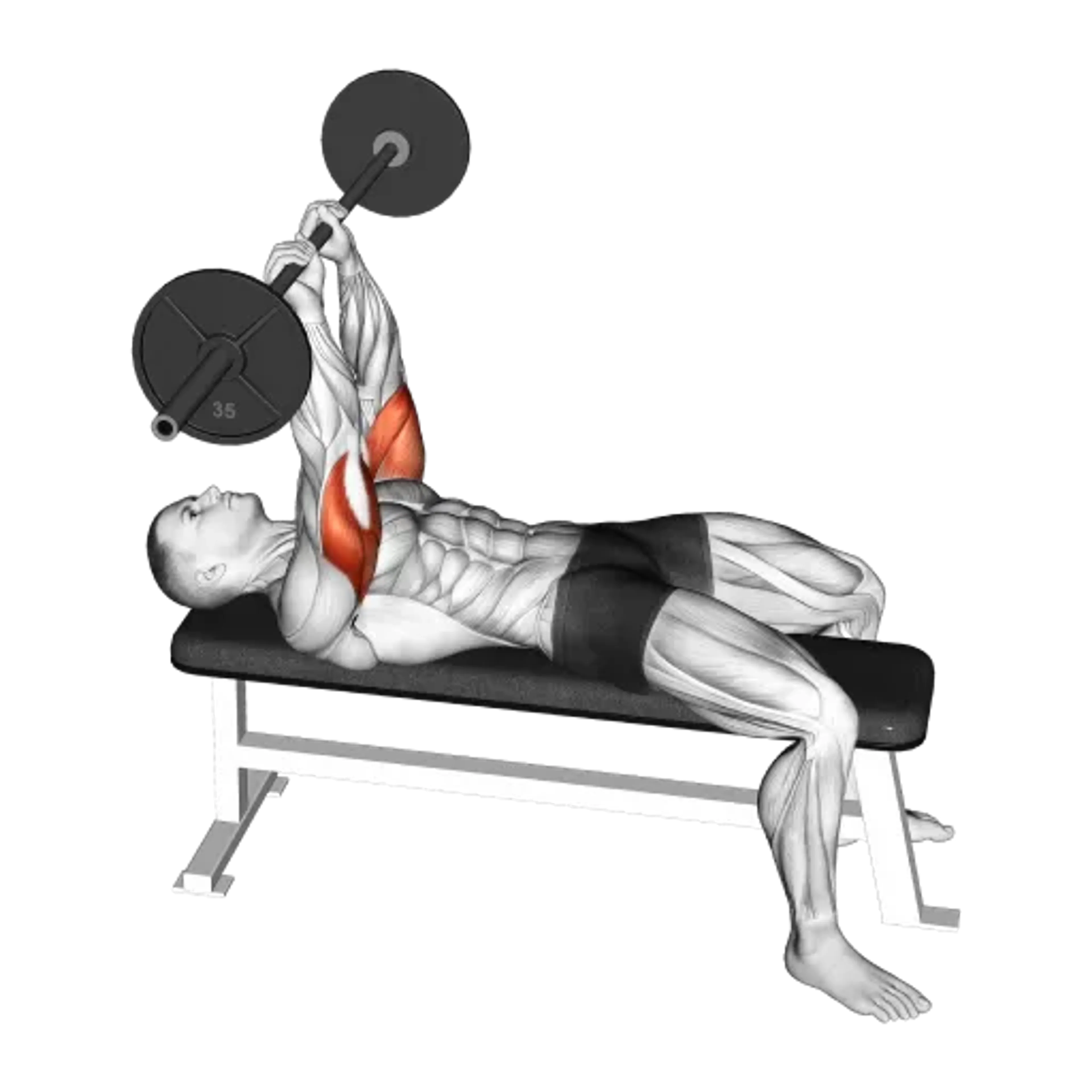
EZ Bar Exercise Ball French Press is an isolation exercise that primarily targets the triceps. It is an intermediate-level movement that combines the benefits of an overhead triceps extension with the instability of an exercise ball, demanding greater core engagement and stabilization throughout the lift.
This exercise is performed while seated on an exercise ball, holding an EZ bar behind the head with both hands, and extending the arms overhead to full lockout. The angled grip of the EZ bar reduces stress on the wrists and elbows compared to a straight barbell, making it a more joint-friendly option for overhead pressing patterns. The seated position on the ball forces the lifter to maintain an upright torso and brace the midsection to avoid tipping.
The long head of the triceps receives the greatest stimulus during this movement because it crosses the shoulder joint and is placed in a stretched position when the arms are overhead. This makes the EZ Bar Exercise Ball French Press particularly effective for building overall triceps mass, especially when compared to pushdown variations that emphasize the lateral and medial heads. Trainees looking to improve lockout strength on pressing movements will also benefit from this exercise.
This variation is well suited for lifters who want to train triceps while simultaneously challenging balance and trunk stability. It works well as an accessory movement in upper body or push-focused sessions. Those who find standard bench-supported EZ Bar Seated Overhead Triceps Extension too stable can use this version to introduce a proprioceptive challenge without significantly reducing the load.
Focus on controlling the eccentric portion of the lift and feeling a deep stretch in the triceps at the bottom position. Avoid flaring the elbows excessively and maintain a deliberate tempo to maximize time under tension.
Muscles Worked
- Triceps Brachii (Long Head)
- Primary
- Triceps Brachii (Lateral Head)
- High
- Triceps Brachii (Medial Head)
- High
- Deltoid
- Medium
- Rectus Abdominis
- Medium
- External Oblique
- Low
- Pectoralis Major
- Low
- Erector Spinae
- Minimal
Instructions
- Sit upright on an exercise ball with your feet flat on the floor, roughly shoulder-width apart.
- Grip an EZ bar with both hands on the inner angled portions, palms facing forward.
- Press the bar overhead until your arms are fully extended, keeping your elbows close to your ears.
- Brace your core and maintain an upright torso throughout the movement.
- Slowly lower the bar behind your head by bending at the elbows, keeping your upper arms stationary.
- Continue lowering until you feel a deep stretch in the triceps, with your forearms roughly parallel to the floor or slightly below.
- Reverse the movement by extending the elbows and pressing the bar back to the starting position.
- Squeeze the triceps at the top of each rep before beginning the next descent.
Common Mistakes
Injuries
EZ Bar Exercise Ball French Press is a medium risk exercise when performed with proper technique. The overhead position places significant demand on the shoulder joint and the long head of the triceps, which can be vulnerable to strain if the lifter uses excessive weight or poor form.
The most common injury concern involves the elbows. Allowing the elbows to flare wide or dropping the bar too aggressively behind the head can create shearing forces on the elbow joint. Lifters with a history of elbow tendinitis should start with a lighter load and controlled tempo. The EZ bar grip helps mitigate wrist strain, but shoulder mobility should still be adequate to allow a full range of motion overhead without compensating through the lower back.
The exercise ball adds a balance component that increases the risk of losing stability under load. If you feel your balance is compromised, reduce the weight or switch to a Dumbbell Exercise Ball Single-Arm French Press with a lighter dumbbell to practice the pattern. Ensure the ball is properly sized so your thighs are parallel to the floor when seated.
Stop the exercise immediately if you experience sharp pain in the elbows, shoulders, or lower back. A brief warm-up with light overhead triceps work and shoulder mobility drills is recommended before loading this movement.
Alternative Exercises
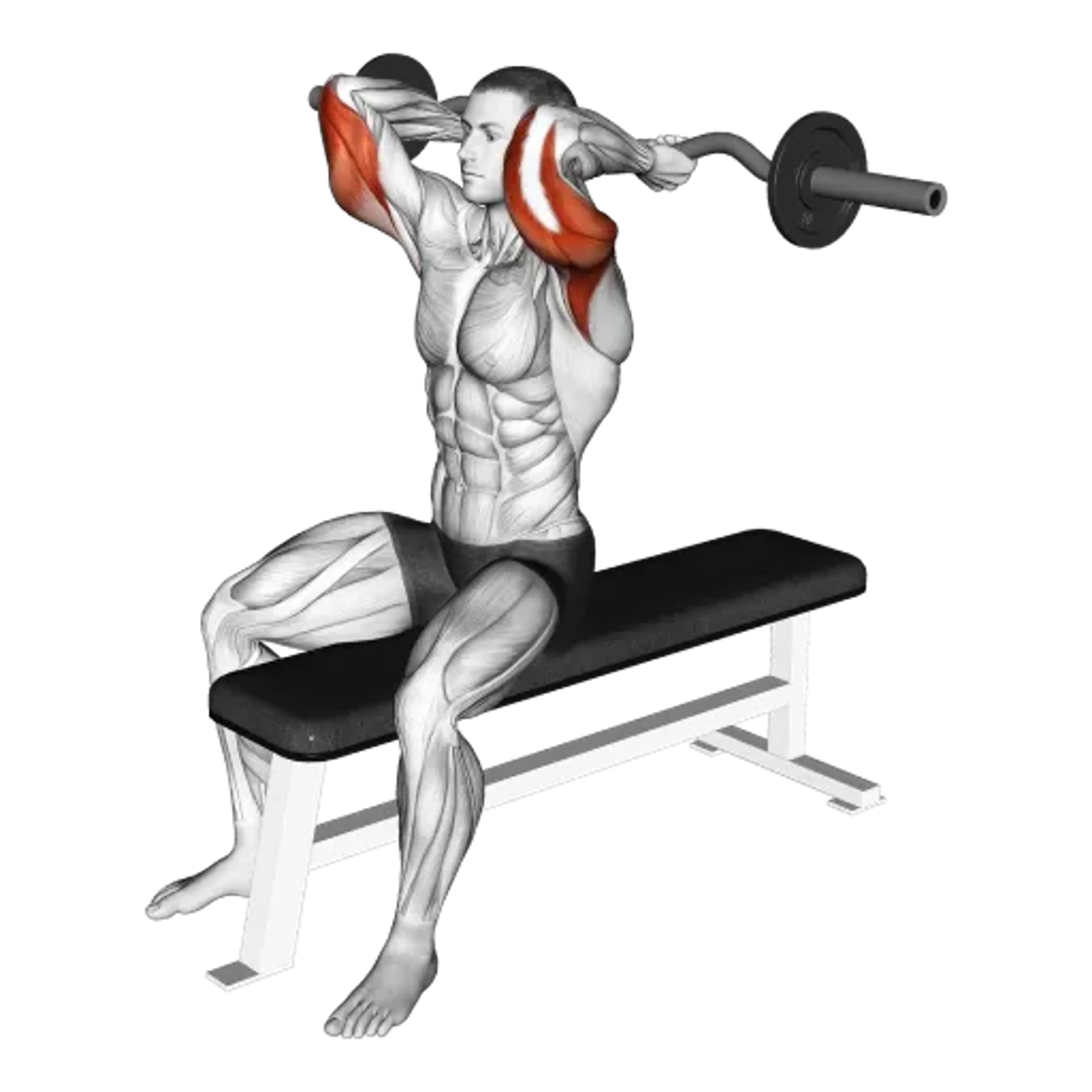
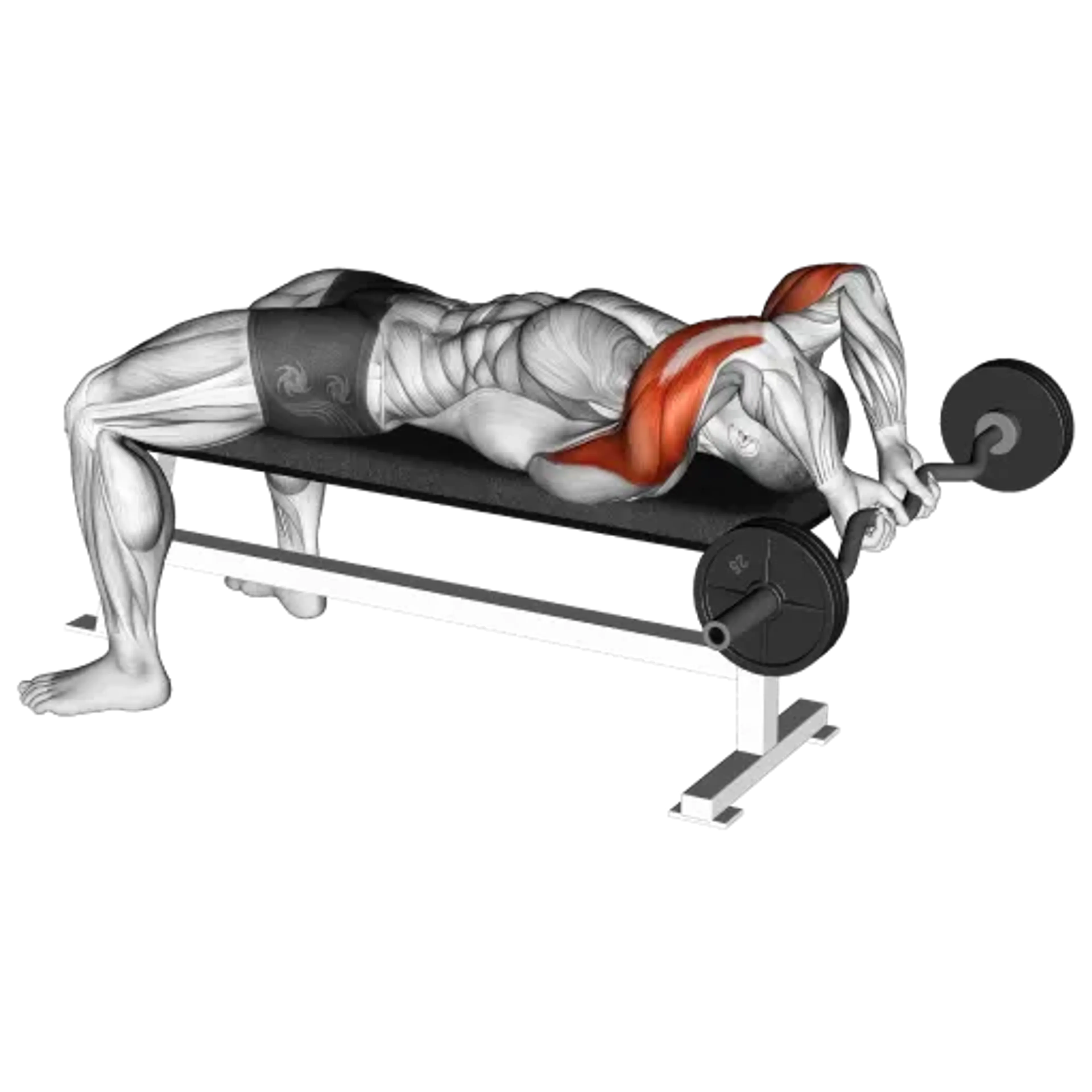
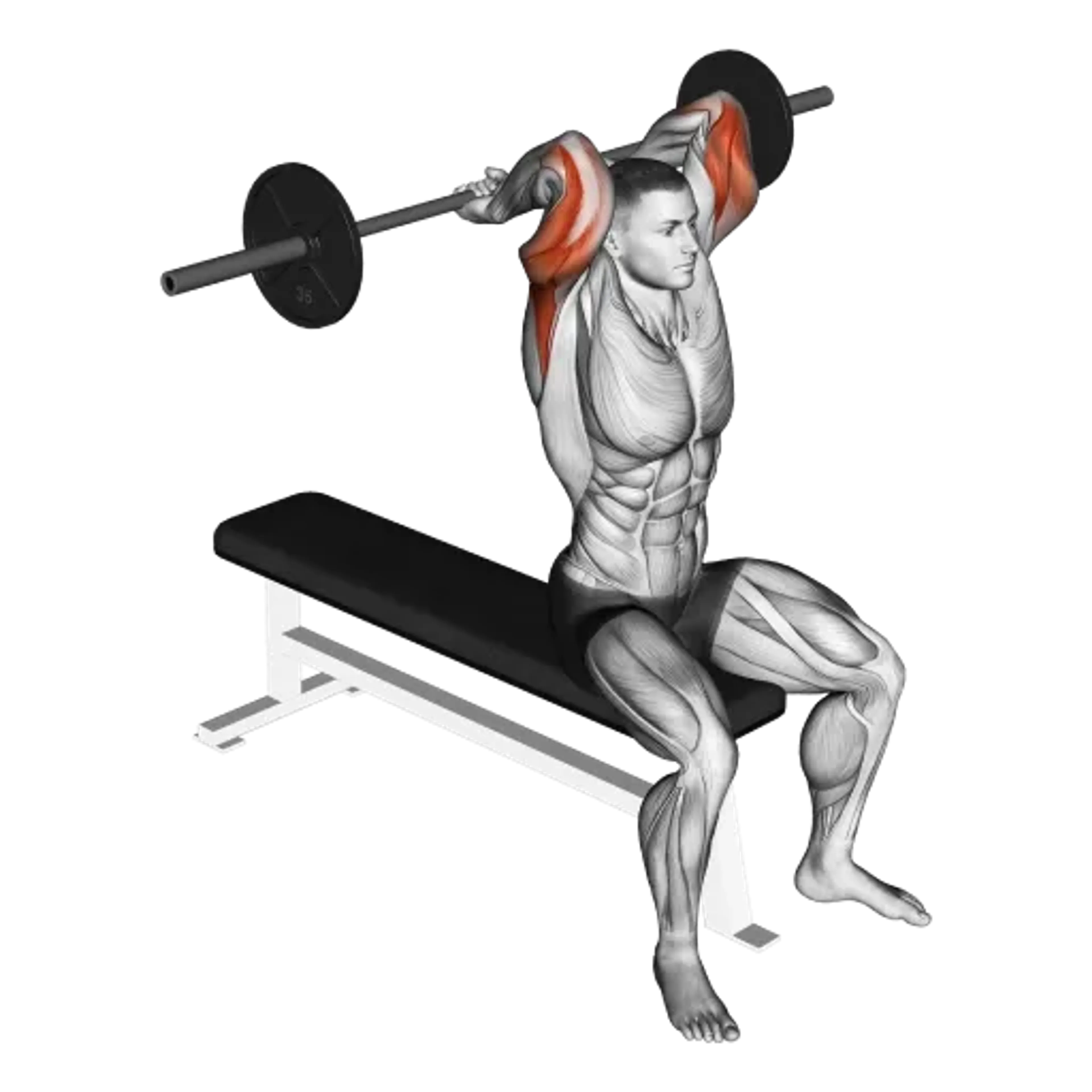
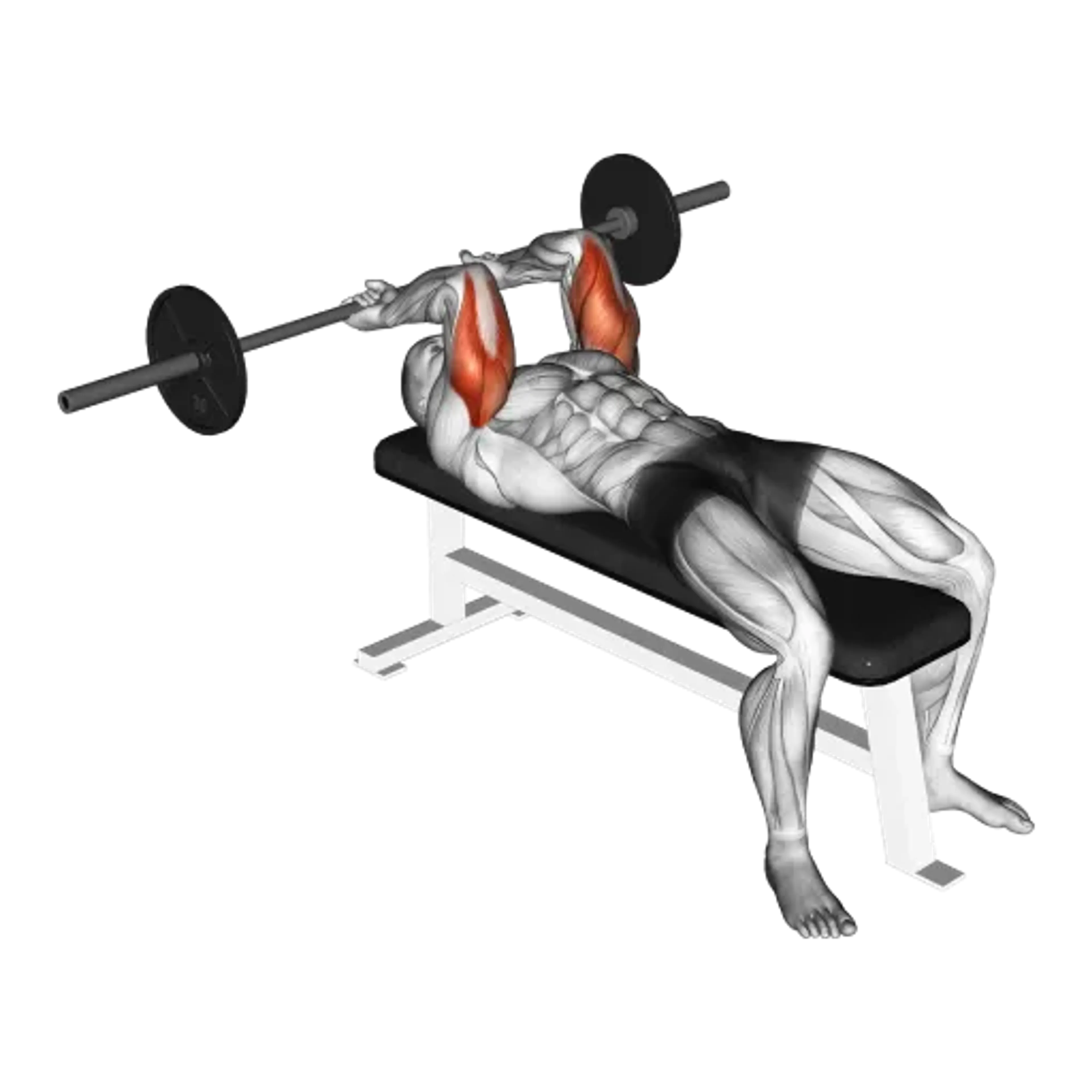
Frequently Asked Questions
- Q: What is the advantage of using an exercise ball instead of a bench?
The exercise ball introduces an instability component that forces your core to work harder to maintain an upright posture. This adds a functional training element and can improve trunk stabilization over time.
- Q: How much weight should I use compared to a bench-supported version?
Expect to use roughly 10 to 20 percent less weight than you would on a stable bench. The reduced stability demands more effort from stabilizer muscles, so the load on the triceps needs to be adjusted accordingly.
- Q: Can I substitute a straight barbell for the EZ bar?
You can, but the EZ bar is preferred because its angled grip reduces wrist and elbow strain. If you only have a straight bar, use a narrower grip and pay close attention to any discomfort in the wrists.
- Q: How does this compare to cable overhead triceps extensions?
Cable extensions provide constant tension throughout the range of motion, while the EZ bar version has a more variable resistance curve. The exercise ball version adds a balance challenge that cables do not provide.
Overview
- Primary Focus:
- Triceps.
- Equipment:
- Ez bar and exercise ball.
- Difficulty:
- Intermediate.