Split-Stance Calf Raise

What Is the Split-Stance Calf Raise?
Split-Stance Calf Raise is an isolation exercise that primarily targets the lower legs, with the soleus doing most of the work, and also engages the quadriceps and glutes, which hold the lunge position. It is a beginner-level movement done with body weight alone: you set up in a low split stance with the back knee hovering just above the floor, then raise and lower the front heel.
The point of the setup is the bent front knee. The gastrocnemius crosses the knee, so holding the knee at about 90 degrees leaves it slack and hands more of the lifting to the soleus, the deeper calf muscle that does much of the work of supporting the body when the knee is bent, as it is in walking, running and landing. That makes this a practical way to train the soleus without a seated calf machine, and it shows up in runner strength routines and in ankle and Achilles programs for that reason.
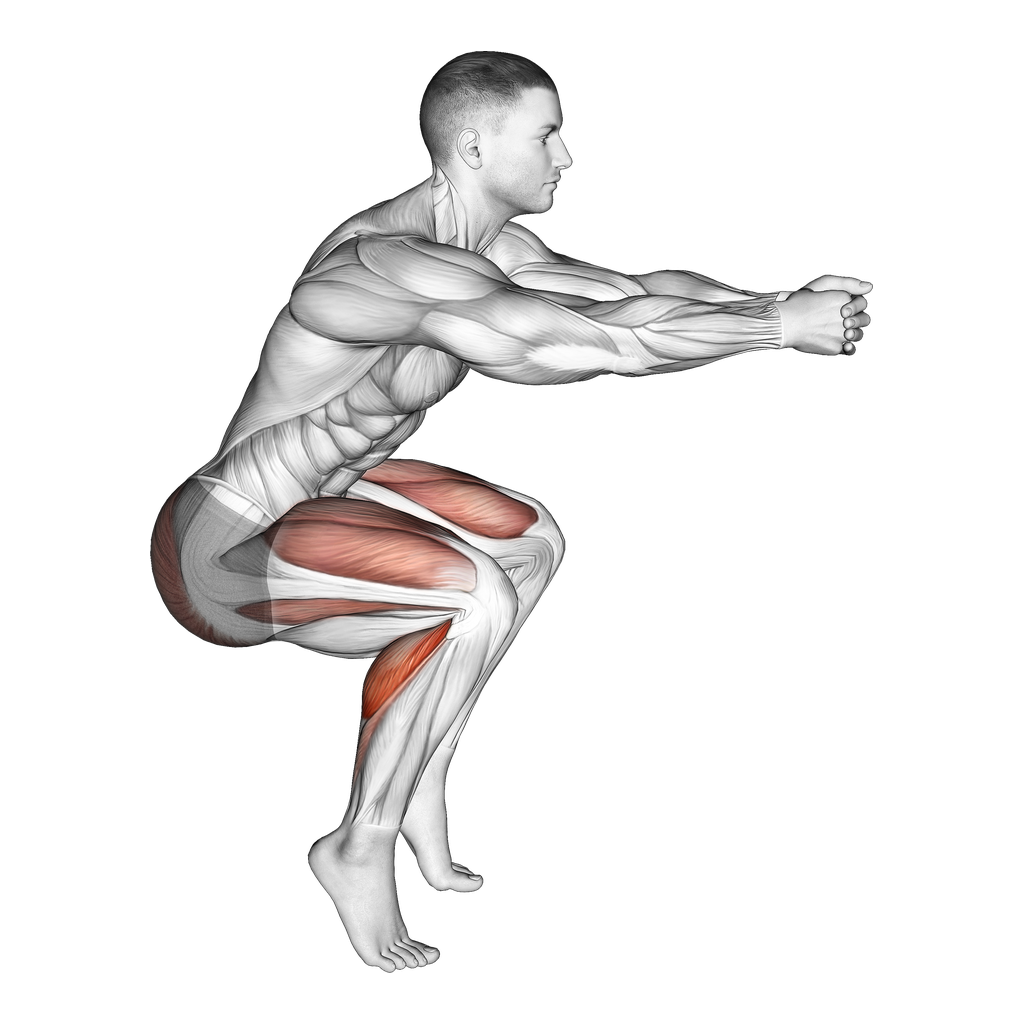
Holding the low lunge adds steady quadriceps and glute work and a balance demand, because the split stance is narrow and the hands stay on the hips. Most of the body weight should sit over the front foot so the front calf carries the load; the more weight drifts onto the back toes, the easier the raise gets. Straightening the knees shifts the work back toward the gastrocnemius, which is what a straight-leg version such as the Bodyweight Single-Leg Calf Raise is for, and the Squat Hold Calf Raise trains the same bent-knee raise on both feet from a squat.
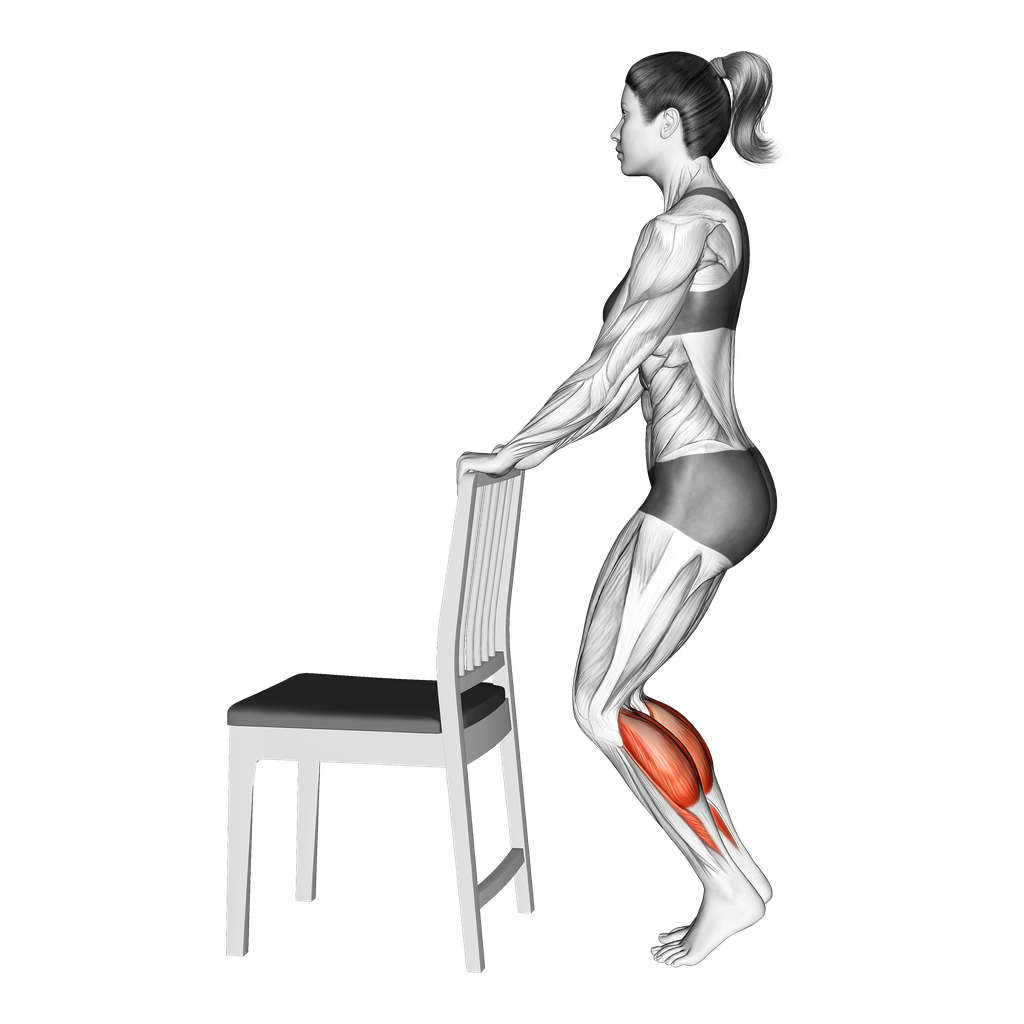
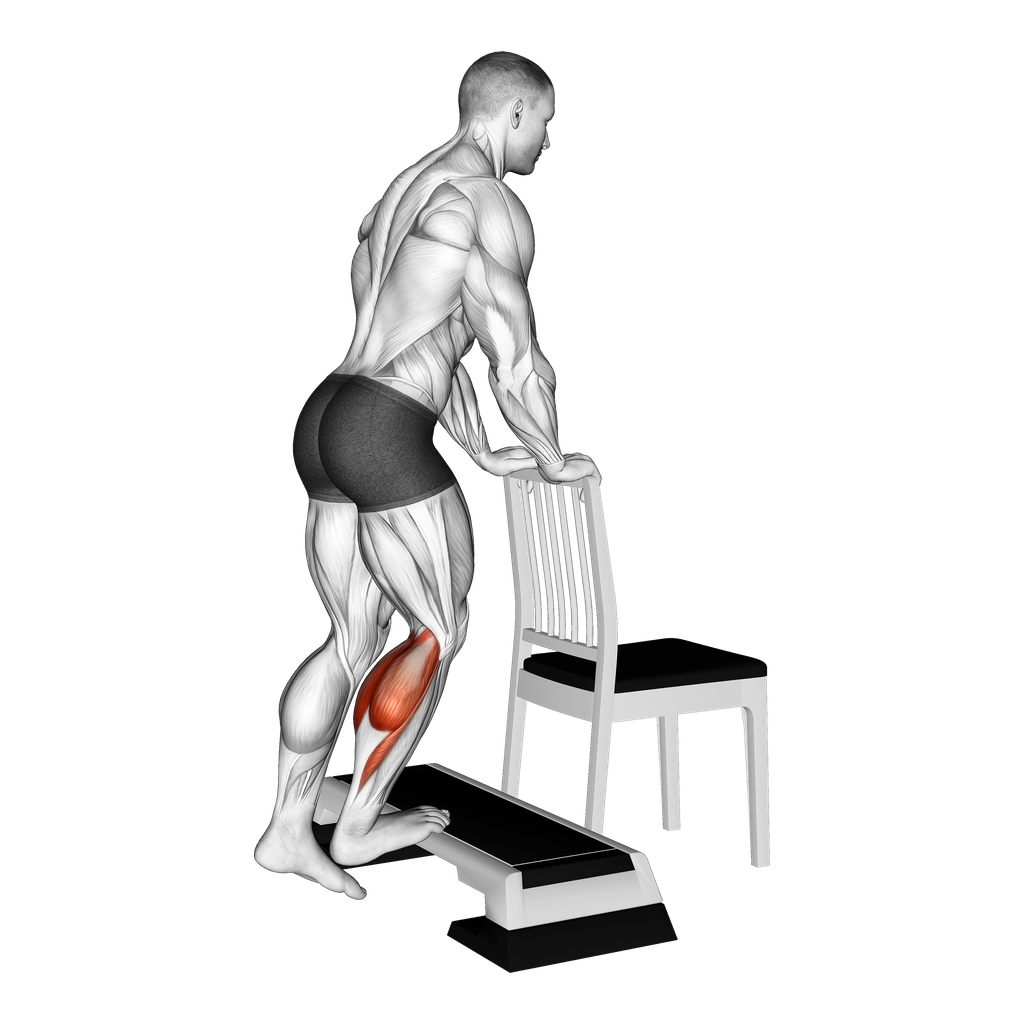
It suits beginners, runners and field-sport athletes, and anyone who wants more ankle strength and control from a short bodyweight drill. If holding the bottom of a lunge is still hard, build up with the Bodyweight Reverse Lunge for the position and the Bodyweight Bent-Knee Calf Raise, which trains the same calf action on both feet with a chair for support.
Muscles Worked
- Soleus
- Primary
- Peroneus Longus
- Medium
- Vastus Lateralis
- Medium
- Vastus Medialis
- Medium
Instructions
- Stand tall with your feet hip-width apart and place your hands on your hips.
- Take a long step back with one foot and land on the ball of that foot, back heel lifted.
- Bend both knees and lower straight down until the back knee hovers just above the floor without touching it. The front foot is flat, the front shin is close to vertical and the front knee is bent to about 90 degrees.
- Shift most of your weight onto the front foot and keep your torso upright with your chest up.
- Exhale and push through the ball of the front foot to lift the front heel as high as you can. Keep your hips at the same height and the front knee bent; the knee moves forward a little as the heel lifts.
- Pause briefly at the top with pressure under the big toe and second toe.
- Inhale and lower the front heel slowly back to the floor, keeping the back knee hovering and the back leg still.
- Finish the reps on one side, then step the back foot forward to stand and repeat with the other leg in front.
Common Mistakes
Rising out of the lunge
Straightening the front knee and lifting the hips turns part of each rep into a split squat and shifts work from the soleus to the thighs and gastrocnemius.
Leaning onto the back leg
Letting weight drift onto the back toes unloads the front calf, so keep most of your weight over the front foot.
Bouncing at the bottom
Dropping the heel and rebounding uses the Achilles tendon as a spring instead of making the calf lift you under control.
Cutting the range short
Small, quick heel lifts skip the top position, so rise as high as the ankle allows and lower all the way back to the floor.
Rolling onto the outer foot
Letting the ankle tip toward the little toe loads the outside of the foot, so keep pressure under the big toe and second toe.
Injuries
Split-Stance Calf Raise is a low risk exercise when performed with proper technique. It uses body weight only and the heel rises from a flat foot rather than dropping below a step, so the main concerns are overuse of the Achilles tendon and calf, discomfort in the front knee from holding a deep bend, and losing balance in the narrow split stance.
Build volume gradually, especially if you are new to calf work or returning from calf or Achilles trouble, and lower each heel under control instead of dropping into it. Keep pressure under the big toe and second toe so the ankle does not roll outward, and keep the back knee hovering rather than letting it knock onto the floor between reps. After a recent calf or Achilles injury, follow a physical therapist's plan, where bent-knee heel raises on both feet usually come before single-leg loading.
To make it easier, rest the back knee on a folded mat or pad, hold a wall or sturdy chair with one hand, or switch to the Bodyweight Bent-Knee Calf Raise. To progress, pause for two seconds at the top, slow the lowering to three or four seconds, or hold a dumbbell in each hand.
Stop the set for sharp pain in the calf or Achilles, a pop or a feeling of being kicked in the back of the leg, a cramp that will not release, or knee pain that does not ease when you stand up. Achilles stiffness that is clearly worse the next morning means the volume was too high, and pain that keeps returning should be checked by a physical therapist.
- Primary Focus
- Calves
- Equipment
- Body weight
- Modality
- Strength
- Difficulty
- Beginner
Alternative Exercises
 Beginner
Squat Hold Calf Raise
Body Weight
 Beginner
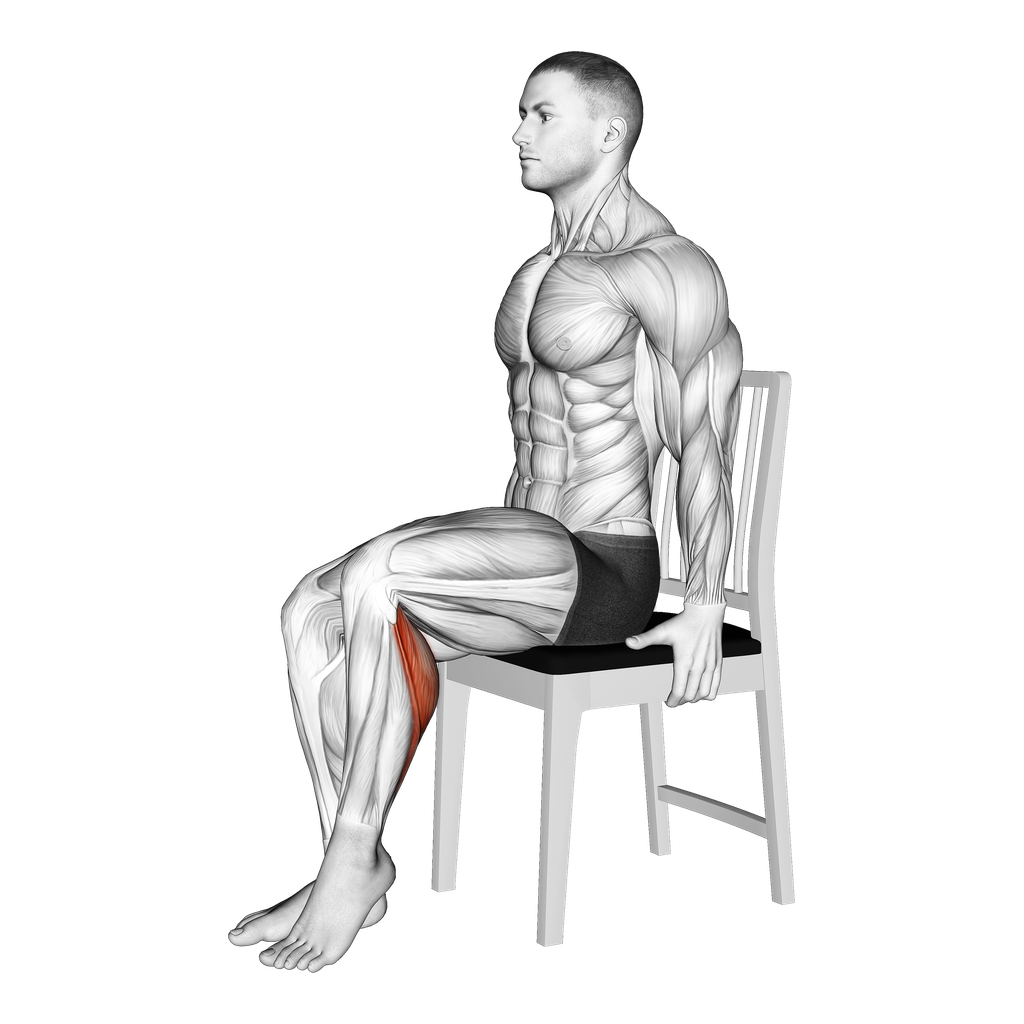
Seated Single-Leg Calf Raise
Body Weight · Other
 Beginner
Bodyweight Bent-Knee Calf Raise
Body Weight · Other
 Beginner
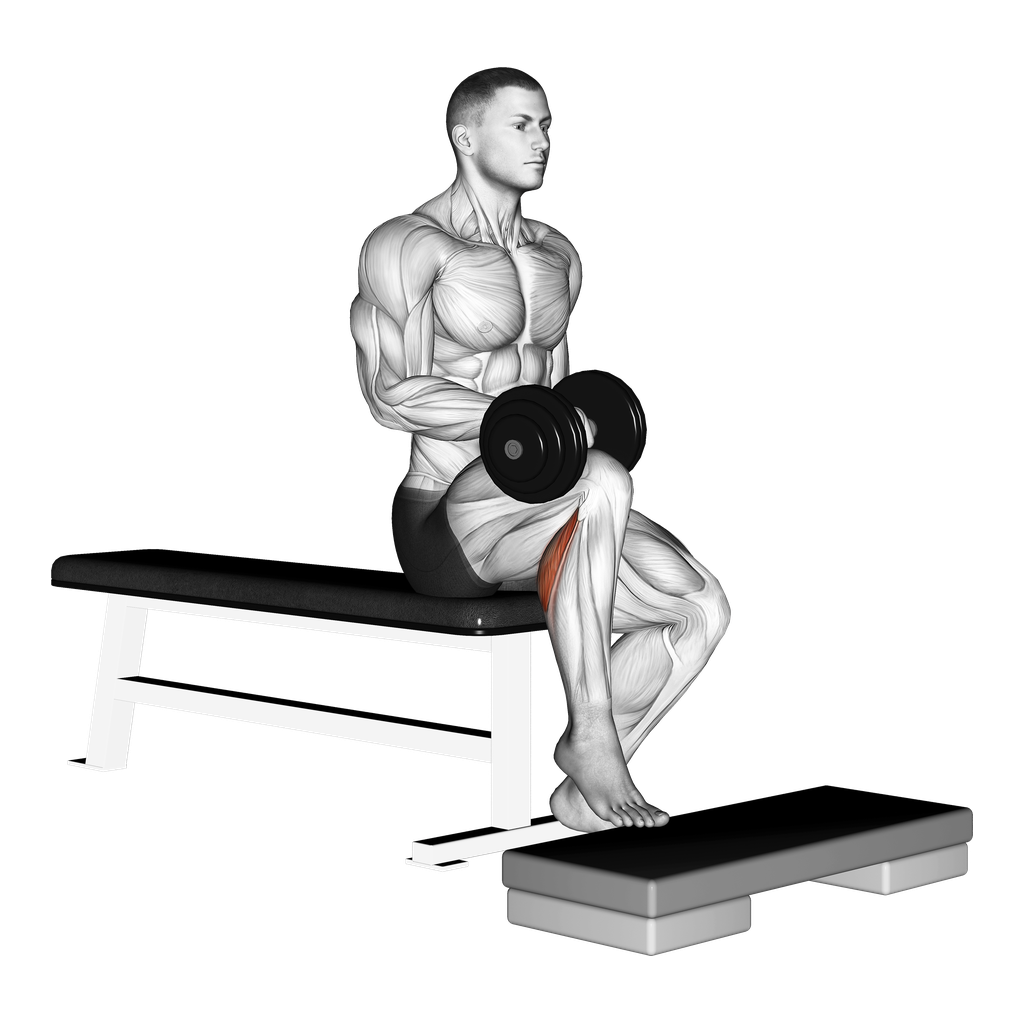
Dumbbell Seated Single-Leg Calf Raise
Dumbbell · Bench · Step Platform
 Beginner
Bodyweight Single-Leg Bent-Knee Calf Raise
Body Weight · Step Platform


Other Names for the Split-Stance Calf Raise
The Split-Stance Calf Raise is also known as:
- Split Squat Calf Raise
- Split Stance Soleus Raise
Frequently Asked Questions
- Q: Should the back knee touch the floor?
No, in the standard version the back knee hovers just above the floor so your legs hold the lunge for the whole set. If the hover is too hard or the knee is uncomfortable, rest the back knee on a folded mat or pad; the front calf still does the raising.
- Q: Can this replace straight-leg calf raises?
No, it complements them. In a 12-week study of 14 untrained adults, the leg trained on a seated calf-raise machine with the knee bent to 90 degrees grew its gastrocnemius far less than the leg trained standing with the knee straight, while soleus growth was similar in both. Pair this exercise with a straight-knee raise such as the Bodyweight Single-Leg Calf Raise.
- Q: How many reps should I do?
Start with 2 to 3 sets of 10 to 15 slow reps per leg. Once 20 controlled reps feel easy, add a pause at the top, slow the lowering, or hold a dumbbell in each hand.
- Q: Why do my thighs tire before my calves?
Both thighs hold the low lunge for the entire set, so quadriceps fatigue can arrive before the calf has worked hard. Use shorter sets, rest the back knee on a pad, or switch to the Bodyweight Bent-Knee Calf Raise when calf work is the priority.
- Q: How is it different from the Squat Hold Calf Raise?
Both keep the knees bent to favor the soleus, but the Squat Hold Calf Raise raises both heels from a squat, while the split stance puts most of the load on one front foot and adds a balance challenge.