Barbell Half-Kneeling Overhead Press

What Is the Barbell Half-Kneeling Overhead Press?
Barbell Half-Kneeling Overhead Press is a compound exercise that primarily targets the shoulders and also engages the triceps, the upper back and the muscles of the trunk. It is an intermediate-level movement in which you kneel on one knee, hold a barbell across the front of your shoulders and press it straight overhead with no help from your legs.
The half-kneeling stance is what sets this press apart. With one knee on the floor there is no leg drive and no small knee dip to start the bar moving, so your shoulders and triceps do all of the work. Squeezing the glute of the kneeling leg keeps that hip straight and the pelvis level, which makes it hard to lean back and turn the press into an incline press, the most common overhead pressing fault. Any lean that does creep in is easy to see, which is why coaches use this position to teach a tall, stacked torso before loading the press standing.
Because both hands hold one bar, the load is even from side to side, so the trunk's main job is to stay tall and resist arching rather than to stop you bending sideways as it does in a single-arm kneeling press. The narrow base of one knee and one foot still asks for steady balance, and the kneeling leg gets an active stretch through the front of the hip. You will press less weight than in the Barbell Overhead Press, which is the natural next step for loading the movement heavily. The Barbell Z Press, done seated on the floor with the legs straight, removes the lower body even further, while the Seated Barbell Shoulder Press puts you on a bench and takes most of the balance demand away.
Coaches place this press early in an upper-body session as a lighter main lift, use it as a shoulder accessory after heavier pressing, or give it to lifters who arch their lower back when they press standing. It suits intermediate lifters who already know how to hold and press a barbell and want stricter overhead strength with less load on the lower back.
You need enough shoulder and upper-back mobility to bring your arms straight overhead without arching, and a knee that tolerates kneeling on a pad. If your arms cannot reach overhead with the ribs down, build up with the Landmine Kneeling Single-Arm Shoulder Press or the Landmine Press, whose angled path needs less overhead range.
Muscles Worked
- Deltoid
- Primary
- Serratus Anterior
- Medium
- Upper Trapezius
- Medium
Instructions
- Set a barbell in a rack so that, once you kneel, it sits at about the height of your upper chest, and place a pad on the floor in front of it.
- Kneel facing the bar with one knee on the pad under your hip and the other foot flat in front, both knees bent to about 90 degrees.
- Grip the bar overhand with your hands just outside shoulder width, wrists straight and stacked over your elbows.
- Lift the bar off the hooks onto your upper chest, just below your chin, with your elbows slightly in front of the bar, then move back just far enough for it to clear the rack.
- Squeeze the glute of the kneeling leg, stack your ribs over your pelvis and brace your trunk.
- Pull your chin back slightly and press the bar straight up past your face, exhaling as it rises.
- Once the bar passes your forehead, bring your head forward and finish with your arms straight, the bar directly over your head and your upper arms beside your ears.
- Keep your torso tall and still throughout, without leaning back.
- Lower the bar under control to your upper chest, pulling your chin back as it passes your face.
- Complete your reps, return the bar to the rack, and switch the down knee for the next set.
Common Mistakes
Arching the lower back
Leaning back with the ribs flared turns the press into an incline press and moves the strain from the shoulders to the lower back.
Letting the rear hip bend
Sitting back toward the heel of the kneeling leg relaxes the glute and tips the pelvis forward, which makes it easy to arch.
Pressing around the face
Pushing the bar forward to clear the chin instead of pulling the head back sends it on a curved path that ends in front of the head and loads the front of the shoulders.
Flaring the elbows at the start
Starting with the elbows out to the sides behind the bar loses the forward elbow position that lets the bar travel straight up.
Bending the wrists back
Letting the bar roll toward the fingers puts it behind the forearms and strains the wrists instead of stacking the bar over the elbows.
Stopping short of lockout
Ending each rep with the elbows still bent and the bar in front of the head skips the top of the range, where the shoulder blades rotate up to finish the press.
Injuries
Barbell Half-Kneeling Overhead Press is a medium risk exercise when performed with proper technique. The kneeling stance protects the lower back better than standing, but the barbell locks both hands in place, travels close to your face and is harder to set down from one knee than a pair of dumbbells.
The shoulder is the main strain point. A pinch at the front or top of the shoulder near lockout usually means the arms cannot reach overhead without help from the lower back, or the bar is drifting forward of the head. The lower back is the second, if the ribs flare and the spine arches to finish the rep. Wrists bent back under the bar can ache, and the kneeling knee gets sore on a hard floor without a pad.
To stay safe, set the bar in a rack at chest height for your kneeling position so you never have to lift it from the floor while kneeling, and put a pad under the down knee. Squeeze the glute of the kneeling leg, keep your ribs stacked over your pelvis and choose a weight you can press without leaning back. If overhead pressing bothers your shoulder, regress to the Landmine Kneeling Single-Arm Shoulder Press. Once you press tall and steady here, progress to the Barbell Overhead Press.
Stop if you feel sharp pain in the shoulder, pain that runs down the arm, numbness or tingling in the hands, or pain in the kneeling knee that a pad does not fix. A history of rotator cuff or labral injury, or shoulder pain that keeps coming back with overhead work, is worth having checked by a physical therapist or doctor before you load this press.
Alternative Exercises
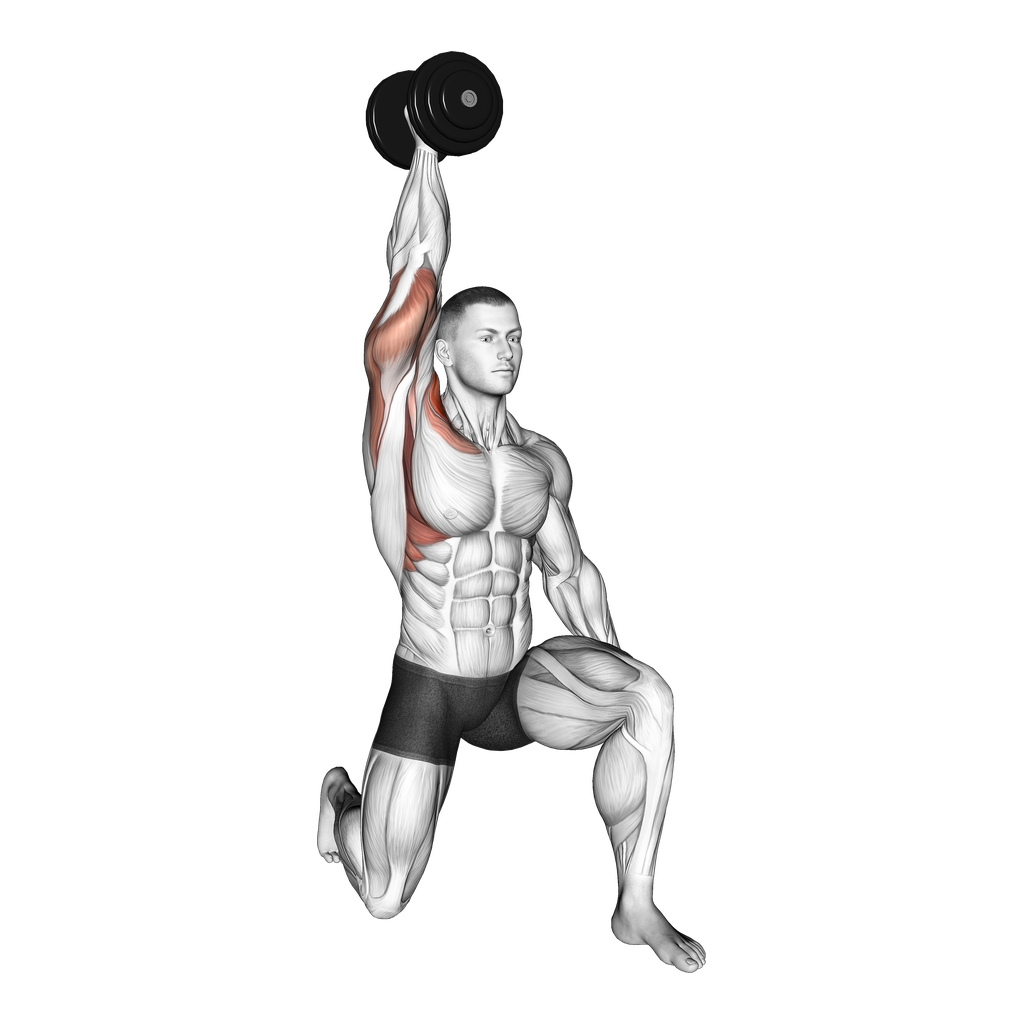 Beginner
Dumbbell Half-Kneeling Single-Arm Shoulder Press
Dumbbell
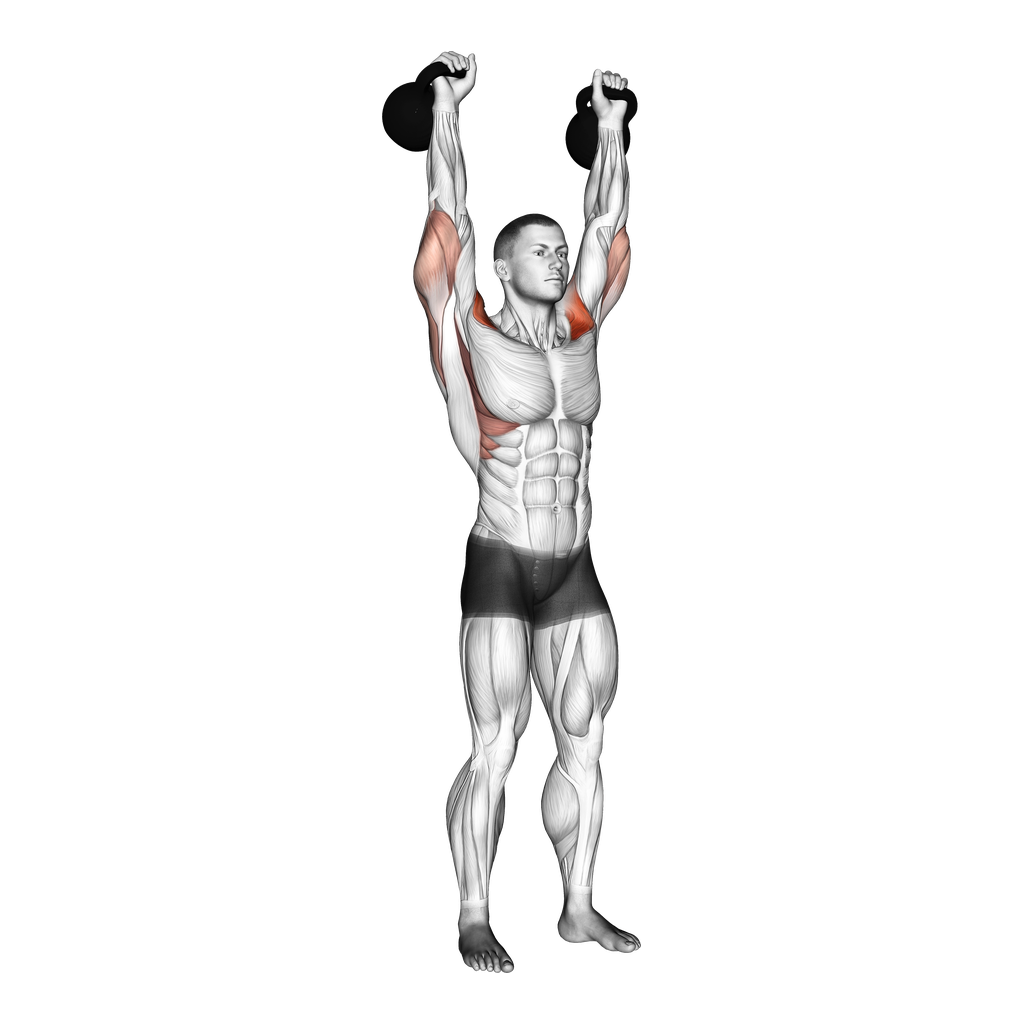 Intermediate
Kettlebell Double Military Press
Kettlebell
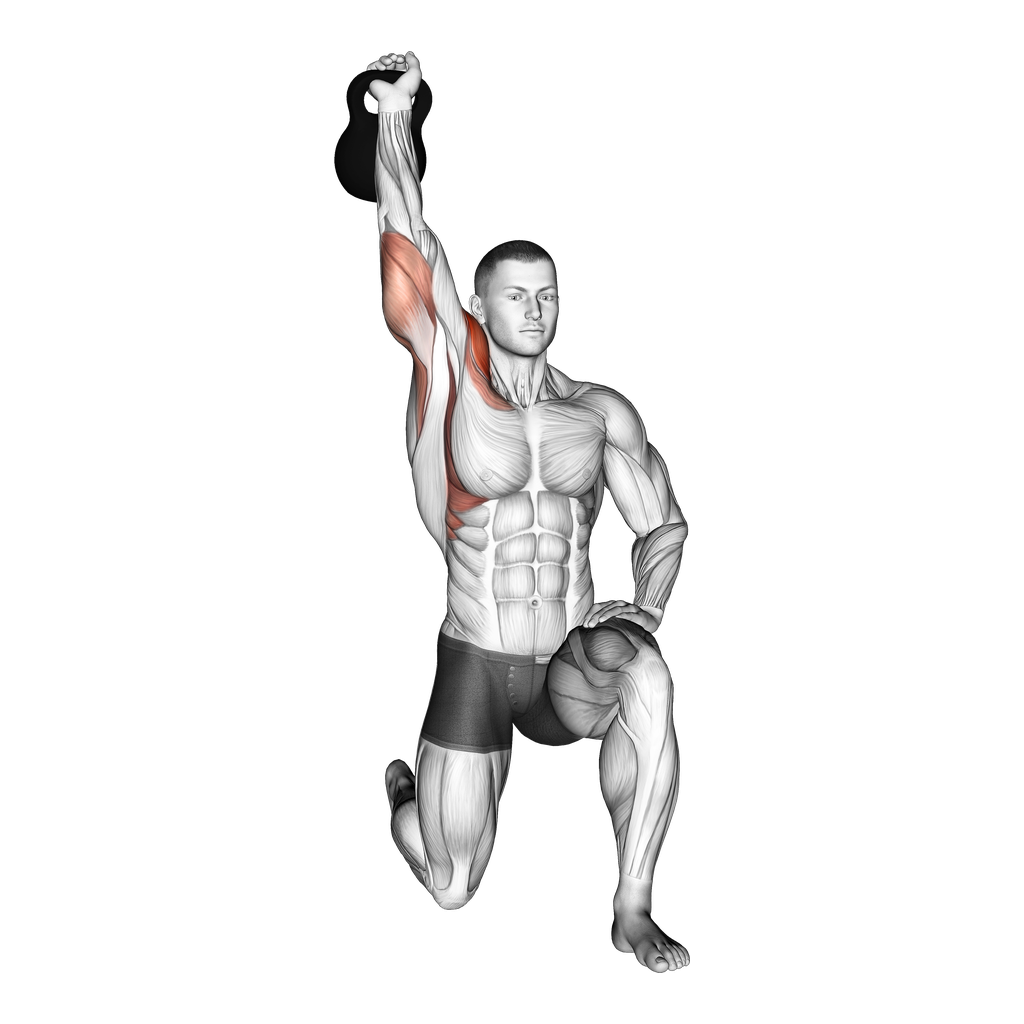 Beginner
Kettlebell Half-Kneeling Single-Arm Shoulder Press
Kettlebell
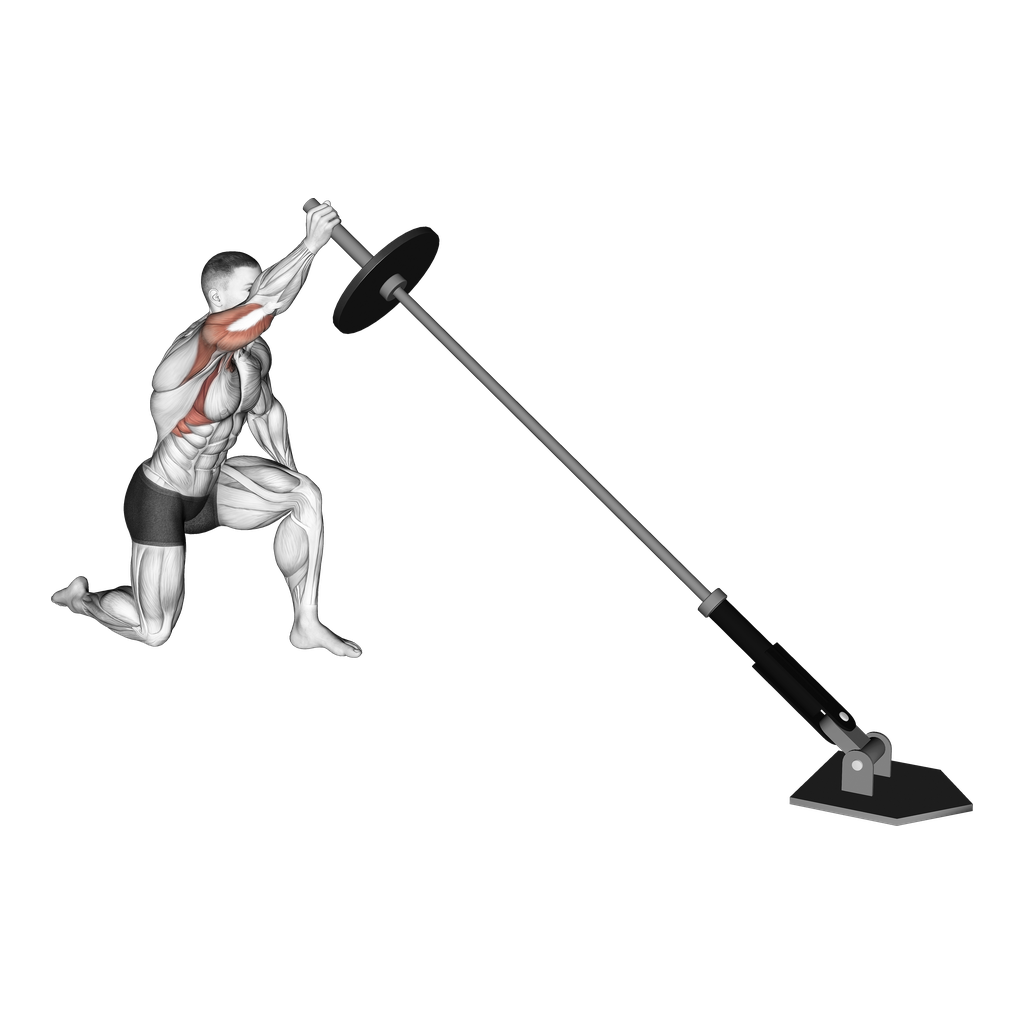 Intermediate
Landmine Kneeling Single-Arm Shoulder Press
Barbell · Landmine
 Intermediate
Dumbbell Standing Shoulder Press
Dumbbell


Frequently Asked Questions
- Q: Why press from half-kneeling instead of standing?
Kneeling takes away leg drive and makes leaning back easy to spot and hard to get away with, so your shoulders and triceps have to move the bar on their own while your trunk stays tall. It is a stricter way to train the press and a useful teaching step before the Barbell Overhead Press.
- Q: Which knee should be down?
Either, because both hands hold the bar and the load is even. Switch the down knee from set to set so both hips get the same time in the stretched, kneeling position.
- Q: Why can I press less weight kneeling than standing?
You lose the leg drive and the small hip and knee bend many lifters use to start the bar moving, and the narrow base makes balance harder. Expect to use noticeably less weight than in the standing press and treat that as part of the exercise.
- Q: Should I use a barbell or dumbbells for a kneeling press?
Both work, and they load the press a little differently. In a study of healthy men pressing seated and standing, the standing barbell press produced about 39% more triceps activity and about 15% less front deltoid activity than standing dumbbell presses, and lifters pressed about 7% more with the barbell. Kneeling was not tested, but the barbell remains the easier way to load the movement heavily.
- Q: Do I need a pad under my knee?
Yes. A pad, folded mat or cushion under the kneeling knee keeps pressure off the kneecap so you can focus on staying tall instead of on the floor.
- Q: Is this press a good choice if my lower back hurts when I press standing?
It can be, since the straight rear hip and squeezed glute make it hard to arch, and lower-back discomfort when pressing usually comes from leaning back. If your back still hurts with a light weight and your ribs held down, stop and have it checked by a professional.