Battle Rope Alternating Wave Lateral Lunge

What Is the Battle Rope Alternating Wave Lateral Lunge?
Battle Rope Alternating Wave Lateral Lunge is a compound exercise that primarily targets the shoulders and quadriceps and also engages the glutes, inner thighs and core. It is an intermediate-level movement that combines alternating arm waves with a wide-stance lateral lunge, shifting the hips from one side to the other while the ropes keep moving. It is sometimes listed as an alternate arms side lunge.
The exercise is mainly a conditioning tool. The arms drive the rope in a continuous up-and-down rhythm while the legs hold a deep, loaded position, so the heart rate climbs quickly and the whole body works at once. It usually appears in finishers, circuits and interval blocks rather than as a heavy strength lift, and it is typically done for time.
The waves put most of the upper-body work on the deltoids, with the trunk resisting the twist that each arm stroke creates. In a study of battle rope waves, alternating waves produced more external oblique activity than double-arm waves, while glute medius activity stayed low in both. That is where this variation differs from the standard Battling Ropes stance: the lateral lunge adds real lower-body work, loading the quadriceps, glutes and adductors of the bent leg while the straight leg's inner thigh lengthens. Training sideways also covers the frontal plane, a direction that squats and forward lunges leave out.
It suits people who can already hold a steady alternating wave and perform a bodyweight lateral lunge with the heel down and the knee tracking over the toes. If either piece breaks down, practice the waves on their own in a standard stance, or try the Battle Rope Alternating Wave Squat, which keeps the legs working in a simpler, symmetrical position.
Muscles Worked
- Deltoid
- Primary
- Vastus Lateralis
- Primary
- Vastus Medialis
- Primary
- Adductor Magnus
- High
- External Oblique
- High
- Gluteus Maximus
- High
- Adductor Longus
- Medium
- Erector Spinae
- Medium
- Gluteus Medius
- Medium
- Rectus Femoris
- Medium
Instructions
- Anchor the rope at its midpoint and face the anchor, holding one end in each hand with a neutral, thumbs-up grip.
- Step back until the rope has only a little slack, then set your feet in a wide stance, about twice shoulder width, with the toes pointing forward or slightly out.
- Brace your core, lift your chest and hinge slightly forward at the hips with your elbows softly bent.
- Shift your hips toward one side, bending that knee and sitting back while the other leg stays straight. Keep the bent-leg foot flat with the knee over the middle toes, and let the straight leg rest on its heel with the toes pointing up.
- Start the alternating waves by driving one arm up to about shoulder height while the other drives down toward the hip, then switch arms in a quick, continuous rhythm.
- Keeping the waves going, push through the bent leg and move your hips across into a lateral lunge on the other side, staying low as you pass through the middle.
- Continue shifting from side to side for the set time, keeping the waves traveling all the way to the anchor and the shoulders down away from the ears.
- Breathe steadily throughout, then bring your feet in, stand up and lower the ropes to finish.
Common Mistakes
Letting the waves stall during the shift
The arms slow down or stop while the hips move across, so keep the rope moving at the same rhythm through every side-to-side shift.
Knee caving inward
The bent knee collapses toward the midline, which stresses the inside of the knee, so keep it tracking over the middle toes.
Lifting the heel of the bent leg
Rising onto the toes shifts load onto the knee and costs balance, so narrow the stance or reduce depth until the heel stays flat.
Bending both knees
Letting the straight leg bend turns the lateral lunge into a sumo squat and removes the inner-thigh stretch that defines this variation.
Folding forward at the waist
Dropping the chest toward the floor rounds the back and shrinks the waves, so hinge only slightly and keep the chest up.
Shrugging the shoulders
Driving the waves with the upper traps and neck instead of the shoulders creates neck tension, so keep the shoulders down and away from the ears.
Injuries
Battle Rope Alternating Wave Lateral Lunge is a medium risk exercise when performed with proper technique. The repetitive arm strokes can irritate the shoulders and neck when the shoulders shrug toward the ears, and the lower back takes strain when fatigue lets the chest collapse toward the floor. In the legs, the bent knee and the straight leg's inner thigh carry most of the stress.
The knee deserves attention because depth changes the load. In a lab study of healthy, experienced adults doing bodyweight lunges, the side lunge put more compressive force and stress on the kneecap joint than the forward lunge once the knee bent past roughly 40 degrees. Anyone with kneecap pain should keep the lunge shallow and build depth gradually. Keep the bent knee in line with the middle toes, keep that heel flat, and choose a stance width that lets the straight leg stretch without a pulling sensation in the groin.
Warm up the hips and shoulders before the set, start with short work intervals, and end each set once the waves shrink or the lunge rises. To regress, perform the waves in a standard stance with Battling Ropes or use the Battle Rope Kneeling Alternating Wave to remove the leg work entirely. To progress, lengthen the work interval, sink deeper or use a heavier rope.
Stop if you feel sharp pain in the knee, groin or shoulder, pinching at the front of the shoulder, or dizziness during the intervals.
- Primary Focus
- Full body
- Equipment
- Battle ropes
- Modality
- Cardio
- Difficulty
- Intermediate
Alternative Exercises
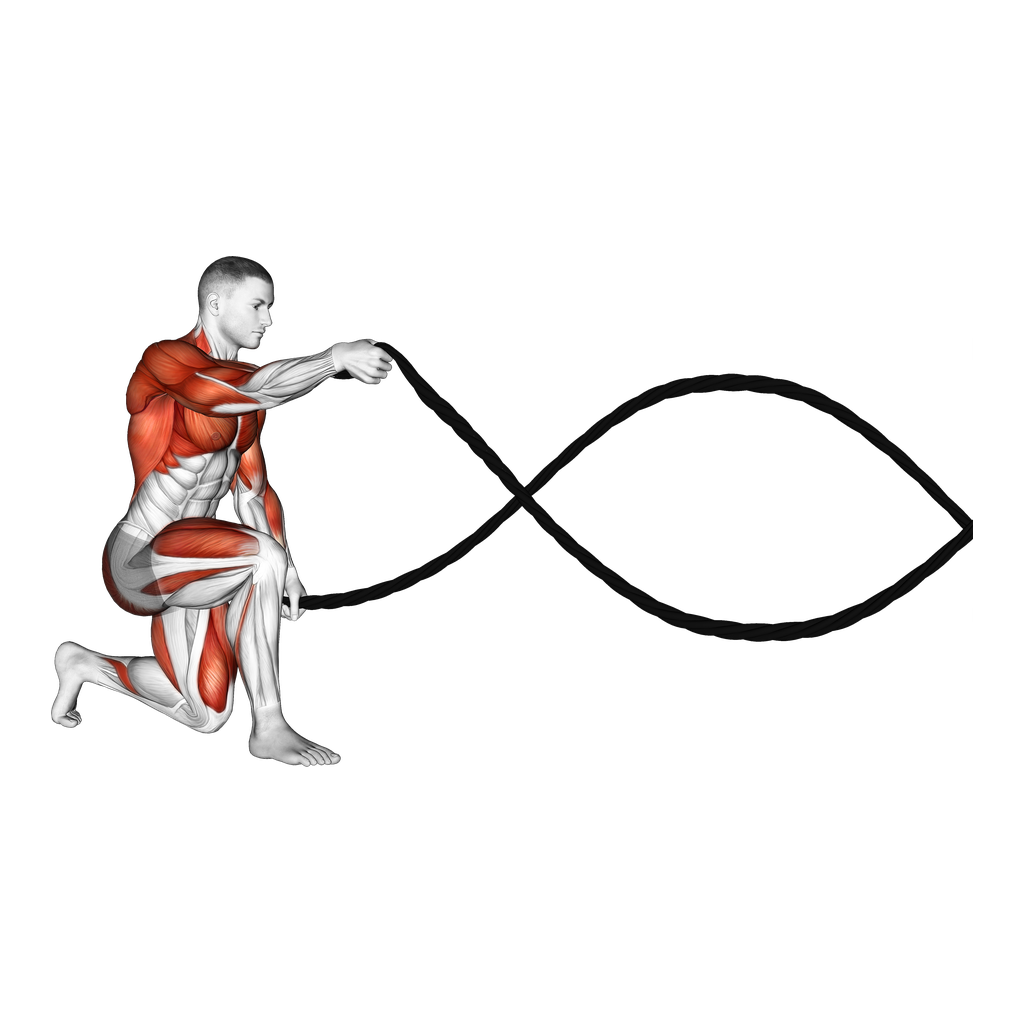 Advanced
Battle Rope Kneeling-to-Standing Alternating Wave
Battle Ropes
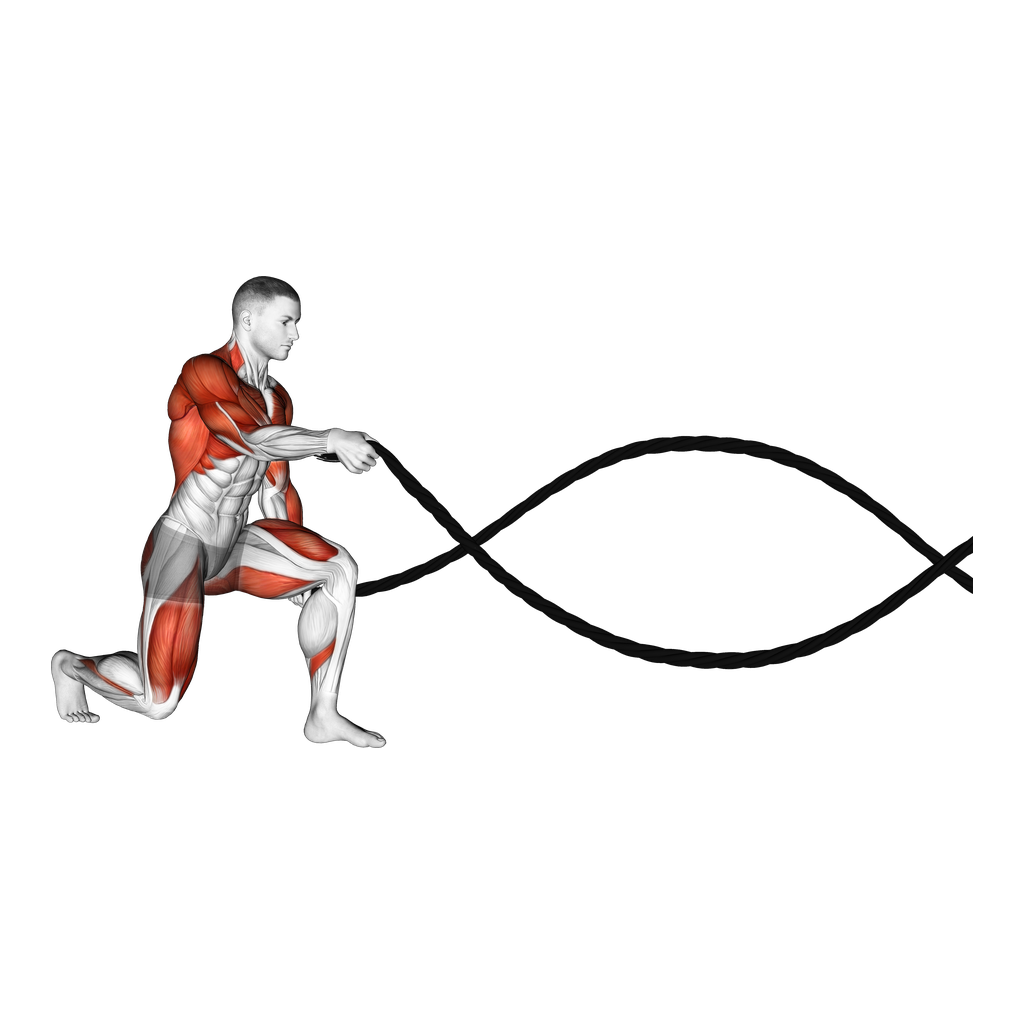 Intermediate
Battle Rope Alternating Wave Reverse Lunge
Battle Ropes
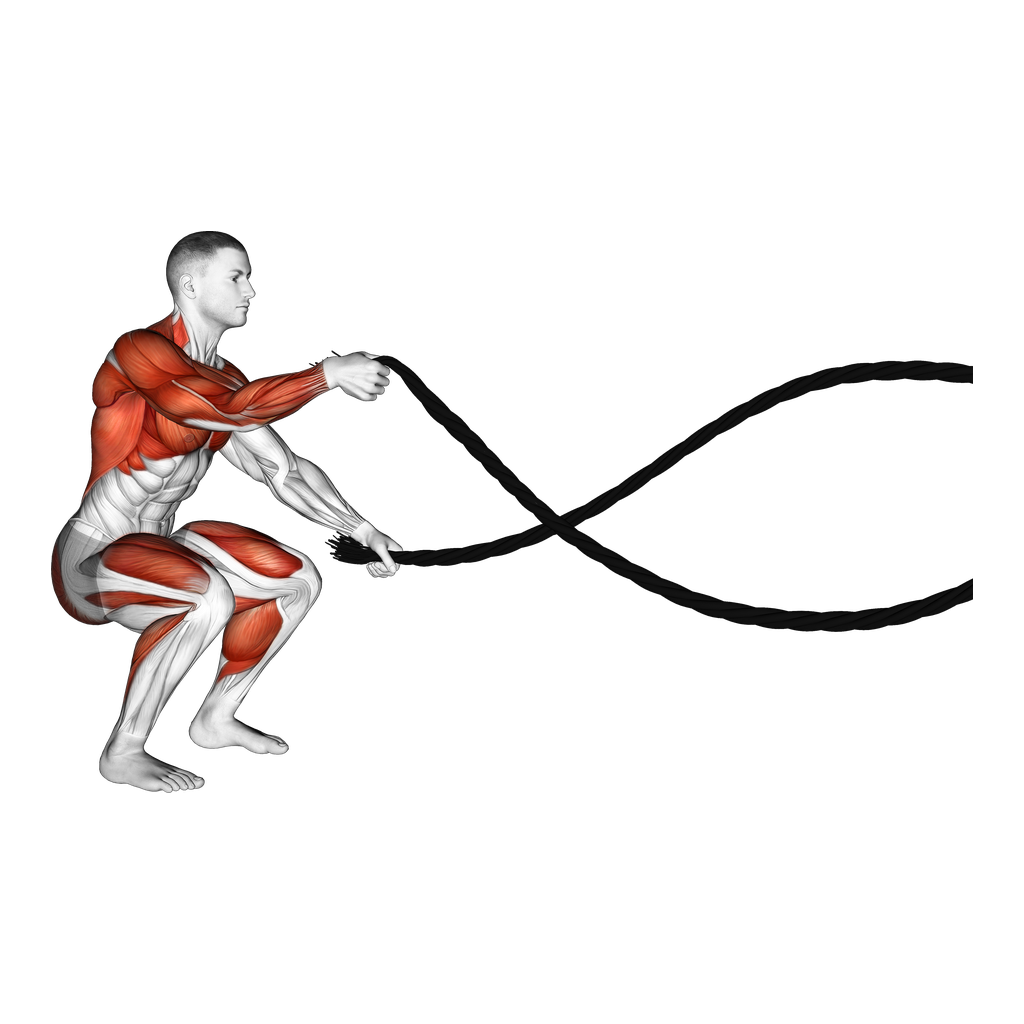 Intermediate
Battle Rope Alternating Wave Squat
Battle Ropes
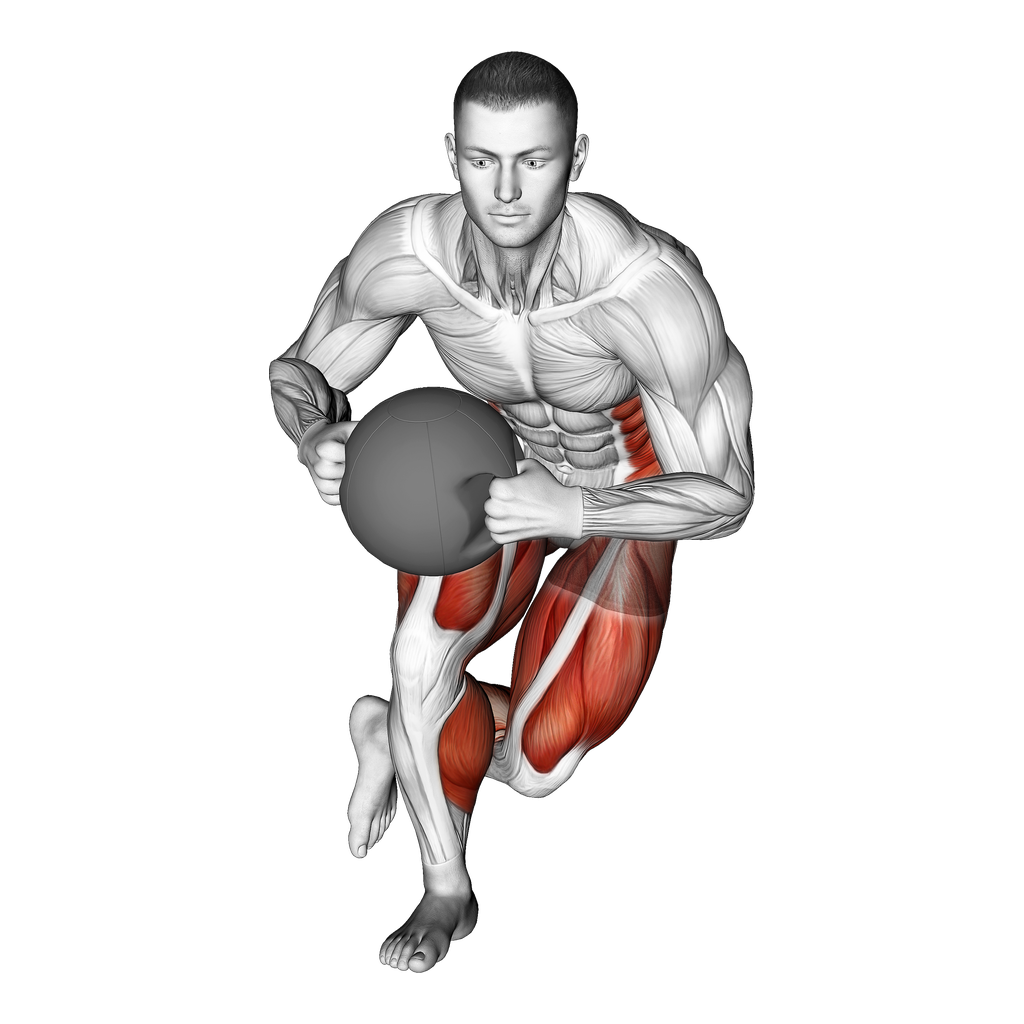 Intermediate
Medicine Ball Skater Hop
Medicine Ball
 Intermediate
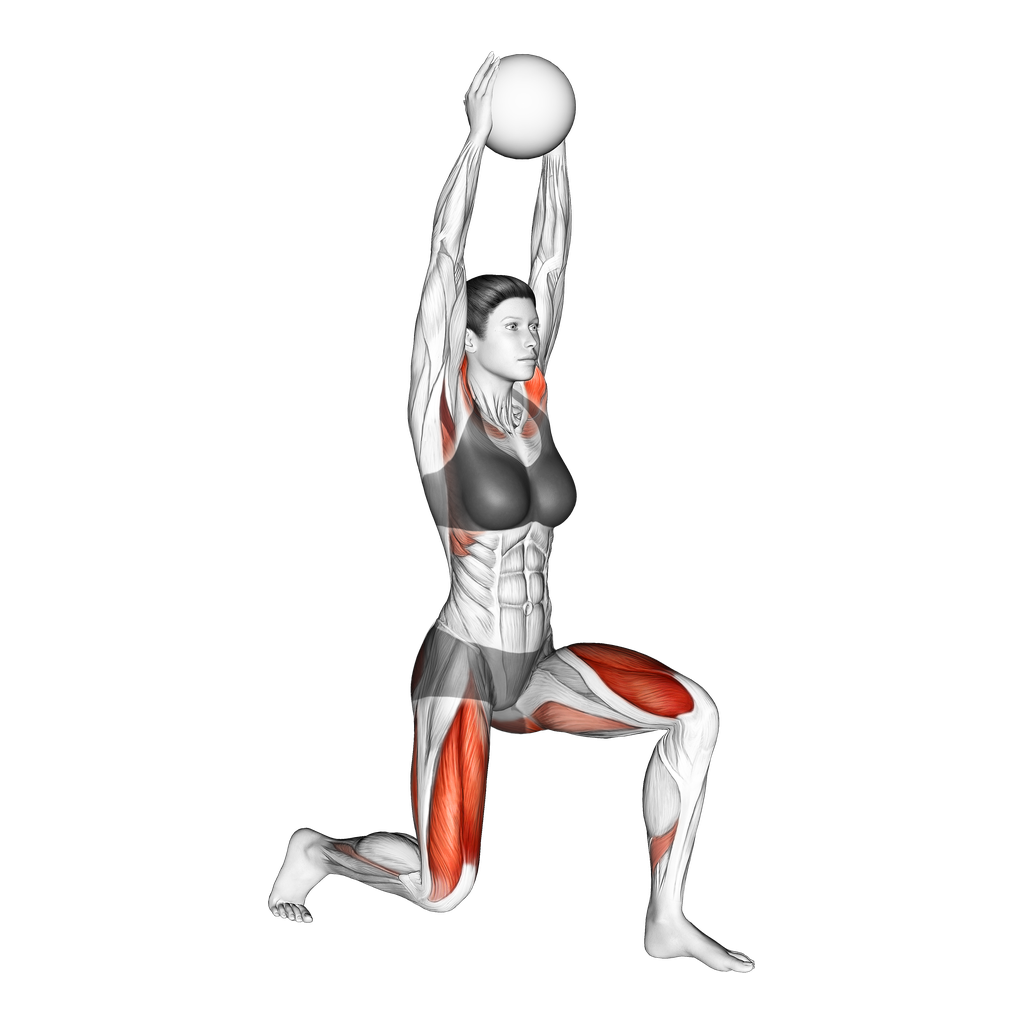
Medicine Ball Lunge to Overhead Press
Medicine Ball


Frequently Asked Questions
- Q: How is this different from standard battle rope waves?
Standard Battling Ropes waves are done in an athletic half squat, so the legs mostly hold a position. Here the legs work through a deep lateral lunge and shift from side to side, which adds substantial quadriceps, glute and inner-thigh work to the same arm pattern.
- Q: How long should each set last?
Start with about 20 seconds of work and 40 seconds of rest. As the waves stay even and the lunge stays low for the whole interval, build toward 30 to 40 seconds of work with less rest.
- Q: How deep should the lateral lunge be?
Go only as deep as you can while keeping the bent-leg heel flat, the knee over the middle toes and the straight leg straight. For many people that is well above parallel at first, and depth improves as hip and inner-thigh mobility improve.
- Q: How fast should I shift from side to side?
Keep the arms fast and the legs controlled. A steady shift every few seconds, staying low as the hips pass through the middle, works better than rushing, which usually breaks the wave rhythm.
- Q: What should I do if I can't keep the waves going while I lunge?
Learn the two parts separately first, practicing bodyweight lateral lunges and standard waves until each is steady. The Battle Rope Alternating Wave Squat is a good bridge because the legs stay in one symmetrical position.