Battle Rope Alternating Wave Reverse Lunge

What Is the Battle Rope Alternating Wave Reverse Lunge?
Battle Rope Alternating Wave Reverse Lunge is a compound exercise that primarily targets the shoulders and quads and also engages the glutes, core and arms. It is an intermediate-level movement that keeps the classic alternating rope waves going while you step back into a reverse lunge, alternating legs, so the upper and lower body work at the same time.
The exercise is mainly a conditioning tool. Rope waves on their own push the heart rate up quickly, and adding a lunge under the arms turns each interval into a total-body effort that also challenges balance and coordination. It fits well in circuits, metabolic finishers and interval sessions, usually as a timed work bout rather than a counted set. It is sometimes listed as Rear Lunge with Battling Ropes.
The shoulders drive the waves while the front leg does most of the lunge work, with the quadriceps controlling the descent and the glutes driving you back to standing. Because one foot is always stepping behind you, the hips and trunk have to stay level while the arms keep moving, which is the main thing this version adds over standing Battling Ropes. A Battle Rope Alternating Wave Squat keeps both feet planted and loads the legs evenly, while a Battle Rope Split Jump adds a jump and a harder landing.
It suits people who can already hold steady alternating waves for 20 to 30 seconds and perform controlled bodyweight lunges. If the rhythm falls apart as soon as you step back, build up the rope side with standing Battling Ropes and the Battle Rope Half-Kneeling Alternating Wave, and the leg side with the Bodyweight Lunge, then combine them.
Muscles Worked
- Deltoid
- Primary
- Vastus Lateralis
- Primary
- Vastus Medialis
- Primary
- Gluteus Maximus
- High
- Rectus Femoris
- High
- Biceps Brachii
- Medium
- External Oblique
- Medium
- Gluteus Medius
- Medium
- Rectus Abdominis
- Medium
- Upper Trapezius
- Medium
Instructions
- Stand facing the anchor, far enough back that the rope has a little slack, with feet about hip-width apart.
- Hold one rope end in each hand with a neutral grip, thumbs facing up, arms in front of you and elbows slightly bent.
- Brace your core, keep your chest up and pull your shoulders down away from your ears.
- Start alternating waves by raising one arm to about chest height as the other drops toward your hip, switching quickly and rhythmically.
- While the waves keep going, take a long step back with one leg and land on the ball of that foot.
- Lower until your back knee is just above the floor and your front thigh is close to parallel, with the front shin close to vertical and the knee tracking over the middle of the foot.
- Keep your torso tall with only a slight forward lean, and keep the waves moving at the bottom.
- Push through the front heel to return to standing, bringing the back foot next to the front one.
- Step back with the other leg on the next rep and keep alternating for the set time.
- Breathe steadily throughout and end the set when the waves or your lunge form start to break down.
Common Mistakes
Letting the waves stop during the lunge
Pausing the arms as you step back or stand up breaks the rhythm and turns the drill into separate lunges and waves instead of one continuous effort.
Leaning the torso forward
Folding over the front leg as you drop into the lunge shifts strain to the lower back and makes the waves smaller and weaker.
Taking too short a step
A short step back pushes the front knee far forward and makes balance harder, so step back far enough that both knees can bend to about 90 degrees.
Front knee caving inward
Letting the front knee collapse toward the midline as you lower or push up puts extra stress on the knee, so keep it pressed out over the middle of the foot.
Shrugging the shoulders
Driving the rope with the upper traps instead of the shoulders tires the neck quickly and produces choppy waves that die before the anchor.
Standing with the rope pulled tight
Starting so far from the anchor that the rope has no slack makes clean waves impossible, so step in until there is a little slack in the rope.
Injuries
Battle Rope Alternating Wave Reverse Lunge is a medium risk exercise when performed with proper technique. The load on any single joint is low, but you are doing two demanding things at once, often while tired, and that is when form tends to slip.
The most common strain points are the lower back, the shoulders and neck, and the front knee. The lower back takes over when the torso folds forward or arches as you step back, the upper traps and neck tighten when the waves come from shrugging instead of the shoulders, and the front knee is stressed when it caves inward or when a short step drives the knee far past the toes. Keep the core braced, the shoulders down, the front knee tracking over the middle of the foot and the front shin close to vertical, and take a long enough step that the back knee can drop straight down.
If balance or rhythm breaks down, regress to standing Battling Ropes or the Battle Rope Half-Kneeling Alternating Wave, which trains the same split position without the stepping. Once the lunge and waves stay smooth for the whole interval, progress by lengthening the work bout or moving to the Battle Rope Split Jump.
Stop if you feel sharp pain in the shoulder, knee or lower back, if the knee gives way, or if you become dizzy or light-headed during the interval.
- Primary Focus
- Full body
- Equipment
- Battle ropes
- Modality
- Cardio
- Difficulty
- Intermediate
Alternative Exercises
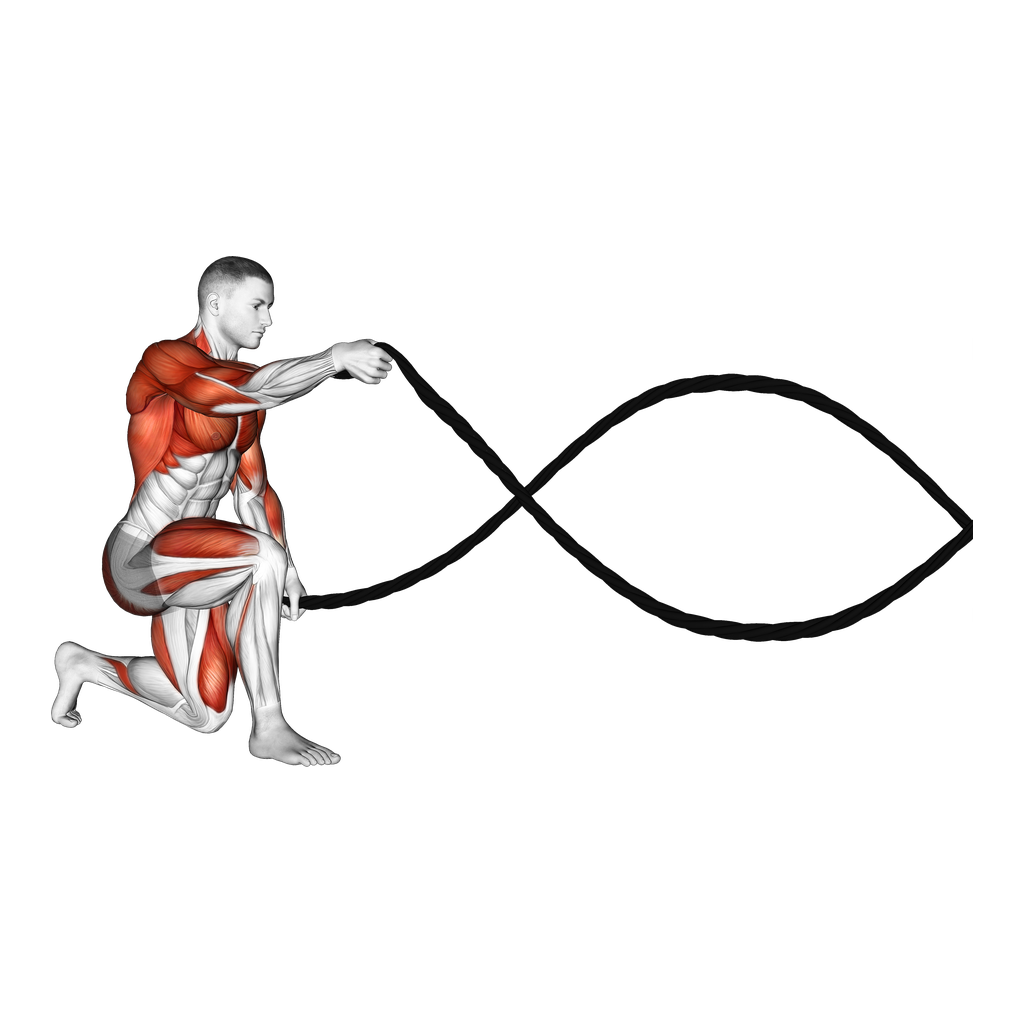 Advanced
Battle Rope Kneeling-to-Standing Alternating Wave
Battle Ropes
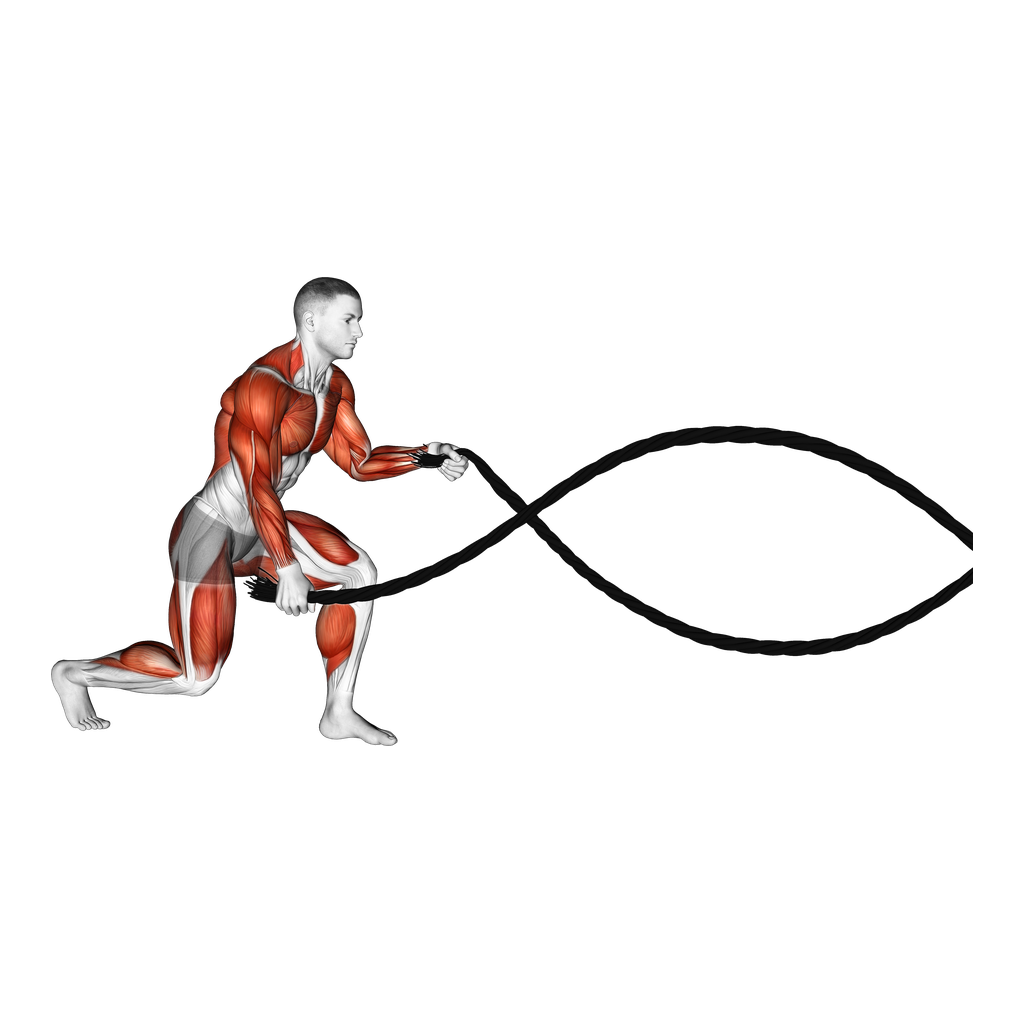 Advanced
Battle Rope Split Jump
Battle Ropes · Body Weight
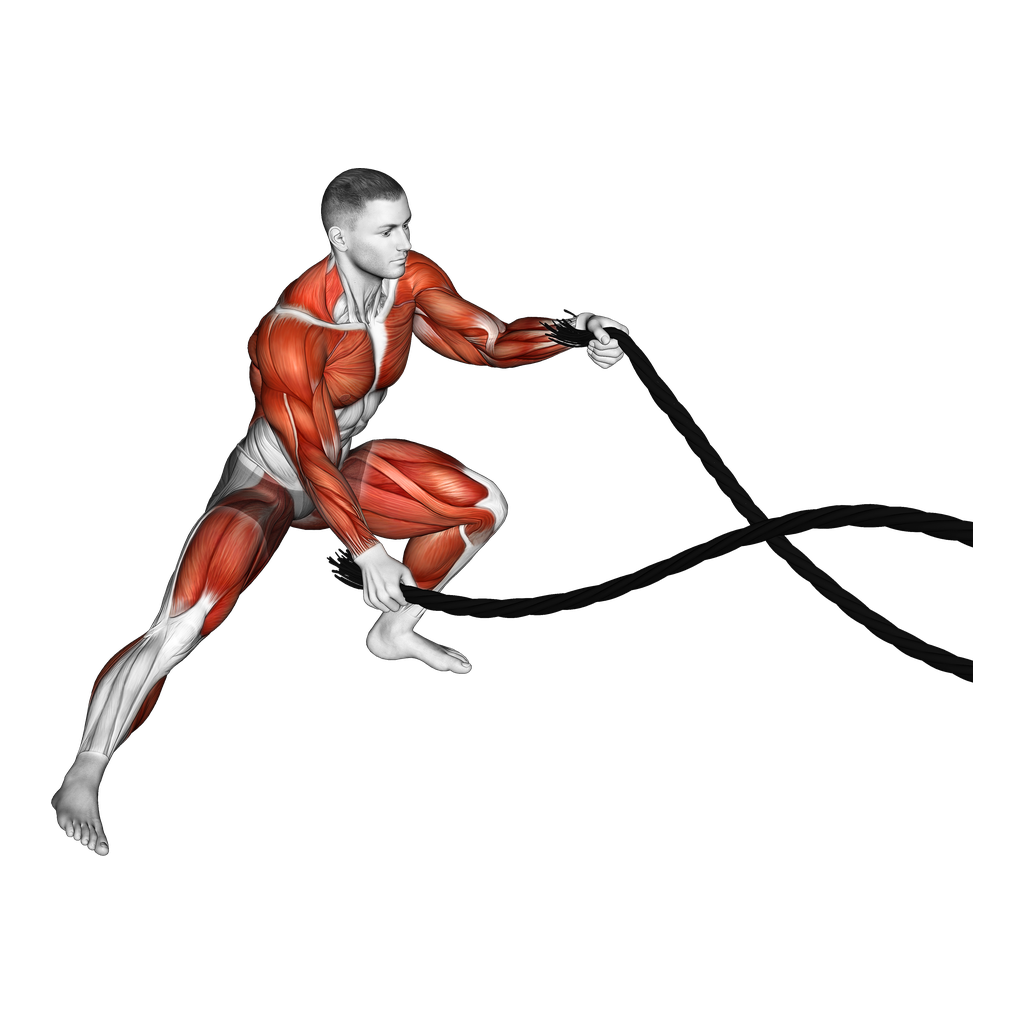 Intermediate
Battle Rope Alternating Wave Lateral Lunge
Battle Ropes
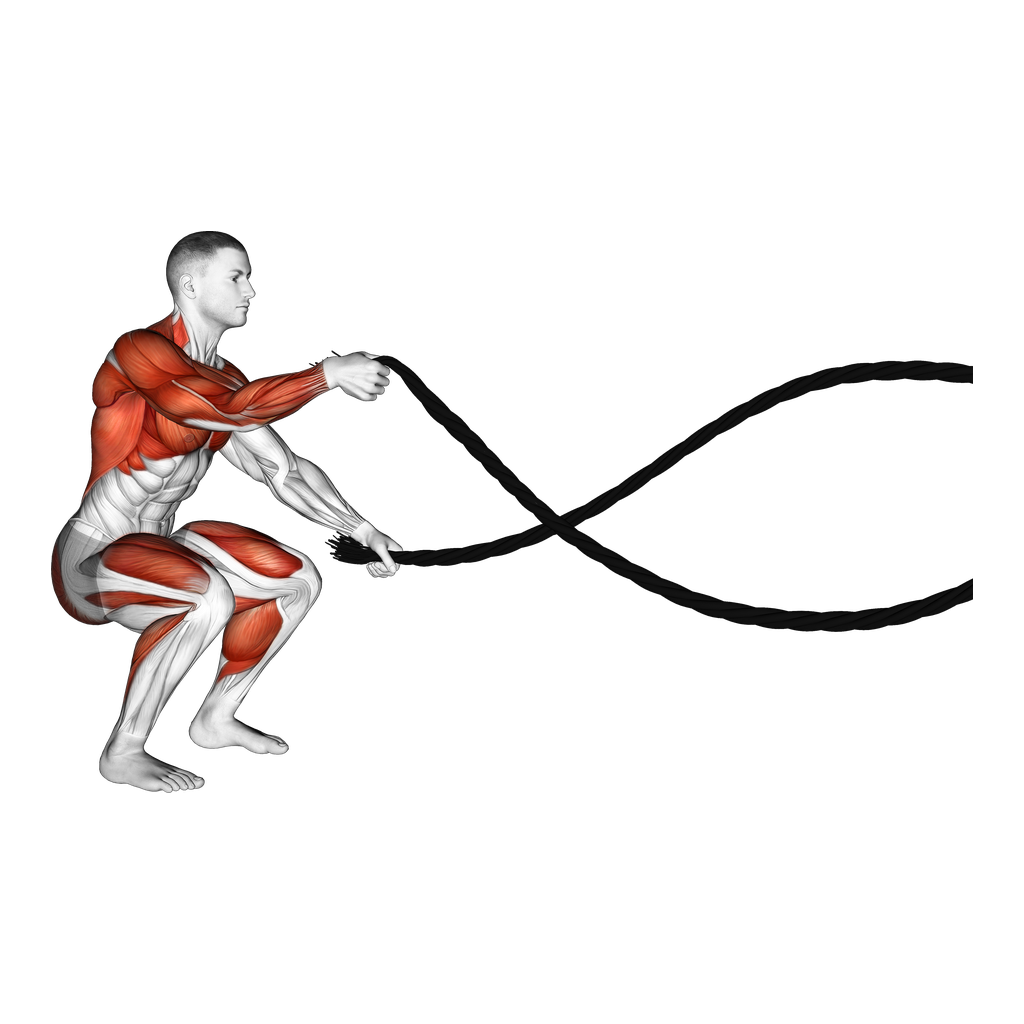 Intermediate
Battle Rope Alternating Wave Squat
Battle Ropes
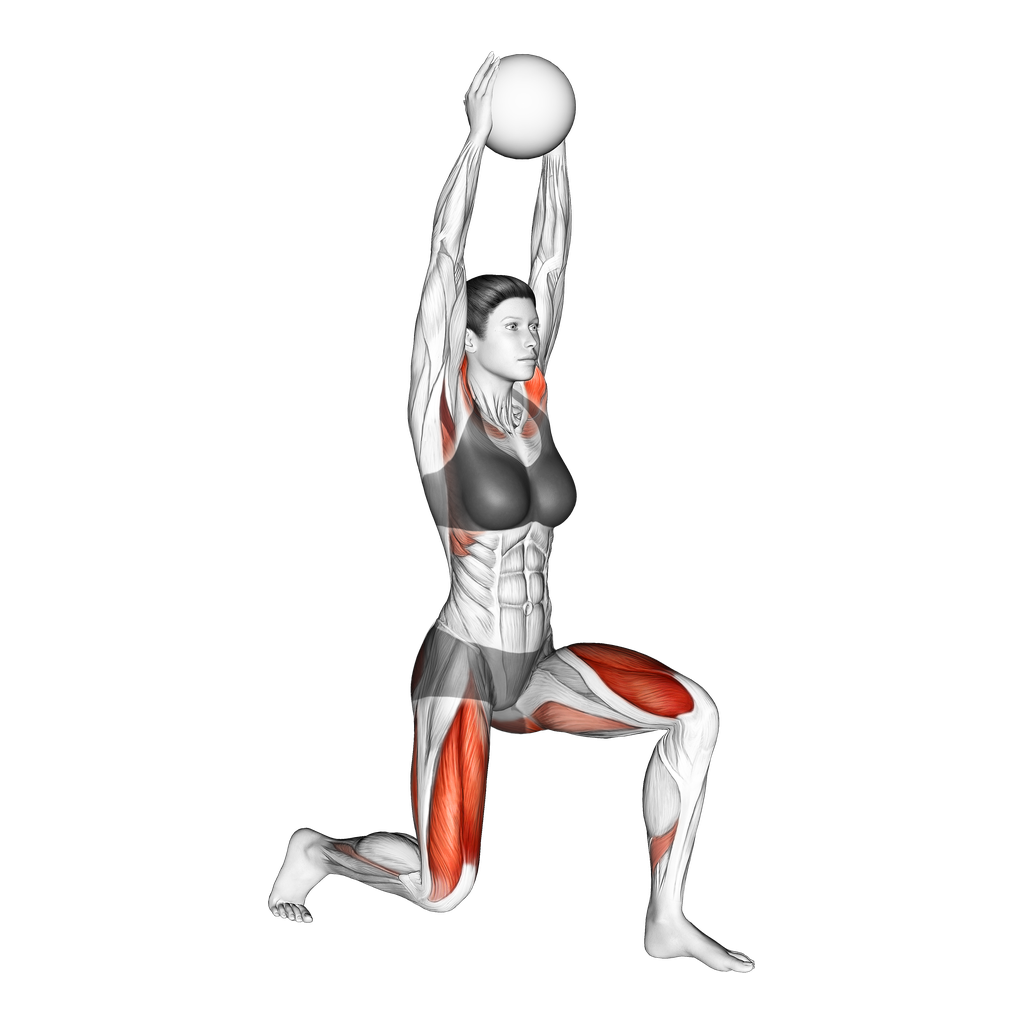 Intermediate
Medicine Ball Lunge to Overhead Press
Medicine Ball


Frequently Asked Questions
- Q: How long should each interval last?
Most people start with 20 to 30 seconds of work followed by 30 to 60 seconds of rest, repeated for several rounds. Lengthen the work bout only while the waves stay even and every lunge stays controlled.
- Q: Why step back into a reverse lunge instead of lunging forward?
Stepping back keeps your weight over the front foot, so it is easier to stay balanced while your arms are moving the rope, and you do not travel toward the anchor. It is also gentler on the kneecap: in a lab study of 20 healthy women, bodyweight backward lunges produced less quadriceps force and lower kneecap joint loading than forward lunges taken to the same depth.
- Q: Should I alternate legs or stay on one side?
Alternating legs on every rep is the standard version and keeps the work even on both sides. Staying on one leg for a full interval makes that leg work harder and is a reasonable option, as long as you switch sides for the next round.
- Q: How do I make it easier?
Slow the lunge down, make it shallower, or use a lighter or shorter rope. If you still lose the rhythm, practice the split position with the Battle Rope Half-Kneeling Alternating Wave first.
- Q: Can this replace a regular leg workout?
Not really. Your body weight is the only lunge load and the sets are run for time, so it builds conditioning and muscular endurance rather than much leg strength. Pair it with loaded lunges or squats if leg strength is the goal.