Barbell Single-Leg Deadlift

What Is the Barbell Single-Leg Deadlift?
Barbell Single-Leg Deadlift is a compound exercise that primarily targets the hamstrings and glutes and also engages the lower back, the side hip muscles and the trunk. It is an advanced-level movement because it asks you to hinge at the hip under a barbell while balancing on one foot, which leaves very little room for a technique error.
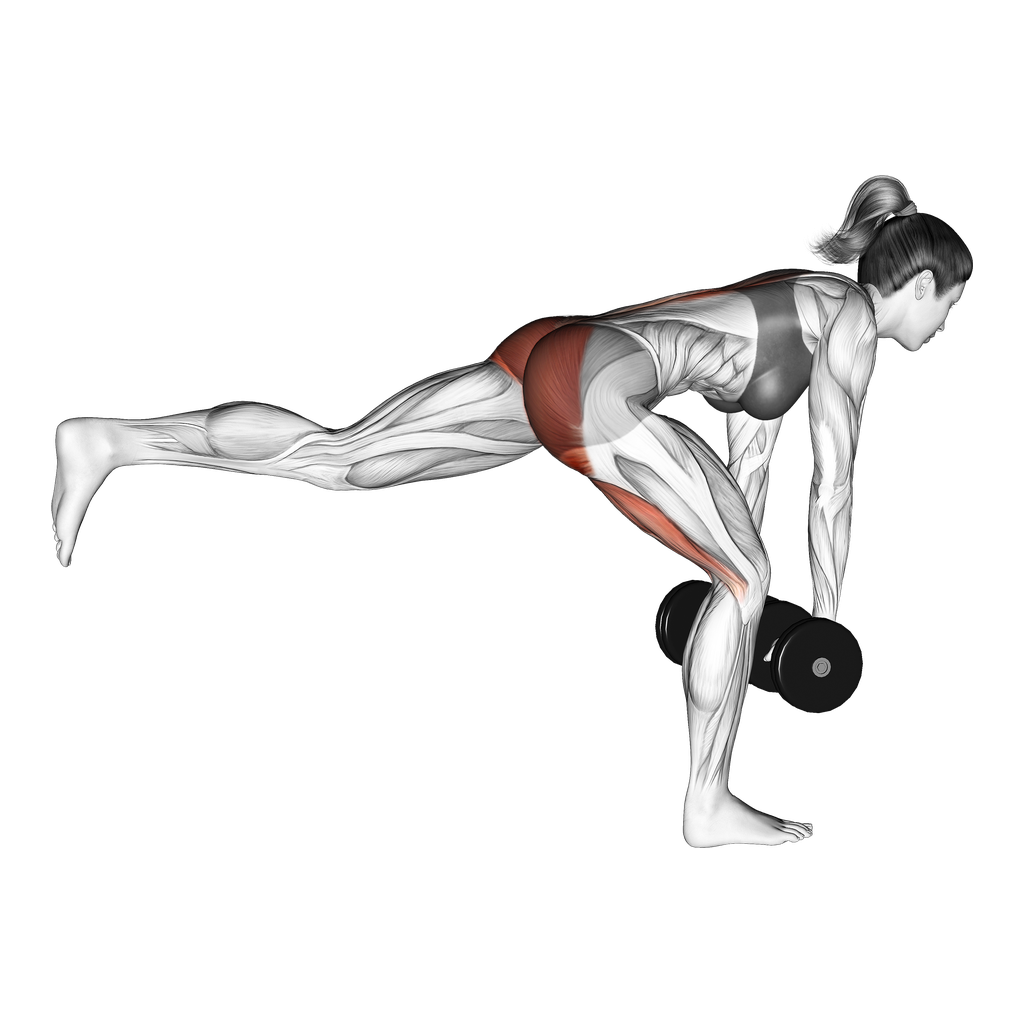
The lift is a Romanian deadlift performed on one leg. You stand on one foot with a soft bend in the knee, push the hips back while the free leg rises behind you, and lower the bar along the standing leg to about mid-shin before driving the hips forward to stand tall again. The bar does not return to the floor between reps, so the hamstrings and glutes stay under tension for the whole set.
The hamstrings and gluteus maximus of the standing leg do most of the work, lengthening on the way down and extending the hip on the way up. The gluteus medius and the smaller hip stabilizers keep the pelvis level and stop the free-leg side from rolling open, while the spinal erectors hold the back flat. Compared with the Dumbbell Single-Leg Deadlift or the Kettlebell Single-Leg Deadlift, the barbell lets you load the lift more heavily from one centered implement, but its long, wide shape makes any twist of the hips easier to feel and harder to recover from.
Coaches use it as an accessory after the main lifts of a lower-body session to build hamstring and glute strength one side at a time, to expose and reduce left-to-right differences, and to train hip control for running and field sports. It also trains the hinge with far less load on the spine than a heavy two-legged deadlift needs to challenge the same muscles.
It suits lifters who already own the Barbell Romanian Deadlift and can perform the single-leg pattern with dumbbells or a kettlebell without wobbling. If balance or hamstring flexibility limits you, build up with the Bodyweight Single-Leg Deadlift, the Dumbbell B-Stance Romanian Deadlift and the Landmine Single-Leg Romanian Deadlift, whose fixed bar path takes some of the balance demand away.
Muscles Worked
- Biceps Femoris
- Primary
- Gluteus Maximus
- Primary
- Semimembranosus
- Primary
- Semitendinosus
- Primary
- Adductor Magnus
- High
- Erector Spinae
- High
- Gluteus Medius
- High
- External Oblique
- Medium
- Gluteus Minimus
- Medium
Instructions
- Take the barbell from a rack or deadlift it from the floor, holding it with an overhand grip about shoulder-width apart, and stand tall with the bar resting against your thighs and your arms straight.
- Shift your weight onto one foot and keep a soft bend in that knee. Let the toes of the other foot rest lightly on the floor just behind you.
- Brace your trunk, pull your shoulders back and set your gaze on the floor a little ahead of you.
- Push your hips back to start the hinge, and let your free leg rise behind you as your torso tips forward so your body moves as one line from head to heel.
- Keep both hips pointing at the floor, the bar level and the toes of the free foot pointing down throughout the rep.
- Lower the bar close to the front of your standing leg until you feel a strong hamstring stretch, usually around mid-shin with your torso close to parallel to the floor, stopping before your back starts to round.
- Drive your standing foot into the floor and squeeze your glutes to bring your hips forward, lowering the free leg as your torso rises.
- Stand tall on the working leg without leaning back, then complete all reps on that side before switching legs.
Common Mistakes
Opening the hip
Letting the free-leg side roll up toward the ceiling, which you can see as the bar tilting or twisting, shifts the work away from the standing hip and onto the lower back.
Rounding the back
Reaching for the floor past the point where your hamstrings allow lets the spine round under the bar and loads the lower back instead of the hips.
Locking the standing knee
A straight, locked standing knee makes balance harder and turns the stretch into strain on the back of the knee and the lower back.
Squatting instead of hinging
Bending the standing knee a lot and sinking straight down turns the lift into a single-leg squat and takes the hamstrings out of it.
Letting the bar drift forward
When the bar swings away from the standing leg, the load moves in front of you and the lower back has to hold it there.
Loading it too heavily too soon
Jumping straight to two-legged Romanian deadlift loads leads to lost balance and rushed, shortened reps before the hips have learned to control the bar.
Injuries
Barbell Single-Leg Deadlift is a medium risk exercise when performed with proper technique. The places most likely to complain are the hamstring of the standing leg at the bottom of the stretch, the lower back when the spine rounds or the bar drifts away from the leg, and the standing ankle and knee when balance is lost under load. The barbell adds its own hazard, because a long, loaded bar is harder to set down safely than a dumbbell when you tip.
Start light, well below what you use for a two-legged Romanian deadlift, and add weight only when every rep looks the same on both legs. Lower only as far as you can keep your back flat and your hips square, keep the bar brushing the standing leg, and give yourself room on both sides so you can step down and lower the bar to the floor if you lose balance. Lifters with acute low back pain should avoid loaded hinging until it has settled.
If the barbell version is too much, regress to the Kettlebell Single-Leg Deadlift, the Dumbbell B-Stance Romanian Deadlift or the Landmine Single-Leg Romanian Deadlift, or practice the pattern with the Bodyweight Single-Leg Deadlift. Progress by adding load in small steps or by slowing the lowering phase rather than by reaching deeper.
Stop the set if you feel a sharp or pulling pain in the back of the thigh, pain in the lower back, or pain, numbness or tingling that travels down the leg, and get any pain that lingers after training checked by a qualified professional.
- Primary Focus
- Hamstrings and glutes
- Equipment
- Barbell
- Modality
- Strength
- Difficulty
- Advanced
Alternative Exercises
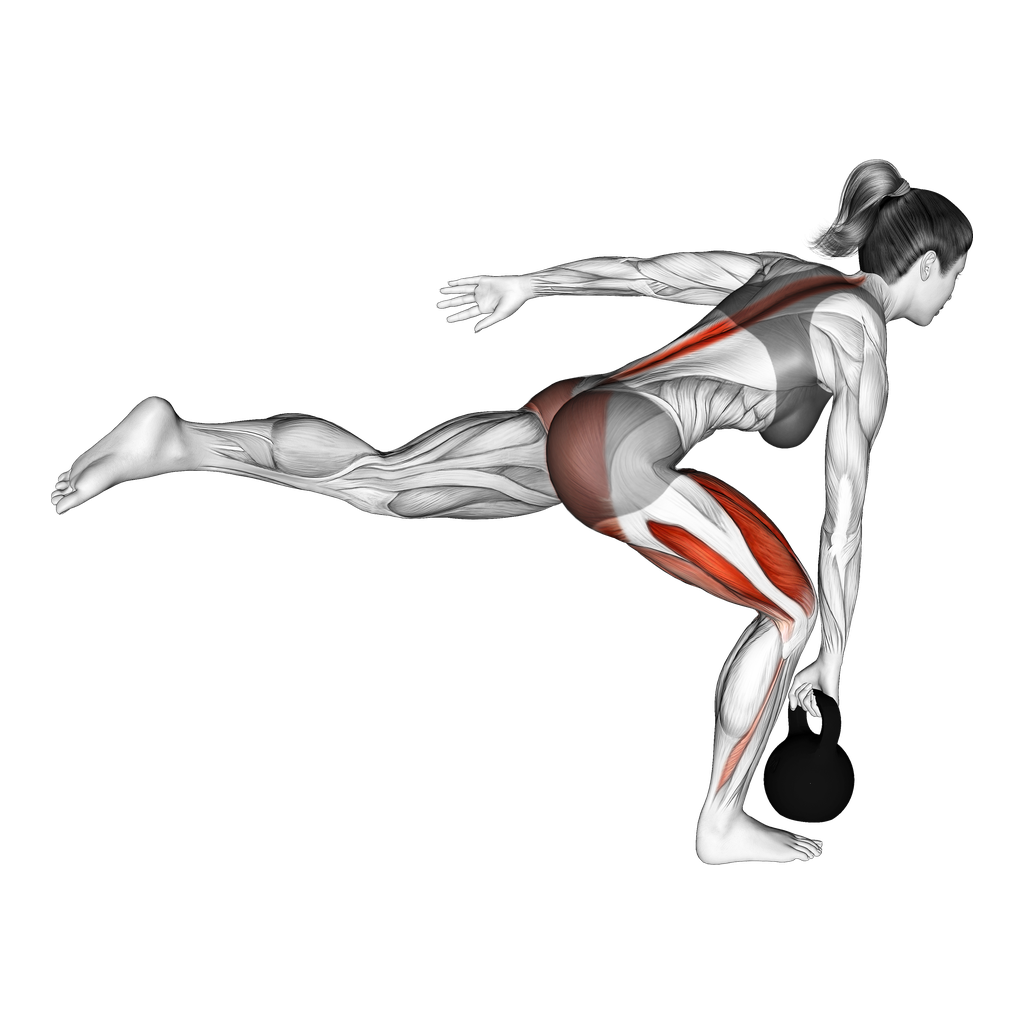 Intermediate
Kettlebell Single-Leg Deadlift
Kettlebell
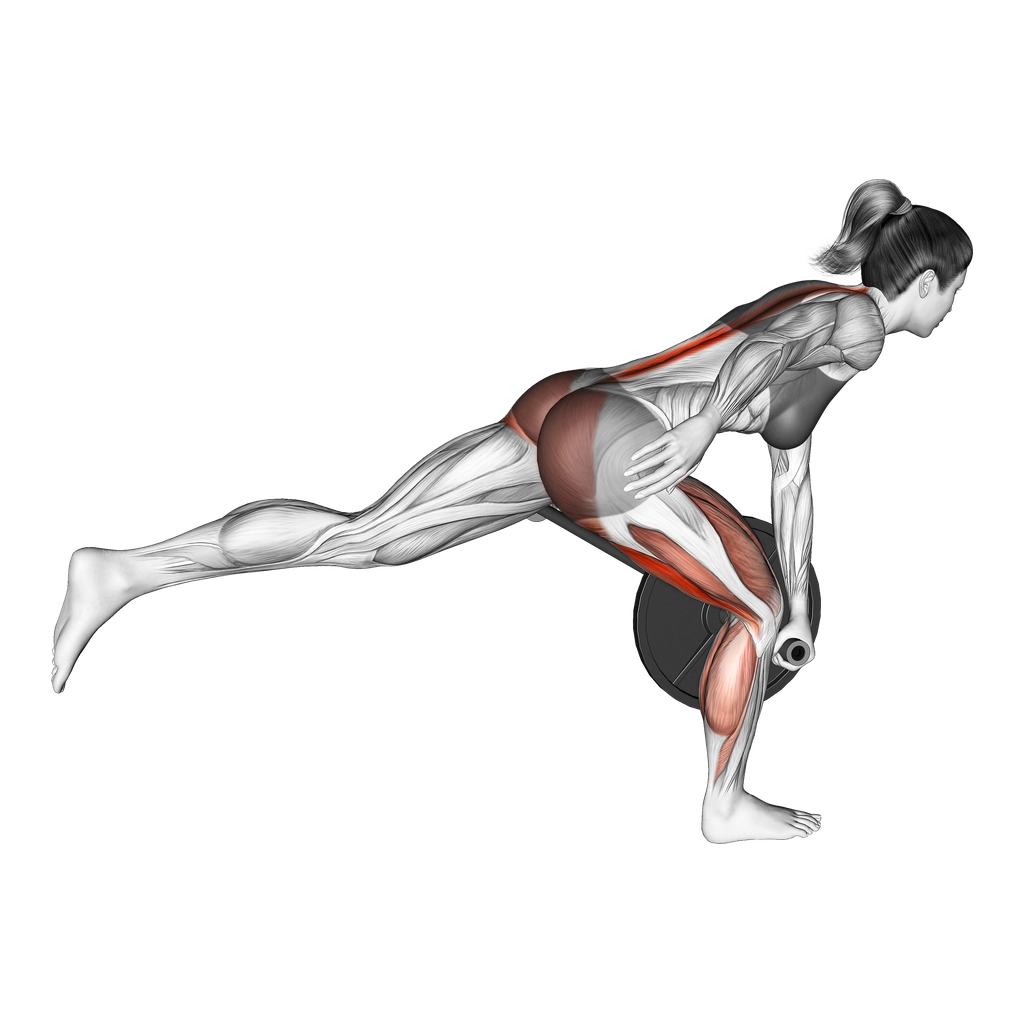 Intermediate
Landmine Single-Leg Romanian Deadlift
Barbell · Landmine
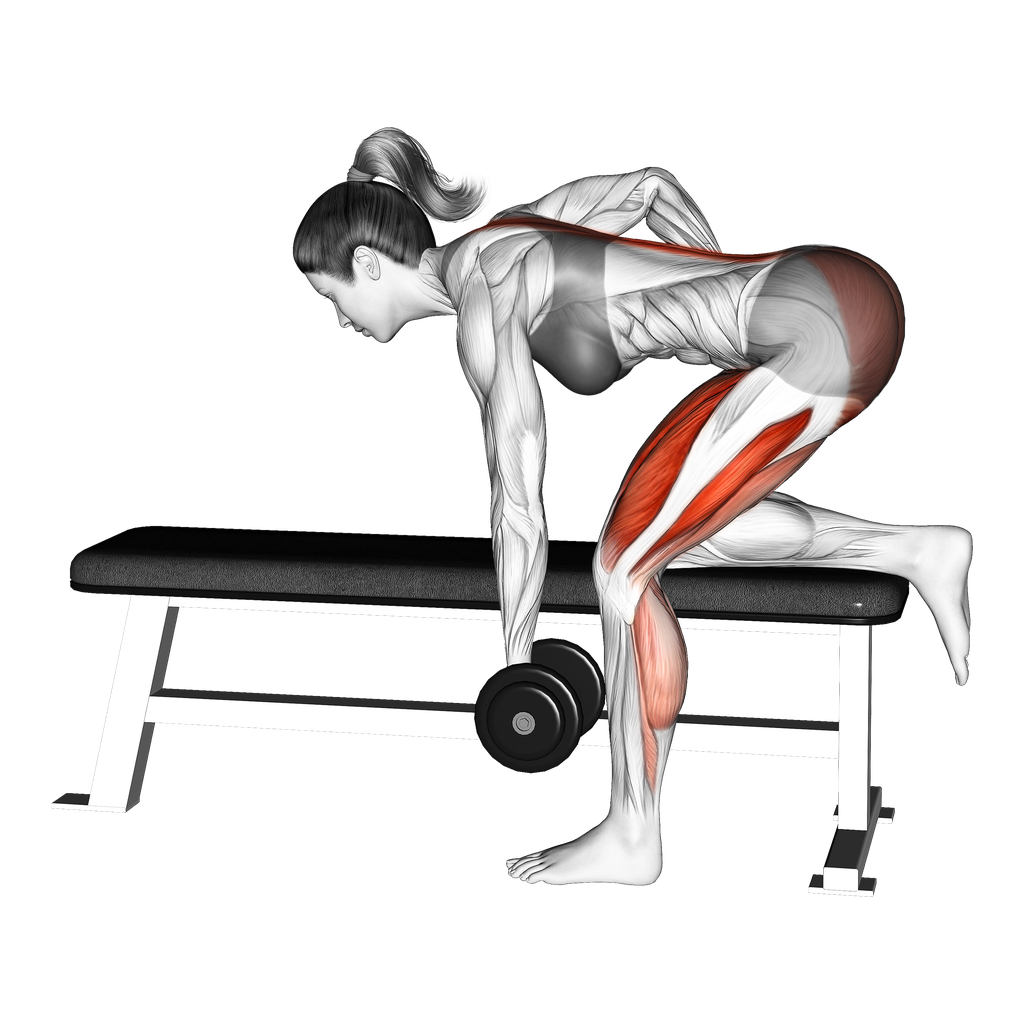 Intermediate
Dumbbell Single-Leg Romanian Deadlift (Rear Foot Elevated)
Dumbbell · Bench
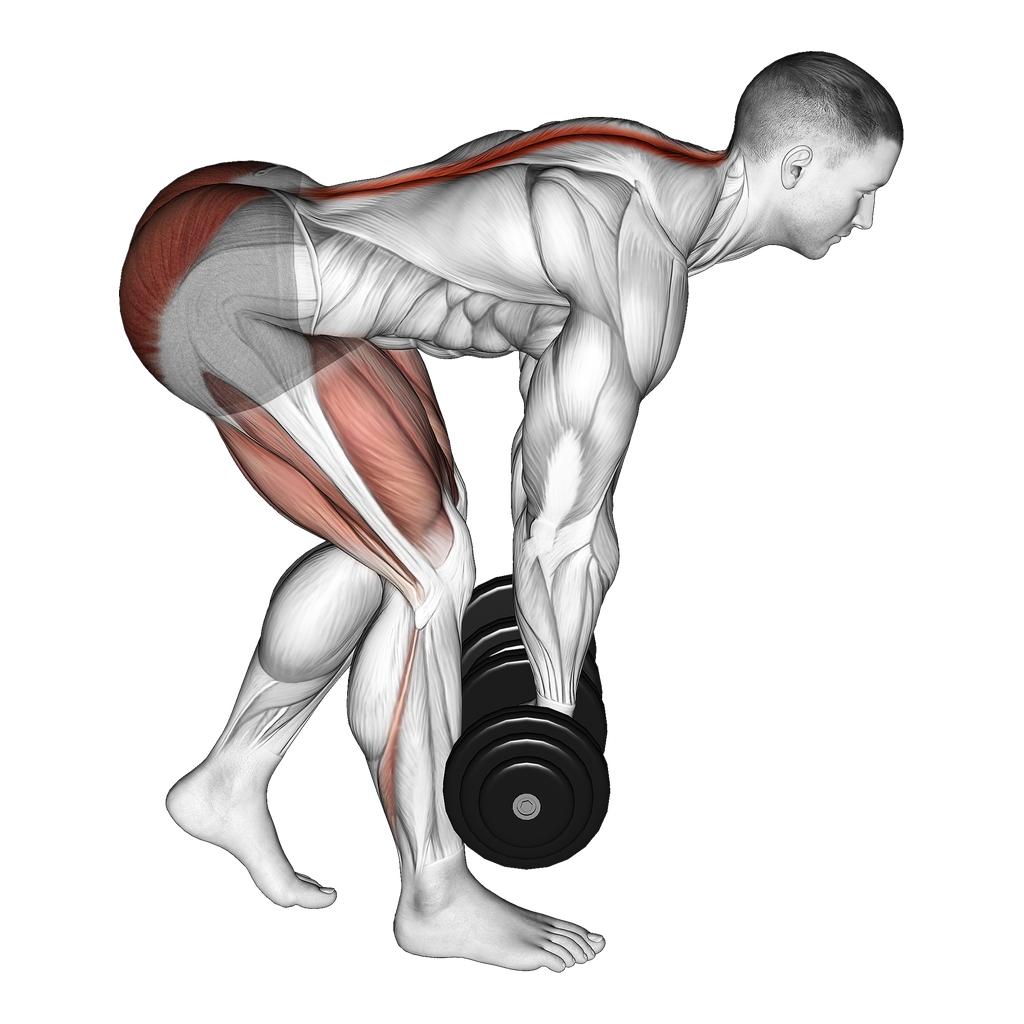 Intermediate
Dumbbell B-Stance Romanian Deadlift
Dumbbell
 Intermediate
Dumbbell Single-Leg Deadlift
Dumbbell


Other Names for the Barbell Single-Leg Deadlift
The Barbell Single-Leg Deadlift is also known as:
- Barbell Single-Leg Romanian Deadlift
Frequently Asked Questions
- Q: Is the barbell single-leg deadlift a Romanian deadlift?
Yes. The standing knee keeps a soft bend, the hips travel back and the bar stops at about mid-shin instead of returning to the floor, which is the Romanian deadlift pattern. If you keep the standing knee nearly straight, it moves closer to a single-leg version of the Barbell Stiff-Leg Deadlift.
- Q: Should I use a barbell or dumbbells for single-leg deadlifts?
Most lifters should learn the pattern with the Dumbbell Single-Leg Deadlift or Kettlebell Single-Leg Deadlift first, since those are easier to control and to set down. The barbell is worth moving to once balance is solid and you want to load the lift more heavily from one centered implement.
- Q: How low should the bar go?
Lower until you feel a strong stretch in the standing hamstring with your back still flat, which for most people puts the bar around mid-shin with the torso close to parallel to the floor. The plates do not need to touch the floor, and you should stop sooner if your back starts to round or your hips start to turn.
- Q: Can single-leg deadlifts help prevent hamstring strains?
They may help as part of a wider plan. In a two-season study of one high school track team, adding three sets of three bodyweight single-leg Romanian deadlifts per leg to the warm-up was followed by fewer mild to moderate hamstring strains but not fewer severe ones, and the barbell version itself was not tested.
- Q: What should I do if I keep losing my balance?
Lighten the bar, slow the lowering phase and fix your eyes on a spot on the floor a little ahead of you. If you still wobble, let the toes of the back foot lightly touch the floor as a kickstand, as in the Dumbbell B-Stance Romanian Deadlift, until the single-leg position feels steady.