Cable Deficit Reverse Lunge

What Is the Cable Deficit Reverse Lunge?
Cable Deficit Reverse Lunge is a compound exercise that primarily targets the quads and glutes and also engages the adductors, hamstrings, calves and trunk muscles. It is an intermediate-level movement in which you stand on a low step platform facing a low cable pulley, hold the handle at your upper chest with both hands, and step one foot back off the platform into a lunge. Because the front foot stays raised, the back knee can travel lower than the front foot, which gives the working leg a deeper range of motion than a reverse lunge on flat ground.
The extra depth is the point of the exercise. The front hip bends further at the bottom, so the glutes and the adductor magnus work through a longer range, and the quads have to drive the body up from a deeper knee bend. It builds single-leg strength and muscle in the lower body, helps even out differences between the legs, and usually sits after the main squat or deadlift work of a lower-body session as a single-leg accessory.
The cable changes how the lunge feels compared with holding dumbbells. It pulls forward and down toward the weight stack, which keeps your weight over the front foot and asks the upper back and trunk to hold the chest up against the pull. The stack also lets you add load in small steps. How you move shifts the work: a slight forward lean from the hips and a longer step put more of the load on the glutes and hamstrings, while a more upright torso and a shorter step keep more of it on the quads.
This variation suits lifters who can already do a controlled Bodyweight Reverse Lunge and Dumbbell Reverse Lunge on flat ground. If the deficit is too much at first, the Bodyweight Deficit Reverse Lunge teaches the deeper range without load, and the Dumbbell Deficit Reverse Lunge is the free-weight option when you want to load the movement more heavily.
Muscles Worked
- Gluteus Maximus
- Primary
- Vastus Lateralis
- Primary
- Vastus Medialis
- Primary
- Adductor Magnus
- High
- Rectus Femoris
- High
- Biceps Femoris
- Medium
- Erector Spinae
- Medium
- Gluteus Medius
- Medium
- Soleus
- Low
Instructions
- Attach a single handle to the low pulley of a cable machine and set a low step platform on the floor a short distance in front of the machine.
- Grab the handle with both hands and step onto the platform facing the machine, feet about hip-width apart.
- Hold the handle at your upper chest just under your chin with your elbows pointing down, brace your trunk and stand tall with the cable taut.
- Keep your weight on your front foot and step one foot back off the platform, landing on the ball of that foot on the floor behind it.
- Bend both knees and lower under control until the back knee is just above the floor, letting your torso tilt slightly forward from the hips while the handle stays fixed at your chest.
- Keep the front heel flat on the platform and the front knee tracking in line with your toes.
- Drive through the whole front foot to stand back up, bringing the back foot onto the platform beside the front foot.
- Finish all reps on one leg and then switch, or alternate legs if you prefer.
- When the set is done, step off the platform toward the machine and let the handle return to the stack under control.
Common Mistakes
Letting the cable pull you forward
Allowing the handle to drift away from your chest lets the cable tip your torso toward the machine and round your upper back.
Dropping onto the back knee
Falling into the bottom instead of lowering under control lets the back knee hit the floor and takes tension off the front leg.
Pushing up with the back leg
Driving off the rear foot turns the lunge into a two-leg push and takes work away from the front leg it is meant to train.
Front knee caving in
Letting the front knee collapse toward the midline shifts stress to the inside of the knee instead of keeping it in line with the toes.
Stepping back too short
A short step crowds the front knee, lifts the front heel and makes the bottom position unstable.
Using a platform that is too high
A platform so high that your pelvis tucks under or your lower back rounds at the bottom adds strain without adding useful range.
Injuries
Cable Deficit Reverse Lunge is a medium risk exercise when performed with proper technique. The platform adds depth and a raised edge to step back from, so most problems come from losing balance, catching the back foot on the platform, or sinking deeper than the hips and knees can control.
The front knee takes the most stress at the bottom, especially when it drifts far forward while the torso pitches over it. The back knee is at risk if it drops onto the floor, the front of the back hip is stretched hard at the bottom, and the lower back can be strained if the cable pulls the chest forward and the back rounds. Start with the platform at its lowest setting, keep the load moderate until the depth feels steady, check that the floor behind the platform is clear, and lower under control so the back knee stops just above the floor.
To make it easier, lower or remove the platform, or practice the Bodyweight Deficit Reverse Lunge or the Bodyweight Reverse Lunge first. To make it harder, add weight, slow the lowering phase, or raise the platform a little. Stop the set if you feel sharp pain in either knee, a pinch at the front of the hip, or you cannot keep your balance on the way down.
- Equipment
- Cable and step platform
- Modality
- Strength
- Difficulty
- Intermediate
Alternative Exercises
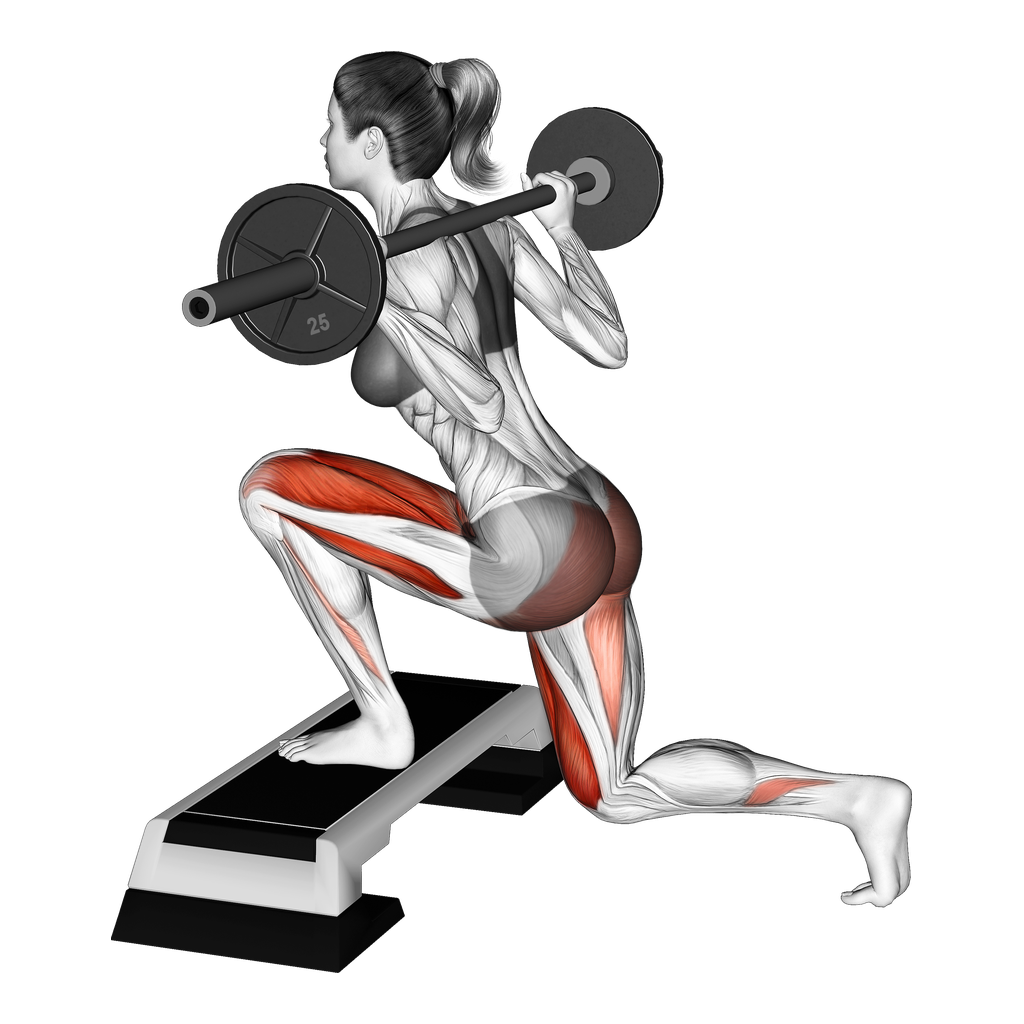 Advanced
Barbell Front-Foot-Elevated Split Squat
Barbell · Step Platform
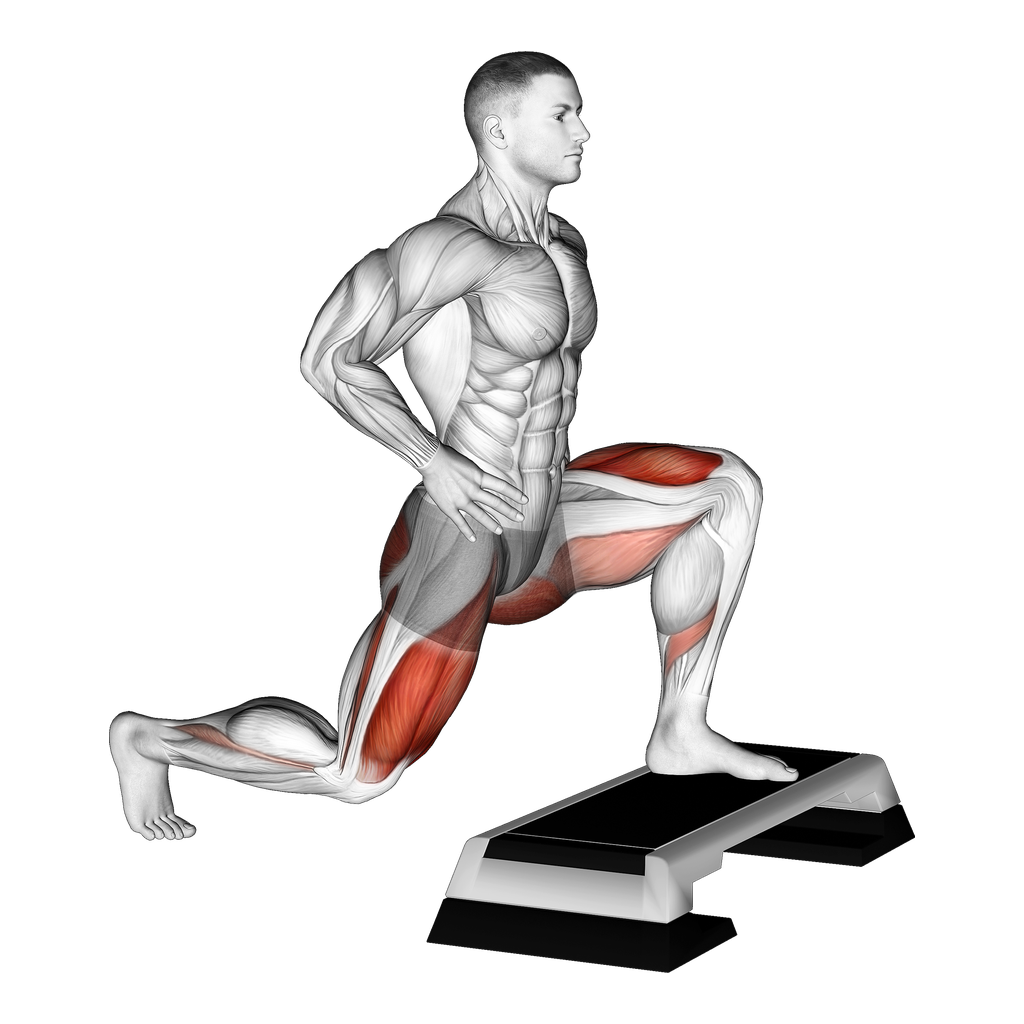 Beginner
Bodyweight Deficit Reverse Lunge
Body Weight · Step Platform
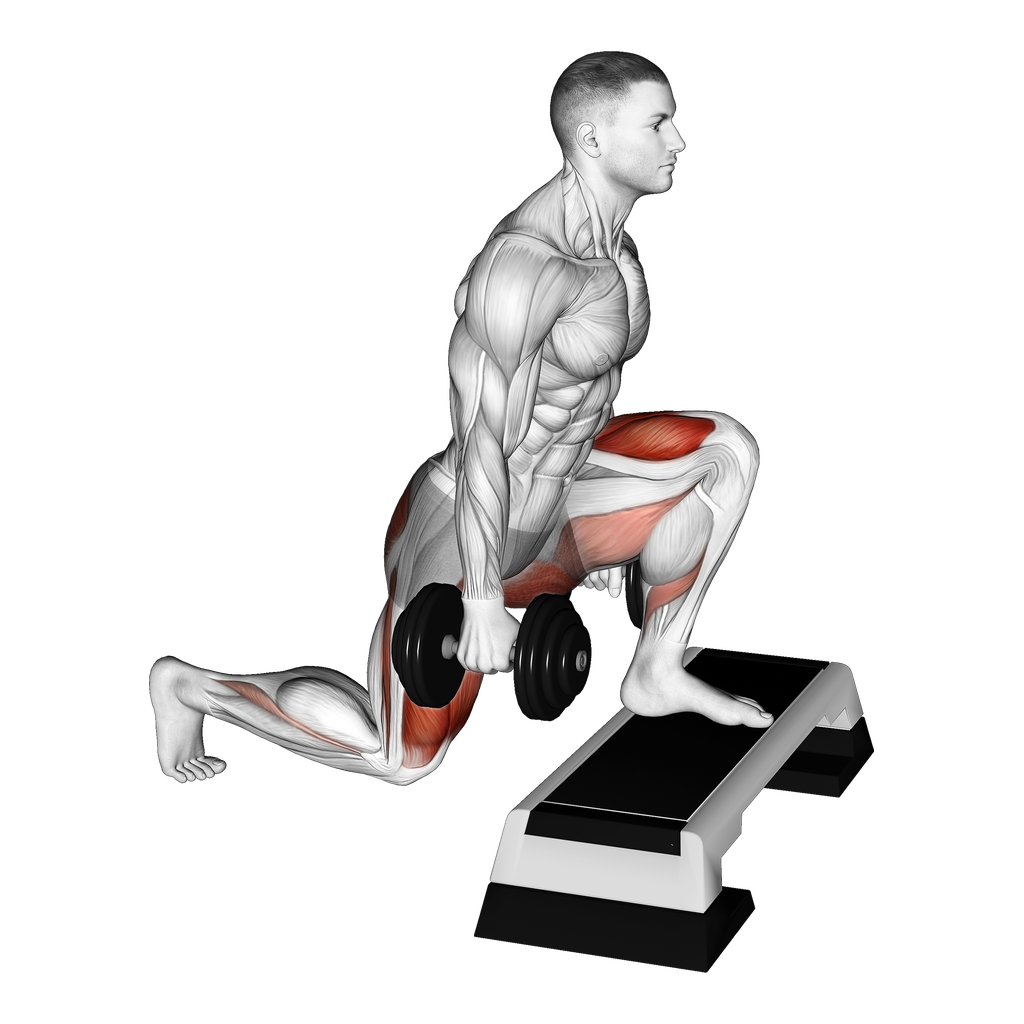 Intermediate
Dumbbell Deficit Reverse Lunge
Dumbbell · Step Platform
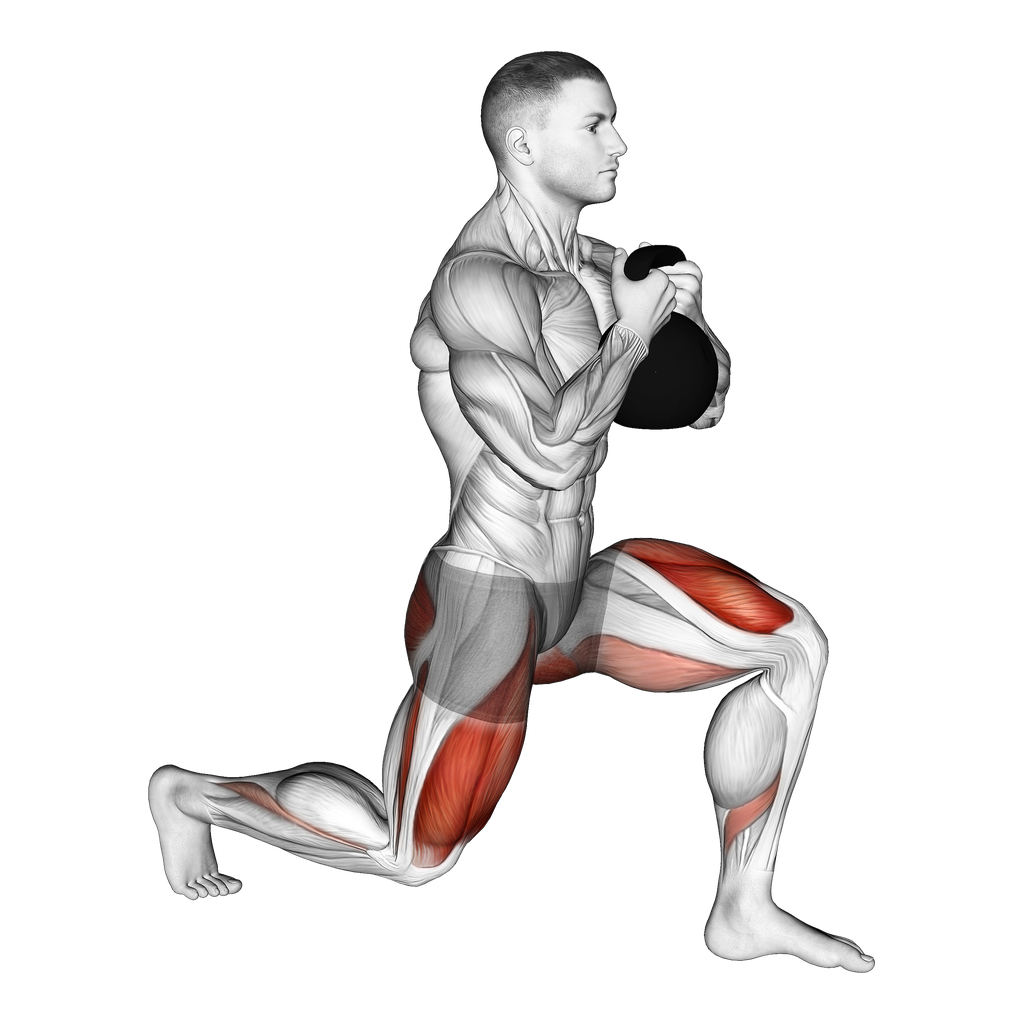 Beginner
Kettlebell Goblet Reverse Lunge
Kettlebell
 Intermediate
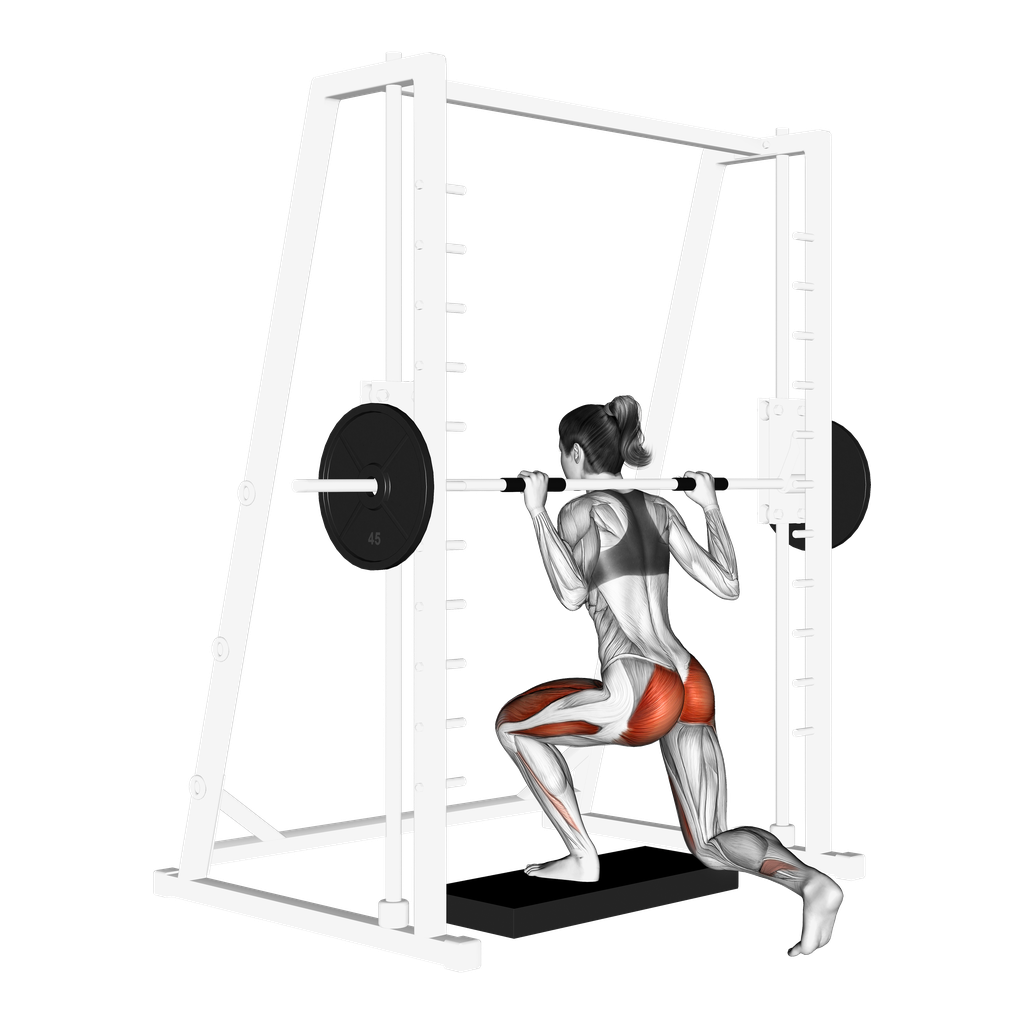
Smith Machine Reverse Lunge
Smith Machine


Frequently Asked Questions
- Q: How high should the step platform be?
Start with the platform at its lowest setting, a few inches high. Raise it only when you can reach the bottom with the back knee just above the floor and your lower back flat; if your pelvis tucks under or your back rounds, the platform is too high.
- Q: Is a reverse lunge easier on the knees than a forward lunge?
Usually, yes. A lab study of nine young men doing bodyweight lunges found lower knee extensor moments on the front leg during the reverse lunge than during the forward lunge. The deficit adds depth, so keep the platform low if your knees are sensitive.
- Q: Why use a cable instead of dumbbells?
The cable pulls forward toward the machine, which keeps your weight over the front foot and helps many lifters stay balanced, and the weight stack changes in small steps. Dumbbells need no machine and are easier to load heavily, so the Dumbbell Deficit Reverse Lunge suits heavier sets.
- Q: Should I lean forward or stay upright?
A slight forward lean from the hips is normal and asks more of the glutes, hamstrings and lower back, while a more upright torso keeps more of the work on the quads. The lean should come from the hips with the handle held steady at your chest, never from the cable rounding your upper back.
- Q: Should I alternate legs or do one side at a time?
Either works. Finishing all reps on one leg keeps your front foot set on the platform and the tension on that leg, while alternating gives each leg a short rest between reps.