Dumbbell Goblet Front-Foot-Elevated Split Squat

What Is the Dumbbell Goblet Front-Foot-Elevated Split Squat?
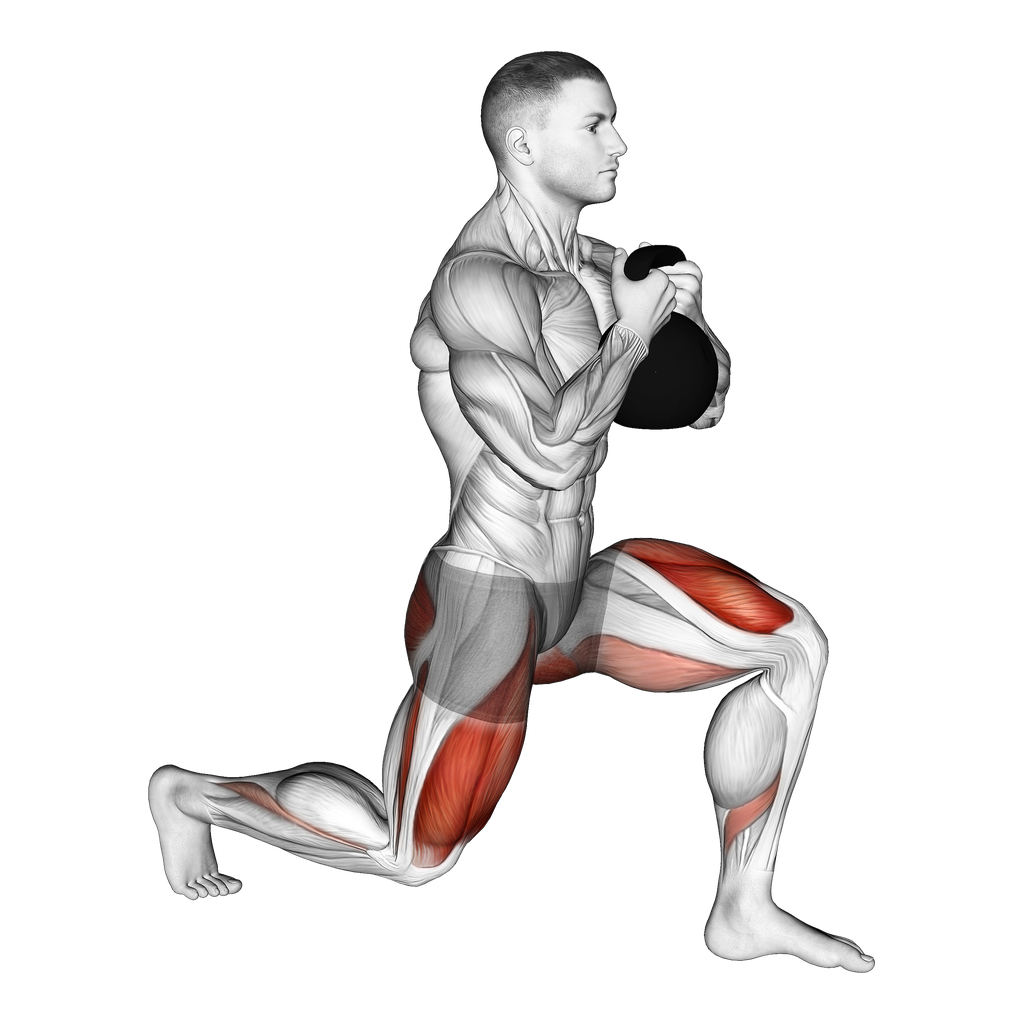
Dumbbell Goblet Front-Foot-Elevated Split Squat is a compound exercise that primarily targets the quads and glutes, and also engages the adductors, hamstrings and trunk muscles. It is an intermediate-level movement in which you hold one dumbbell vertically against your chest and lower straight down in a split stance, with your front foot raised on a low step platform and your back foot on the floor.
The step is what sets it apart from the flat Dumbbell Goblet Split Squat. With the front foot a few inches higher, your back knee has farther to travel before it reaches the floor, so the front hip and knee bend further at the bottom and the quads, glutes and adductors work through a longer range. That extra depth makes it useful for taller lifters who run out of room on flat ground and for anyone building strength and control in deep knee bend. It usually sits after the main lift of a lower-body session as a single-leg accessory, trained for moderate reps per leg with a controlled lowering.
The goblet hold suits the extra depth. The dumbbell at your chest acts as a counterweight in front of your body, which makes it easier to stay upright as you sink lower, and your upper back and trunk work to stop the weight from pulling your chest forward. A single dumbbell is also easy to set down if you lose your balance, unlike a bar across your back in the Barbell Front-Foot-Elevated Split Squat. The trade-off is load: one dumbbell held at the chest runs out sooner than a barbell or a dumbbell in each hand.
Where the work lands depends on your stance and shin angle. Letting the front knee travel forward over the toes keeps more of the work on the quads, while a longer stance moves more of it to the hips. In a study of barbell split squats on flat ground in 20 male college students, lengthening the stance from half a leg length to 1.2 leg lengths raised the peak hip extension moment by about 15% and lowered the knee extension moment by about 10%.
This variation suits lifters who are already comfortable with the flat Dumbbell Goblet Split Squat and want more range from the same dumbbell. Build up with the flat version first, and make sure you can reach the bottom of it with your front heel flat and your torso steady before adding the step.
Muscles Worked
- Gluteus Maximus
- Primary
- Vastus Lateralis
- Primary
- Vastus Medialis
- Primary
- Adductor Magnus
- High
- Rectus Femoris
- High
- Erector Spinae
- Medium
- Gluteus Medius
- Medium
- Soleus
- Low
Instructions
- Place a low step platform on the floor and stand about one long stride behind it.
- Hold one dumbbell vertically against your chest, cupping the top end with both hands and keeping your elbows pointing down and close to your body.
- Step one foot forward and place the whole foot flat on the step, then set your back foot on the floor about hip-width apart, resting on the ball of the foot with the heel lifted.
- Brace your core and stand tall with your chest up so the dumbbell stays pinned to your chest.
- Bend both knees and lower straight down, letting the front knee travel forward over your toes while the front heel stays flat on the step.
- Continue until your back knee hovers just above the floor and your front thigh is about parallel to it.
- Drive through your whole front foot to stand back up, keeping your torso upright and your feet in place.
- Complete all reps on one side, then step off the platform, switch legs and repeat.
Common Mistakes
Step too high
Using a platform that is too tall makes the front heel lift or the torso tip forward before the back knee gets near the floor, so start with a few inches and go higher only when the bottom position stays steady.
Front heel lifting
Rising onto the ball of the front foot shifts the load onto the knee and forefoot, so keep the whole foot flat on the step and shorten the depth if your ankle runs out of range.
Front knee caving in
Letting the front knee drift toward the midline on the way down or up twists the knee, so keep it tracking over your middle toes.
Dumbbell drifting forward
Letting the dumbbell slide away from your chest pulls your torso forward and rounds your upper back, so keep your elbows down and the weight pinned to your chest.
Tightrope stance
Lining the front and back feet up on one line makes the hips wobble and twist, so keep the feet about hip-width apart.
Dropping onto the back knee
Falling into the bottom position or bouncing the back knee off the floor bruises the knee and takes tension off the front leg.
Injuries
Dumbbell Goblet Front-Foot-Elevated Split Squat is a low risk exercise when performed with proper technique. The load is held close to your body, both feet stay in place, and you can set the dumbbell down at any point, so most problems come from the extra depth and the step rather than from the weight.
The front knee takes the most strain. The step lets it bend further than on flat ground, and deep knee bend under load can irritate the kneecap or patellar tendon in lifters who are not used to it, so add depth gradually and lower under control instead of dropping into the bottom. Use a step that sits flat and will not slide, keep your whole front foot on it with the heel planted, and keep the front knee tracking over your middle toes. Letting the dumbbell drift away from your chest pulls the torso forward and loads the lower back, so keep your elbows down and the weight pinned in place, and stop the back knee just above the floor so it does not strike it.
To make it easier, return to the flat Dumbbell Goblet Split Squat, use a lower step, or lower only as far as you can control with the front heel flat. If your front knee aches, lengthen your stance a little and keep the front shin more upright. To progress, raise the step a little at a time, slow the lowering, or pause at the bottom, then move to the Barbell Front-Foot-Elevated Split Squat for heavier loading.
Stop the set if you feel sharp pain in the knee or hip, pain at the front of the kneecap that builds with each rep, pain in your lower back, or if the step shifts under your foot. Pain that lingers after training is worth having checked before you load the movement again.
- Equipment
- Dumbbell and step platform
- Modality
- Strength
- Difficulty
- Intermediate
Alternative Exercises
 Intermediate
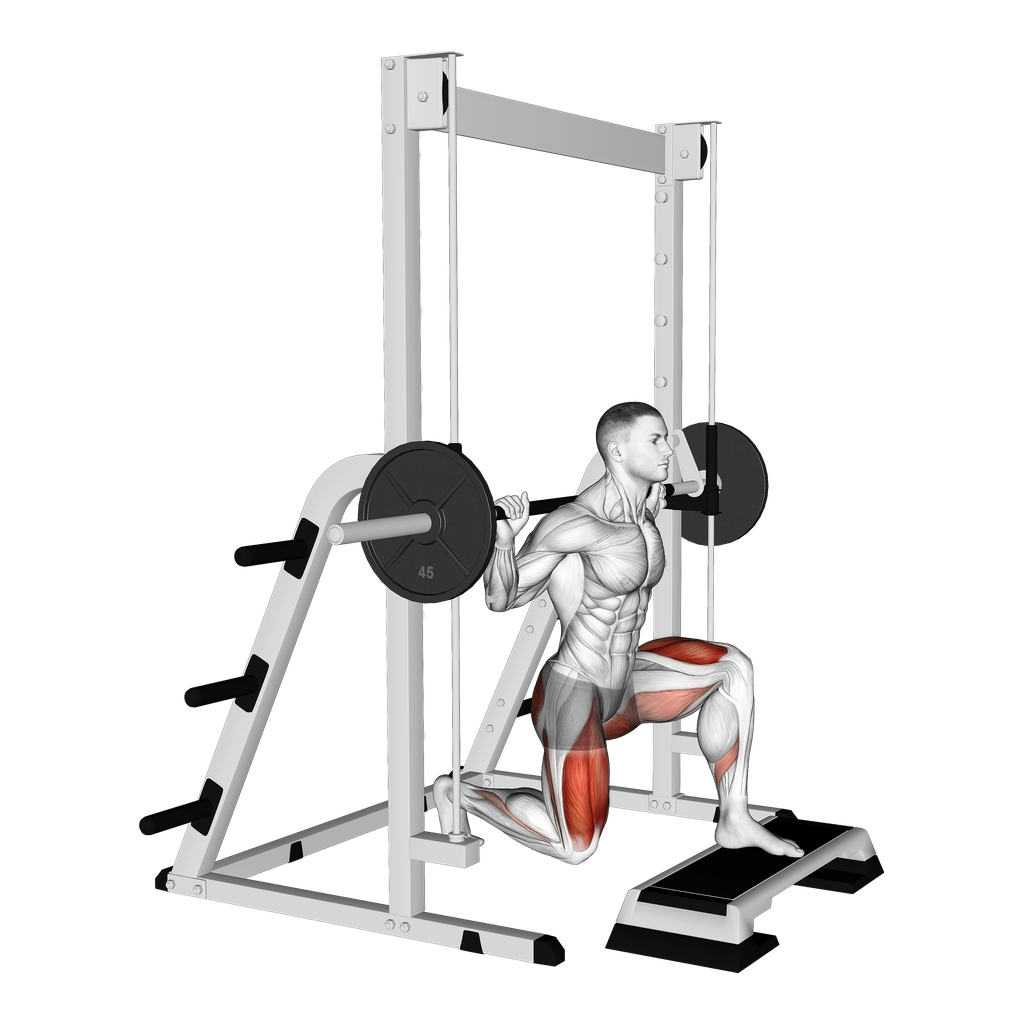
Smith Machine Front-Foot Elevated Split Squat
Smith Machine · Step Platform
 Intermediate
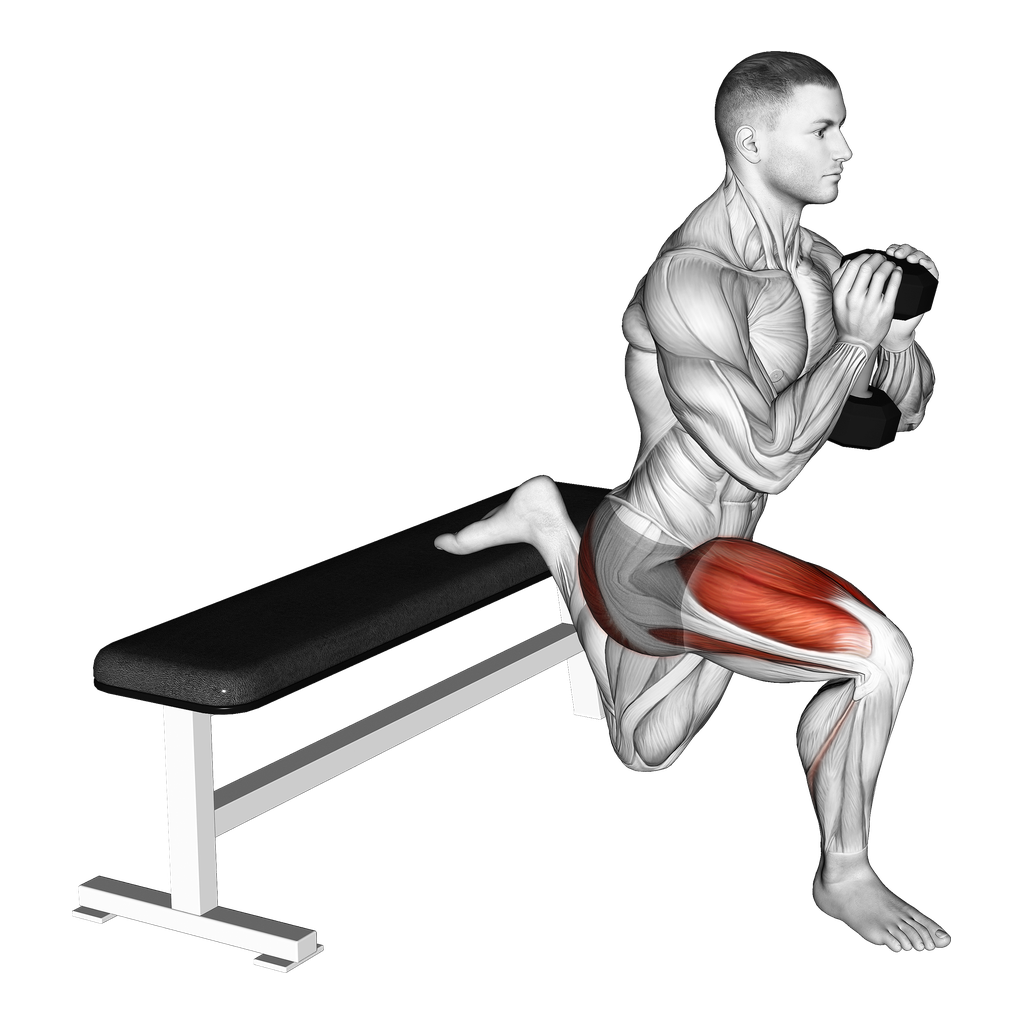
Dumbbell Goblet Bulgarian Split Squat
Dumbbell · Bench
 Advanced
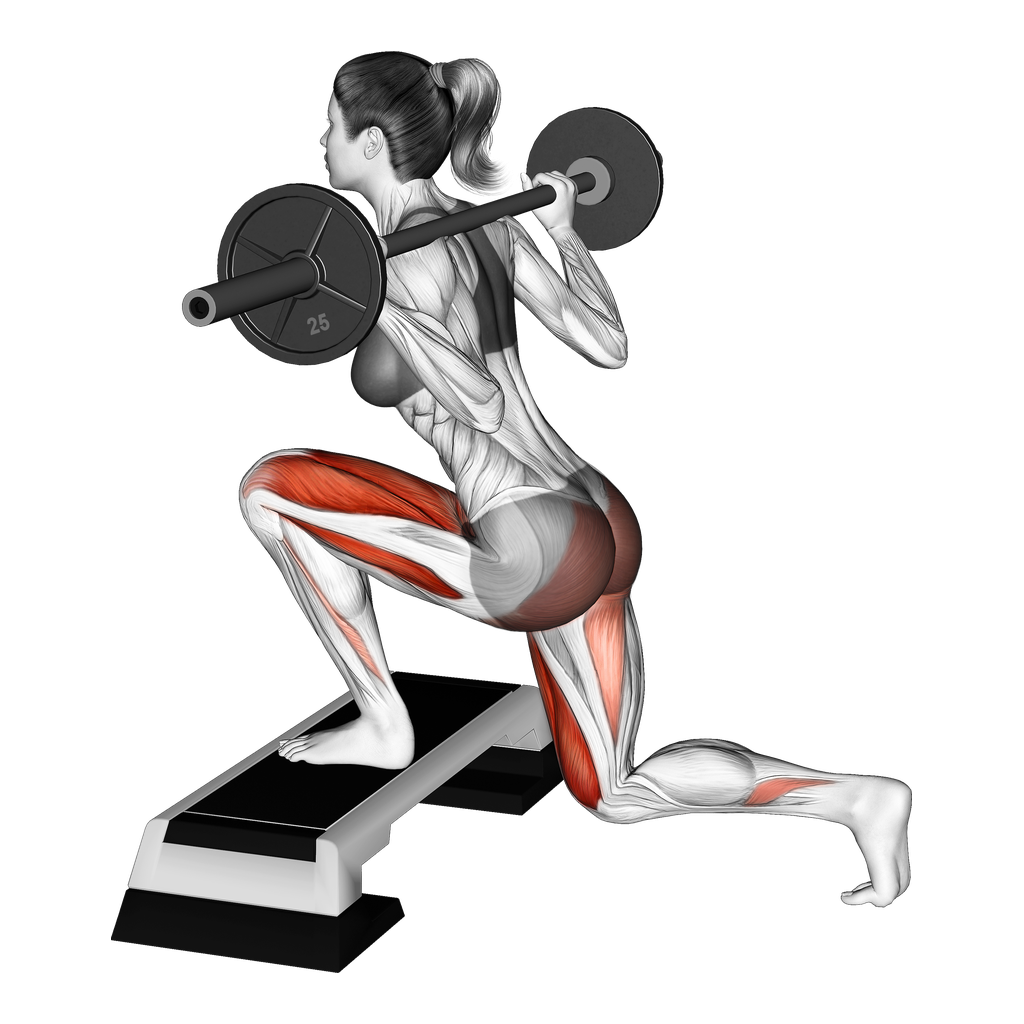
Barbell Front-Foot-Elevated Split Squat
Barbell · Step Platform
 Intermediate
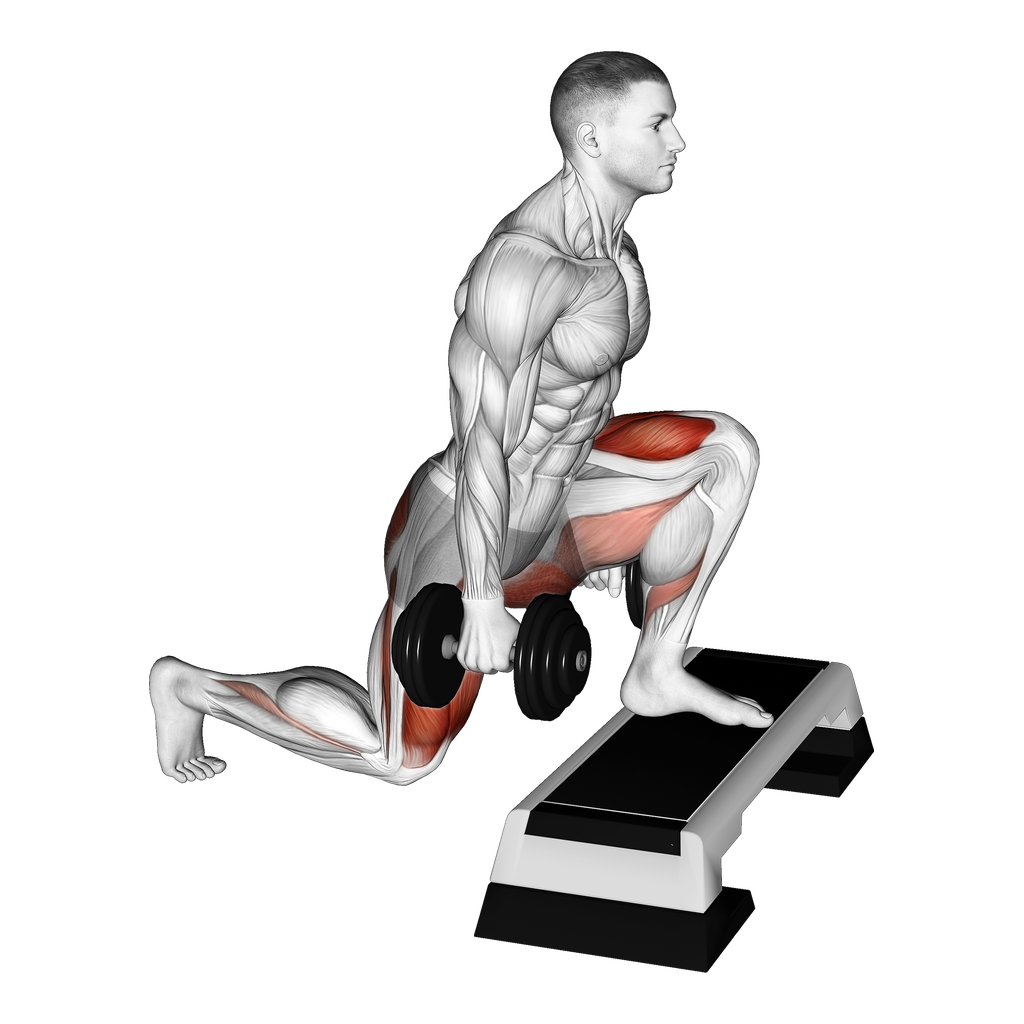
Dumbbell Deficit Reverse Lunge
Dumbbell · Step Platform
 Beginner
Kettlebell Goblet Reverse Lunge
Kettlebell


Frequently Asked Questions
- Q: What does the step add to a goblet split squat?
It raises your front foot so your back knee can drop lower before it reaches the floor, which lets the front hip and knee bend further and works the quads, glutes and adductors through a longer range. Expect to use a little less weight than on the flat Dumbbell Goblet Split Squat.
- Q: How high should the step be?
A few inches is enough. Coaches commonly suggest about 2 inches when you are new to the lift and 3 to 5 inches once you are comfortable, and a low aerobic step or a weight plate laid flat works well. Go higher only if you can still reach the bottom with your front heel flat and your torso upright.
- Q: Can my front knee go past my toes?
Yes, as long as your front heel stays flat and the knee tracks over your middle toes, and that forward travel is how the step gives the quads more range. It does load the front knee more: in a study of 18 healthy adults doing forward lunges, moving the front shin and torso forward produced the highest kneecap joint stress in the front knee, while keeping the front shin vertical shifted more of the stress to the back knee. If your front knee aches, lengthen your stance a little and keep the shin more upright.
- Q: How is this different from a Bulgarian split squat?
In the Dumbbell Goblet Bulgarian Split Squat your back foot rests on a bench, so the front leg carries nearly all the load. Here the back foot stays on the floor and helps a little, and raising the front foot adds depth to the front leg instead.
- Q: Should my back knee touch the floor?
It can lightly brush the floor, but it should not rest or bounce there. Lowering until it hovers just above the floor keeps the tension on the front leg and protects the back knee.
- Q: What should I do when the dumbbell gets too heavy to hold at my chest?
That usually means your legs have outgrown the goblet hold. Move to the Barbell Front-Foot-Elevated Split Squat or the Smith Machine Front-Foot Elevated Split Squat to load the same movement more heavily.