Bodyweight Deficit Bulgarian Split Squat

What Is the Bodyweight Deficit Bulgarian Split Squat?
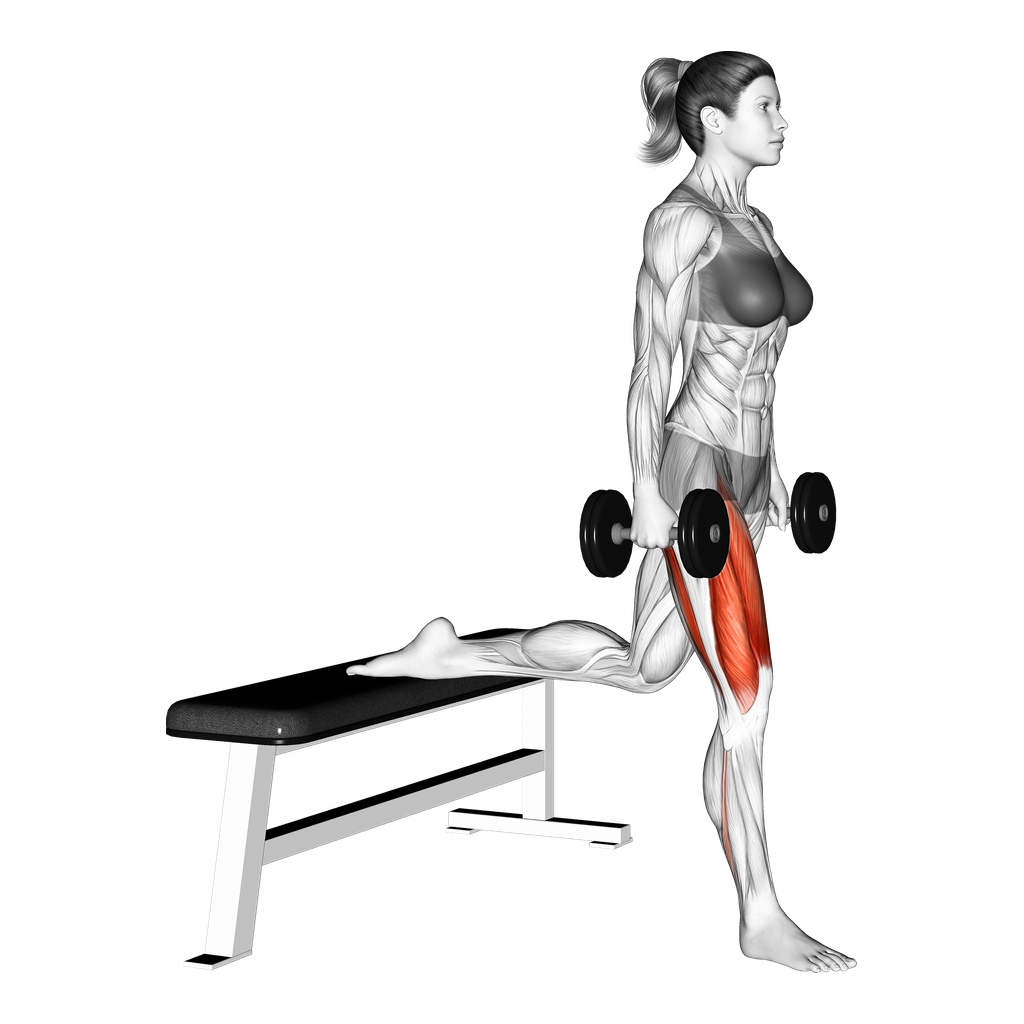
Bodyweight Deficit Bulgarian Split Squat is a compound exercise that primarily targets the quads and glutes, and also engages the adductors, hamstrings and the hip stabilizers that keep the front knee in line. It is an intermediate-level movement that sets the rear foot on a bench and the front foot on a raised step platform, so the back knee can sink below the level of the front foot and the working leg travels through a longer range than it does in the floor version.
Compared with the Bodyweight Bulgarian Split Squat, where the front foot stays on the floor, the step adds depth at the bottom of the rep, where the front hip and knee are most bent and the glutes and quads work from a stretched position. That makes it a way to make bodyweight split squats harder without holding any weight, which suits home training and anyone who has outgrown the floor version but is not ready to load it. The step only needs to be a few inches high; reaching a depth you can control matters more than the height itself.
The front leg does most of the work. The quadriceps straighten the knee, the gluteus maximus and adductor magnus extend the hip out of the deep bottom position, and the gluteus medius keeps the pelvis level and the knee tracking over the foot. A slightly longer stance with a modest forward lean from the hips brings the glutes and hamstrings in more, while a shorter stance puts more bend at the knee and more demand on the quads. The back leg mostly balances and gets a stretch through the front of the hip.
Build up to it with the floor version until sets of 10 or more controlled reps per leg feel steady, with the back knee lowering close to the floor and no wobble at the bottom. Once the deficit becomes easy, holding dumbbells turns it into the Dumbbell Deficit Bulgarian Split Squat. It usually sits among the main or accessory lower-body exercises of a session, with the same number of reps on each leg.
Muscles Worked
- Gluteus Maximus
- Primary
- Vastus Lateralis
- Primary
- Vastus Medialis
- Primary
- Adductor Magnus
- High
- Rectus Femoris
- High
- Gluteus Medius
- Medium
- Soleus
- Low
- Erector Spinae
- Minimal
Instructions
- Place a step platform in front of a flat bench, about a long stride away, and check that it sits flat and does not slide.
- Stand on the step with one foot flat on it, toes pointing forward, and rest the top of your other foot on the bench behind you, laces down.
- Clasp your hands in front of your chest, stand tall with your hips square, and keep most of your weight on the front foot.
- Bend both knees and lower yourself straight down, letting the back knee drop toward the floor below the level of the step.
- Let the front knee travel forward in line with your toes while your torso leans slightly forward from the hips.
- Lower until the back knee is just above the floor or the front thigh is at or slightly below parallel, keeping the front heel down and your back flat.
- Drive through the whole front foot to stand back up, keeping the front knee tracking over the toes and pressing only lightly on the back foot.
- Finish all reps on one leg, then switch legs and repeat.
Common Mistakes
Stance too short
Setting the step too close to the bench drives the front knee far forward and lifts the heel, loading the front of the knee instead of sharing the work with the hip.
Stance too long
Setting the step too far from the bench overstretches the front of the back hip and pulls the lower back into an arch at the bottom.
Pushing off the back foot
Driving down into the bench with the back foot takes work away from the front leg, which should do almost all of the lifting.
Front knee caving in
Letting the front knee drift inside the big toe on the way up shifts stress onto the knee and takes work away from the glutes.
Cutting the depth short
Stopping well above the floor wastes the step, since the extra range at the bottom is the reason to use a deficit.
Foot hanging off the step
Letting the heel or the outside of the front foot hang over the edge of the step makes the base unstable and shifts weight onto the toes.
Injuries
Bodyweight Deficit Bulgarian Split Squat is a low risk exercise when performed with proper technique. With no external load, the main strain points are the front knee, which bends further than in the floor version, the front of the back hip, which is stretched by the rear foot resting on the bench, and the front leg's adductors and hamstrings at the bottom of the deeper range.
Make sure the step sits flat, does not slide, and is big enough for your whole front foot. Start with a low step and raise it only when you can control the bottom without the front heel lifting or the lower back rounding. If the front knee aches, lengthen the stance a little and let the torso lean slightly forward from the hips so the shin stays more upright. If the front of the back hip pinches, use a lower bench or bring the front foot slightly closer. Keep the front knee in line with the toes rather than letting it cave inward.
If balance or depth is the limit, go back to the Bodyweight Bulgarian Split Squat or a Bodyweight Reverse Lunge until the pattern is steady. When the deficit feels easy, progress to the Dumbbell Deficit Bulgarian Split Squat. Stop the set if you feel sharp pain in the knee, pain in the front of the hip or groin that does not ease when you shorten the range, or pain around the kneecap that lingers after the set.
- Equipment
- Body weight, bench, and step platform
- Modality
- Strength
- Difficulty
- Intermediate
Alternative Exercises
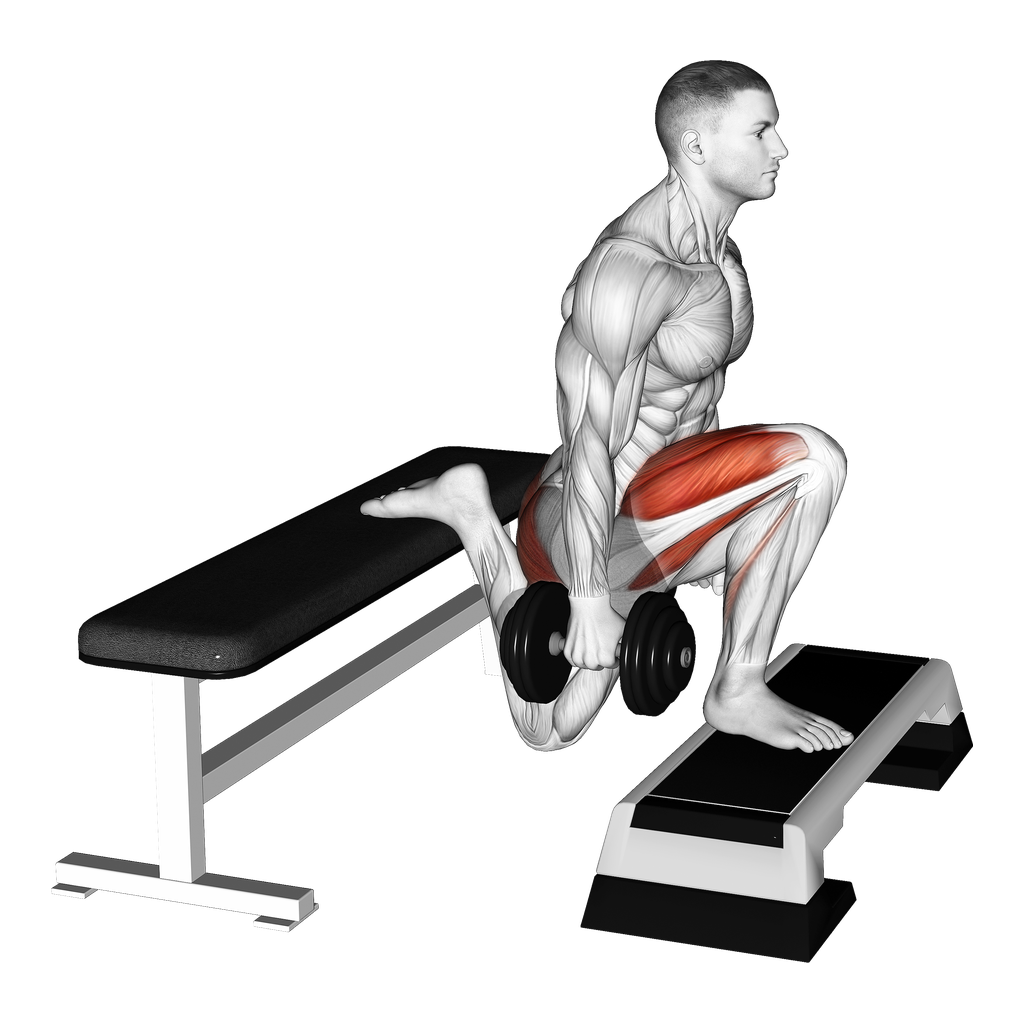 Advanced
Dumbbell Deficit Bulgarian Split Squat
Dumbbell · Bench · Step Platform
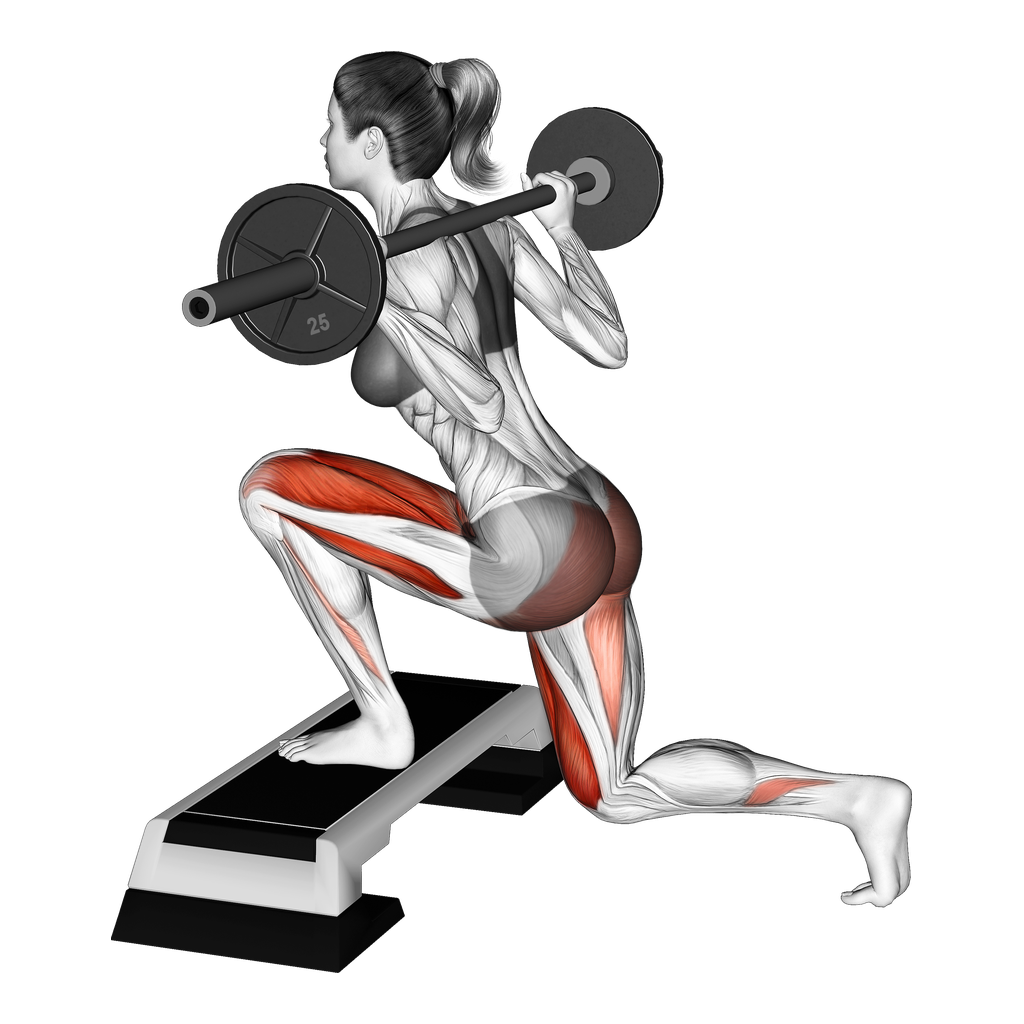 Advanced
Barbell Front-Foot-Elevated Split Squat
Barbell · Step Platform
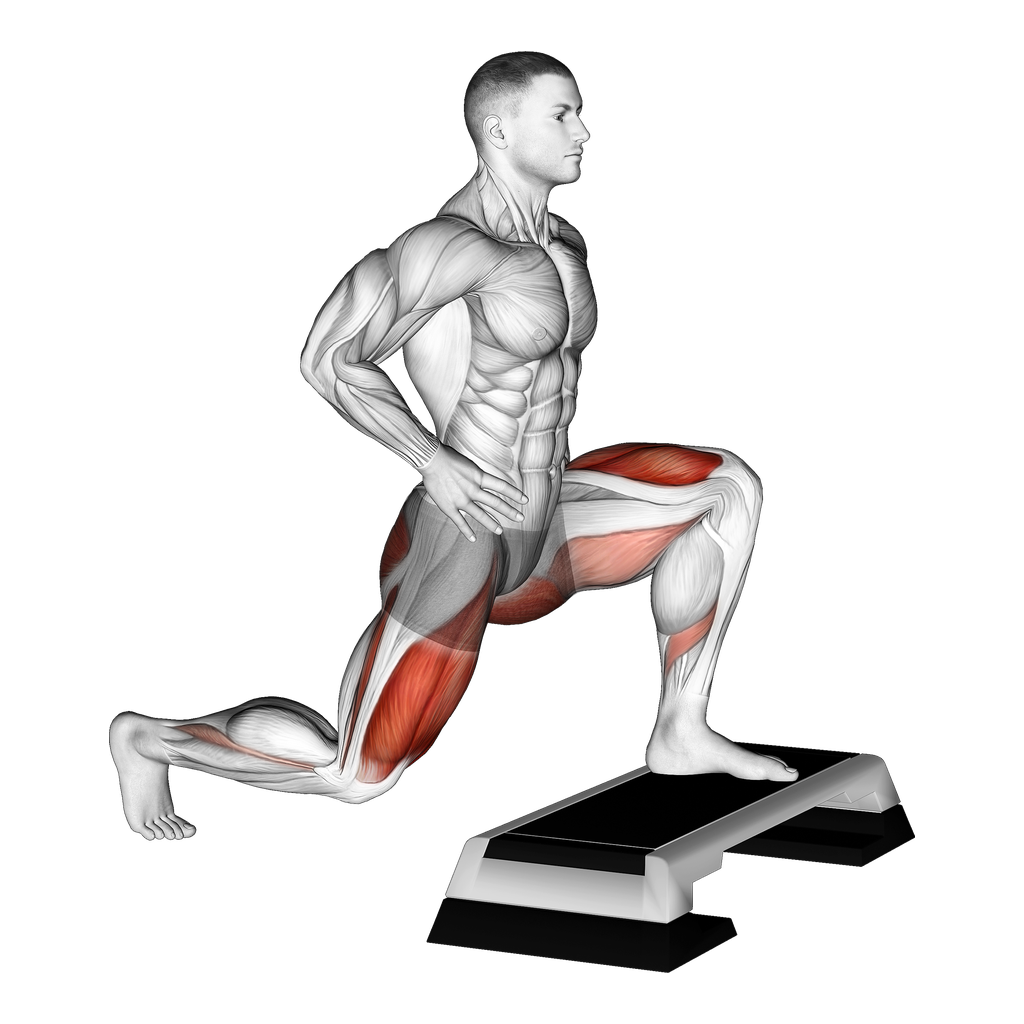 Beginner
Bodyweight Deficit Reverse Lunge
Body Weight · Step Platform
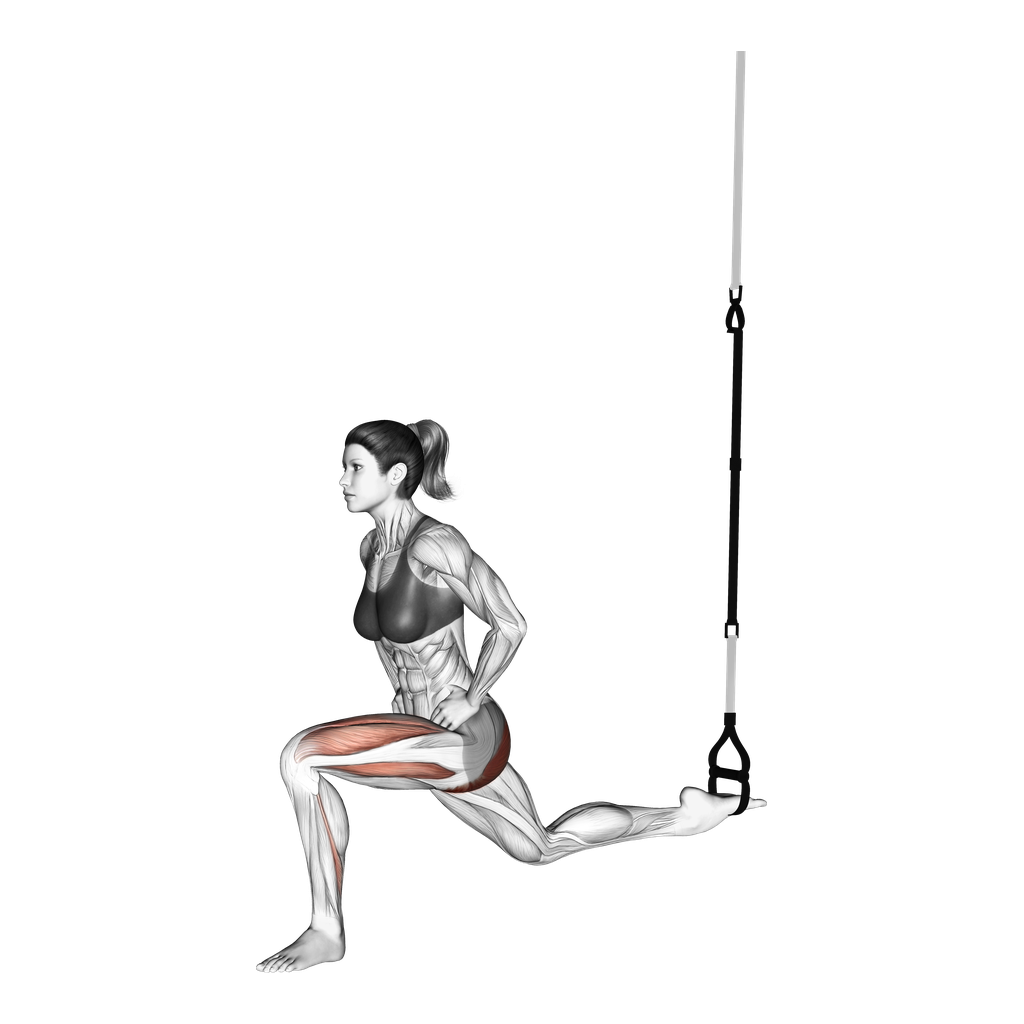 Intermediate
TRX Bulgarian Split Squat
Suspension Trainer · Body Weight
 Beginner
Dumbbell Bulgarian Split Squat
Dumbbell · Bench


Frequently Asked Questions
- Q: How is this different from a regular Bulgarian split squat?
The setup is the same except for the front foot, which stands on a step instead of the floor. That lets the back knee sink below the level of the front foot, so the front hip and knee bend further and the bottom of the rep gets harder. If the Bodyweight Bulgarian Split Squat no longer challenges you, the deficit is a way to progress without adding weight.
- Q: How high should the step be?
A few inches is enough for most people, and the lowest setting of an aerobic step is a good place to start. Raise it only when you can reach the bottom with control, the front heel stays down and the lower back does not round, because extra height you cannot use adds nothing.
- Q: Should I lean forward or stay upright?
A slight forward lean from the hips is normal and brings the hips into the work more. In a study of trained female athletes doing bodyweight Bulgarian split squats with the front foot on the floor, holding a 40-degree forward trunk lean produced higher gluteus maximus, biceps femoris and rectus femoris activity during the lowering phase than keeping the torso upright. Lean by hinging at the hips with a flat back, not by rounding the spine.
- Q: Does the back leg do much of the work?
Very little, which is what makes this a single-leg exercise. In a force-plate study of trained men doing loaded rear-foot-elevated split squats with the front foot on the floor, the front foot produced about 84% of the vertical force, and its share rose slightly as the load got heavier. Use the back foot for balance and keep pressing through the front foot.
- Q: What is the difference between this and a front-foot-elevated split squat?
In a front-foot-elevated split squat, such as the Barbell Front-Foot-Elevated Split Squat, only the front foot is raised and the back foot stays on the floor, which makes it easier to balance and easier to load heavily. Here the back foot rests on a bench as well, so the front leg carries more of your body weight and balance is harder.