Dumbbell Deficit Bulgarian Split Squat

What Is the Dumbbell Deficit Bulgarian Split Squat?
Dumbbell Deficit Bulgarian Split Squat is a compound exercise that primarily targets the quads and glutes and also engages the adductors, hamstrings and the muscles that hold the trunk upright. It is an advanced-level movement in which the front foot stands on an aerobic step platform, the top of the rear foot rests on a bench and a dumbbell hangs at each side.
The step is what separates it from the Dumbbell Bulgarian Split Squat. With the front foot on the floor, the rear knee meets the ground and caps the depth. Raising the front foot a few inches lets the hips sink below the level of that foot, so the front hip and knee bend further under load and the glutes, adductors and quads of the working leg are lengthened more at the bottom. The rear leg's hip flexors and quads get a deeper stretch too, which is a large part of why the variation feels so demanding.
The working leg carries nearly all of the load. In a study of 26 trained men performing a loaded rear-foot-elevated split squat on force plates, with the front foot on the floor, the front foot produced about 84% of the total vertical force, so the rear leg acts mainly as a support. That makes the movement useful for building single-leg strength and muscle and for exposing side-to-side differences that bilateral squats can hide. It usually sits after the main lift of a lower-body session as an accessory for moderate to higher reps.
Holding dumbbells at the sides keeps the load low and easy to set down if balance goes, but grip strength often runs out before the legs do, and the extra range means most lifters use noticeably lighter dumbbells than on the flat version. Lifting straps help once grip becomes the limit.
It suits lifters who already own a controlled, full-depth Bulgarian split squat and want more range without simply adding weight. When it is too hard, build up with the Bodyweight Bulgarian Split Squat, then the Dumbbell Bulgarian Split Squat and the Bodyweight Deficit Bulgarian Split Squat, and start on the lowest setting of the step.
Muscles Worked
- Gluteus Maximus
- Primary
- Vastus Lateralis
- Primary
- Vastus Medialis
- Primary
- Adductor Magnus
- High
- Rectus Femoris
- High
- Gluteus Medius
- Medium
Instructions
- Place an aerobic step platform in front of a flat bench, leaving about a long stride of space between them.
- Hold a dumbbell in each hand with your palms facing your body and your arms hanging straight at your sides.
- Step one foot onto the center of the platform with the whole foot flat on it.
- Reach the other leg back and rest the top of that foot on the bench.
- Stand tall with your weight over the front foot, hips square and chest up.
- Brace your core and lower by bending the front knee and hip, letting the rear knee drop straight down toward the floor.
- Keep the front heel down and the front knee tracking in line with your toes as your hips sink below the level of the step.
- Lower until the rear knee hovers just above the floor, or as far as you can with a neutral spine.
- Drive through the whole front foot to stand back up, keeping the dumbbells hanging straight down.
- Complete all reps on one leg, then switch sides.
Common Mistakes
Too much step height
Raising the step beyond what your hips and ankles allow makes the pelvis tip and the lower back round or arch at the bottom instead of adding useful range.
Stance too short
Standing too close to the bench lifts the front heel and drives the front knee far forward, which shifts stress onto the kneecap.
Front knee caving in
Letting the front knee collapse toward the midline as you lower or stand loads the knee and hip unevenly instead of tracking the knee over the toes.
Pushing off the back foot
Driving up through the rear foot on the bench takes work away from the front leg, which should do nearly all of the lifting.
Stopping at flat-floor depth
Cutting each rep at the depth of a regular Bulgarian split squat wastes the extra range the step is there to provide.
Front foot half off the step
Letting the heel or toes hang over the edge of the platform makes the foot unstable and the step more likely to tip or slide.
Injuries
Dumbbell Deficit Bulgarian Split Squat is a medium risk exercise when performed with proper technique. The deficit takes both legs into deeper flexion than the flat version, and the balance demand of two raised surfaces adds to the challenge while a dumbbell hangs in each hand.
The front knee is the most common complaint, usually when the stance is too short and the shin tips far forward at the bottom, which raises the load on the kneecap. The rear leg is also under strain: its hip flexors and quads are stretched hard at full depth, and the rear knee bends sharply as it drops toward the floor. If the hip flexors are stiff, the pelvis tends to tip forward and the lower back arches to find extra range.
Use a stable, non-slip step with the whole front foot on it, and keep the bench at about knee height or lower. Start with the step at its lowest setting, set the stance so the front heel stays down, and only go as deep as you can with a neutral spine. To regress, remove the step and do the Dumbbell Bulgarian Split Squat, or keep the step and drop the weights with the Bodyweight Deficit Bulgarian Split Squat. Progress with heavier dumbbells, a slower lowering phase or a pause at the bottom before adding step height.
Stop the set if you feel sharp pain in either knee, a pinch at the front of the hip, cramping in the rear foot or ankle, or if you lose your balance.
- Equipment
- Dumbbell, bench, and step platform
- Modality
- Strength
- Difficulty
- Advanced
Alternative Exercises
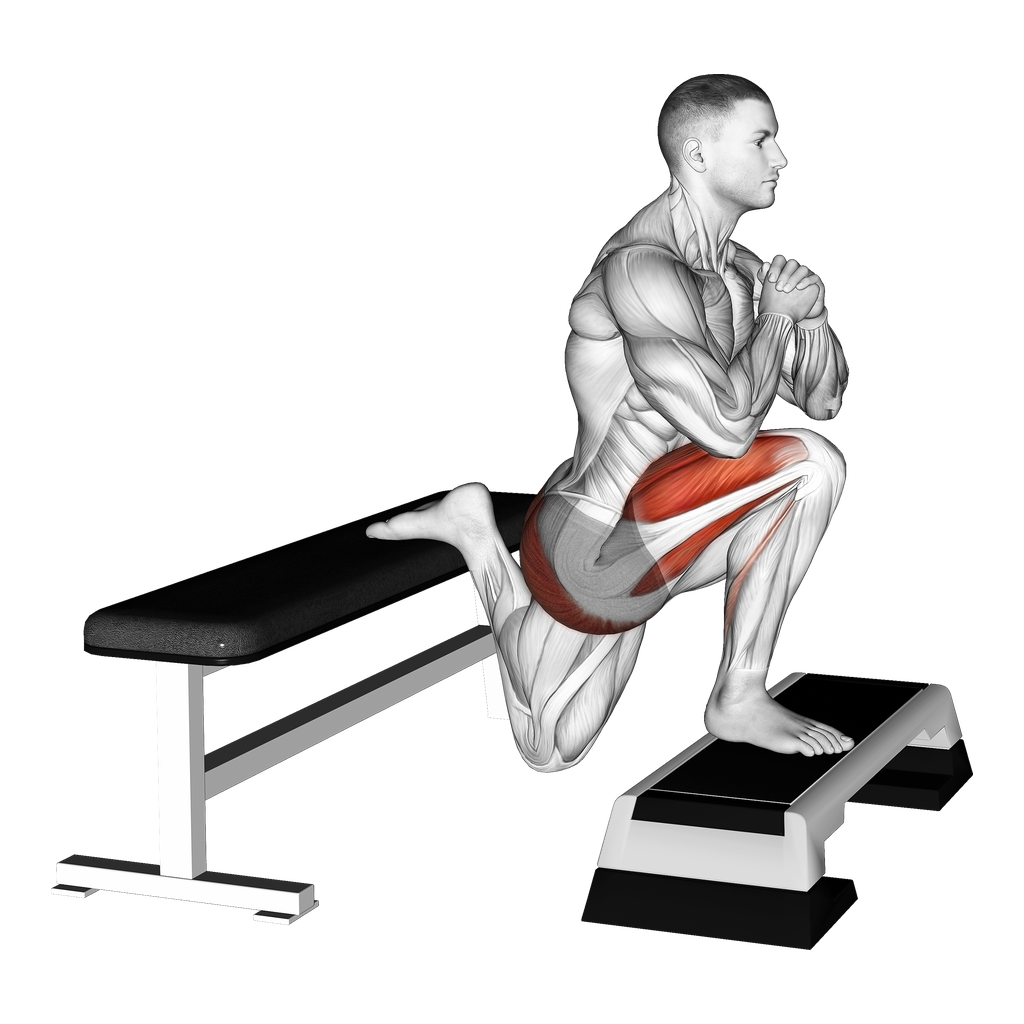 Intermediate
Bodyweight Deficit Bulgarian Split Squat
Body Weight · Bench · Step Platform
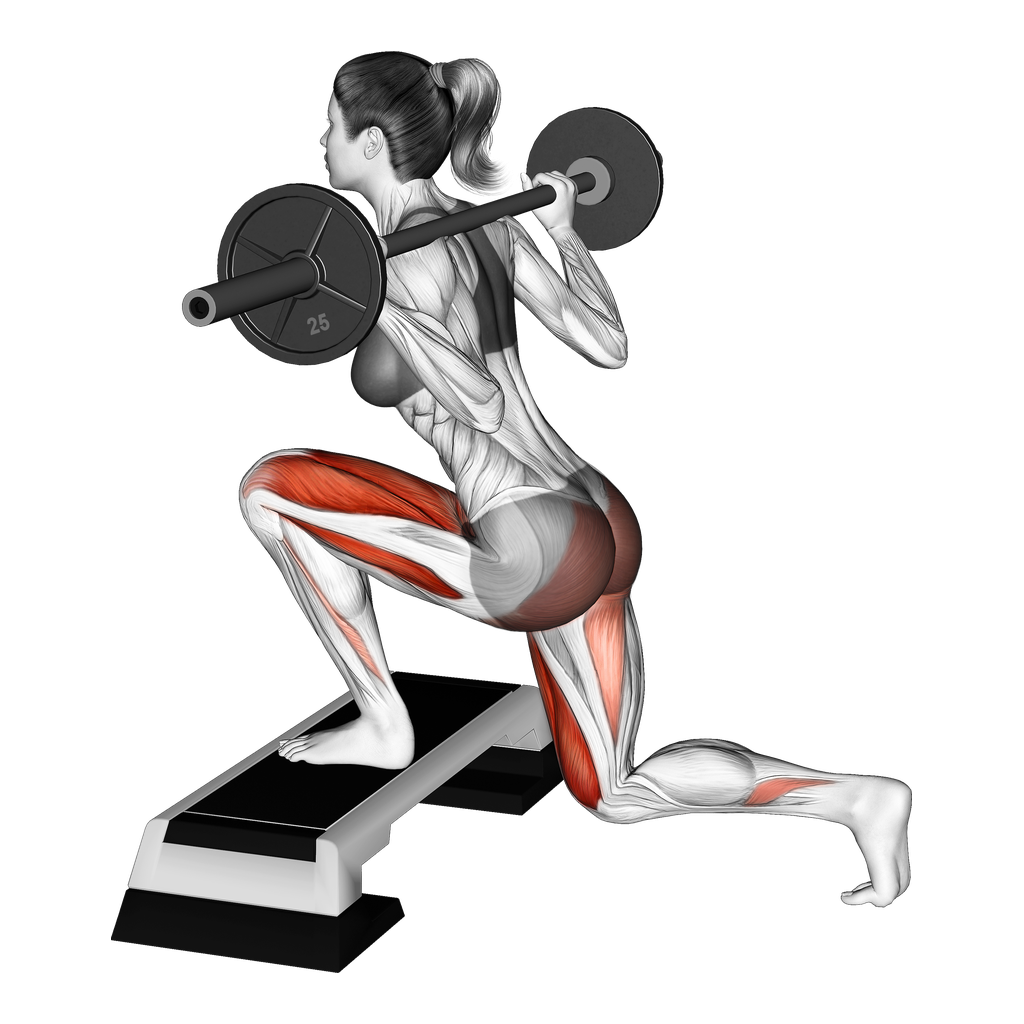 Advanced
Barbell Front-Foot-Elevated Split Squat
Barbell · Step Platform
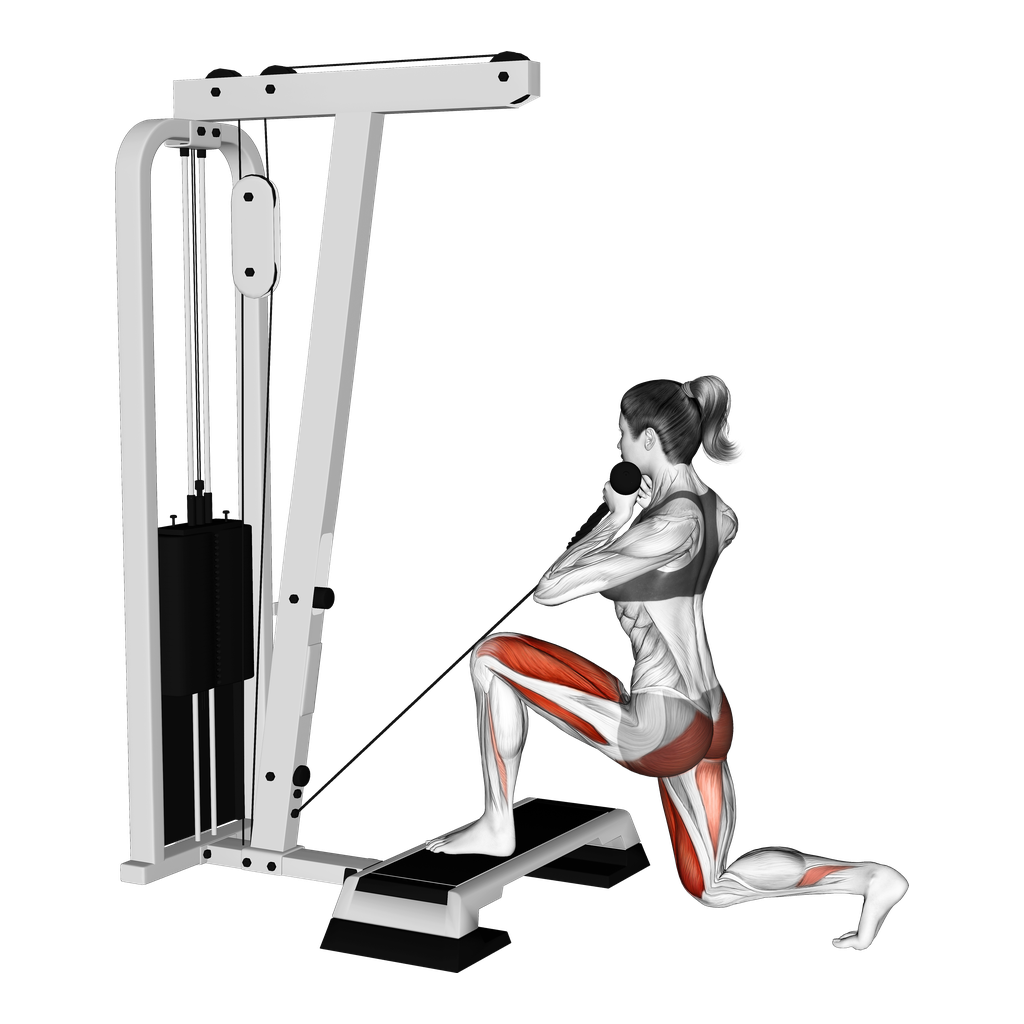 Intermediate
Cable Deficit Reverse Lunge
Cable · Step Platform
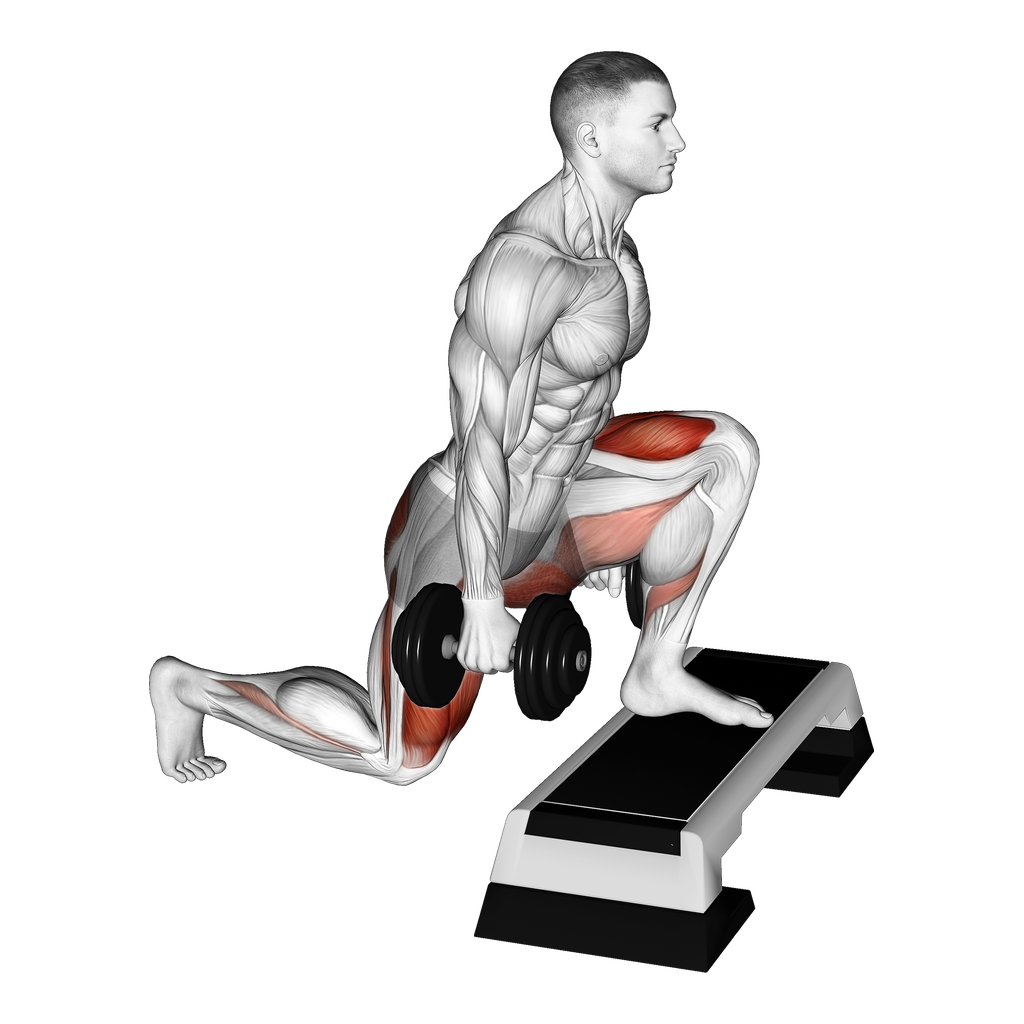 Intermediate
Dumbbell Deficit Reverse Lunge
Dumbbell · Step Platform
 Intermediate
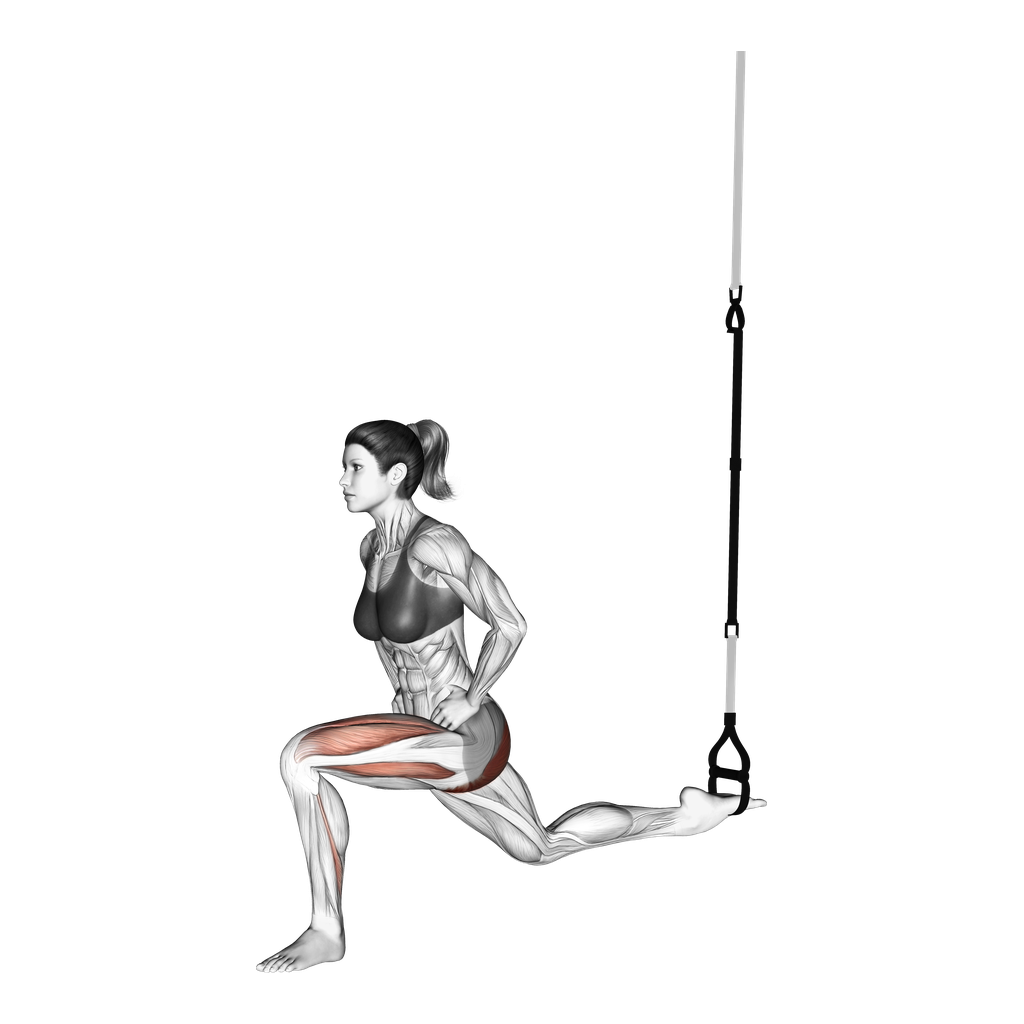
TRX Bulgarian Split Squat
Suspension Trainer · Body Weight


Frequently Asked Questions
- Q: How is this different from a regular Dumbbell Bulgarian Split Squat?
The only change is the step under the front foot. In the Dumbbell Bulgarian Split Squat the rear knee reaches the floor and limits depth, while the step lets the hips sink lower, so each rep covers more range and usually needs lighter dumbbells.
- Q: How high should the step platform be?
A low platform of about 2 to 4 inches is enough for most lifters, so start with the step at its lowest setting. Add height only when you can reach the bottom with the front heel down, a neutral spine and no knee discomfort.
- Q: Should I lean forward or stay upright?
A moderate lean from the hips with a flat back is normal and is what most lifters settle into at the bottom. A study of trained female athletes doing unloaded Bulgarian split squats found that holding a 40-degree forward trunk lean raised gluteus maximus and biceps femoris activity compared with an upright torso. Choose the lean that lets you reach full depth with a neutral spine and keep it the same on both legs.
- Q: Should my back knee touch the floor?
No, lower until the rear knee hovers just above the floor without resting on it. If you cannot get that low with good control, shorten the range or lower the step rather than dropping into the bottom.
- Q: Is it better to use dumbbells or a barbell?
Dumbbells are easier to balance on two raised surfaces and simple to drop if you lose your footing, which suits this variation well. Their drawback is grip, so lifting straps or a barbell on the back make sense once your hands give out before your legs.