EZ Bar Decline Triceps Extension

What Is the EZ Bar Decline Triceps Extension?
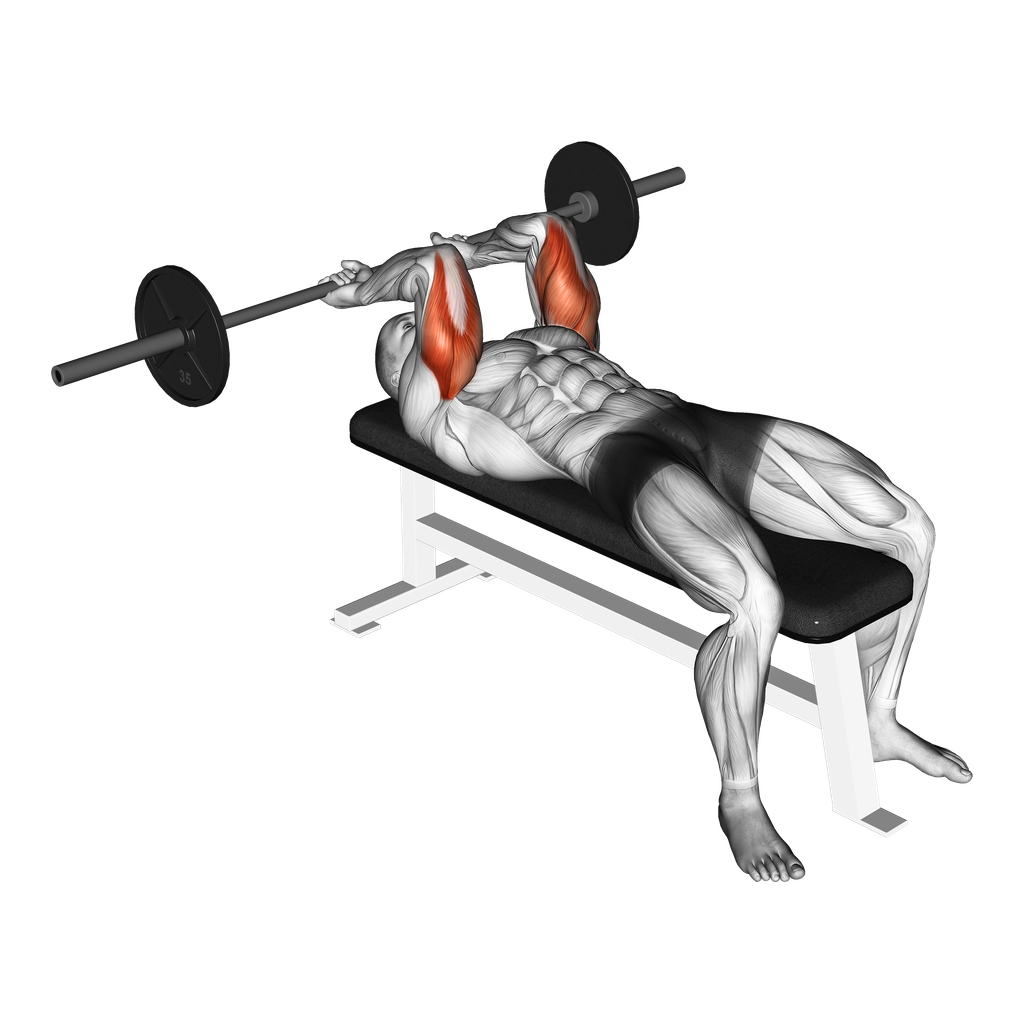
EZ Bar Decline Triceps Extension is an isolation exercise that primarily targets the triceps and also engages the lats, shoulders and forearms as stabilizers. It is an intermediate-level movement performed lying head-down on a decline bench with the legs hooked under the pads, lowering an EZ bar behind the head by bending only at the elbows.
Its main job is building triceps size and strength, and it usually sits after the main pressing work of a session as an accessory in moderate to higher rep ranges. All three heads of the triceps straighten the elbow. Because the arms are held angled back toward the head rather than straight up, the bar never stacks directly over the elbows, so the triceps stay under load even near the top of each rep, and the lats and teres major work to hold the upper arms in place.
Compared with the flat EZ Bar Lying Triceps Extension, the elbow does the same work and the decline mostly changes the direction gravity pulls on the arms. How far the long head of the triceps is stretched depends on the angle between the upper arms and the torso, and with the arms angled back as shown that angle ends up close to the flat version. The EZ Bar Incline Triceps Extension takes the arms closer to overhead at the bottom, which suits a long-head goal better. The Dumbbell Decline Triceps Extension uses the same bench with a neutral grip, while the EZ bar keeps the hands together on angled handles that many lifters find easier on the wrists than a straight bar.
It suits lifters who already handle the flat lying extension with good control and are comfortable lying head-down. If it feels awkward or too heavy, build up first with the Cable Triceps Pushdown with Rope and the flat EZ bar version, then move to the decline with a light bar.
Muscles Worked
- Triceps Brachii (Long Head)
- Primary
- Latissimus Dorsi
- Medium
- Deltoid
- Low
- Teres Major
- Low
- Flexor Carpi Radialis
- Minimal
- Flexor Carpi Ulnaris
- Minimal
- Rectus Abdominis
- Minimal
Instructions
- Set a bench to a slight decline of about 15 to 30 degrees, sit at the high end and hook your feet under the leg pads with your knees bent over the top pad.
- Hold an EZ bar with an overhand grip on the inner angled sections, hands a little narrower than shoulder width.
- Bring the bar to your chest and lie back so your head is at the low end of the bench, with your head and upper back on the pad, or have a spotter hand you the bar once you are lying down.
- Press the bar up until your arms are straight, then angle your arms back slightly so the bar sits above your head rather than over your chest.
- Brace your core and keep your legs hooked firmly so your body does not slide.
- Keeping your upper arms still and your elbows pointing up, bend your elbows and lower the bar in an arc behind your head.
- Lower slowly until you feel a deep stretch in the back of your arms, keeping your elbows about shoulder-width apart.
- Extend your elbows to bring the bar back to the start, without snapping into lockout and without letting your upper arms swing toward your hips.
- Breathe in as you lower and out as you press up, and repeat for the planned reps.
- To finish, bring the bar down to your chest with your elbows bent, then sit up holding it close or hand it to your spotter.
Common Mistakes
Flaring the elbows
Letting the elbows drift wide as the bar lowers shifts stress onto the elbow and shoulder and takes work away from the triceps.
Swinging the upper arms
Pulling the upper arms toward the hips on the way up turns the lift into a pullover and lets the lats move the weight.
Dropping the bar too fast
Letting the bar fall behind the head loads the elbow tendon abruptly at its longest length and risks hitting the head or bench.
Loose leg hook
Without the legs locked under the pads the body slides down the bench and the arms lose their position.
Bending the wrists back
Letting the wrists fold back under the bar strains the wrists and makes the weight harder to control.
Going too heavy
A load that forces short, jerky reps usually breaks elbow position and is a common cause of elbow pain on this lift.
Injuries
EZ Bar Decline Triceps Extension is a medium risk exercise when performed with proper technique. The elbows take most of the stress, especially where the triceps tendon attaches behind the elbow, because the muscle is loaded hardest at the deep bottom position. The loaded bar also passes close to the head on every rep while the head sits lower than the hips, which makes getting into and out of the set more awkward than on a flat bench.
Warm up the elbows and shoulders with a few light sets, choose a load you can lower slowly and stop under control, and keep your legs hooked firmly so your body does not slide. Breathe steadily rather than holding your breath through long sets, since the head-down position already raises pressure in the head. People with high blood pressure, glaucoma or a tendency to dizziness when inverted should check with a doctor first or use the flat version, and a spotter makes handing off the bar safer.
To make it easier, shorten the range, switch to the flat EZ Bar Lying Triceps Extension, or use the Dumbbell Decline Triceps Extension, whose neutral grip many elbows tolerate better and whose dumbbells pass beside the head. To progress, add a slower lowering phase or a short pause at the bottom before adding weight, and add weight in small steps.
Stop the set if you feel sharp pain at the elbow or the front of the shoulder, dizziness or a headache, or numbness or tingling in the hands. Elbow pain that lingers after training is a sign to cut load or volume and choose a more comfortable triceps exercise for a while.
Alternative Exercises
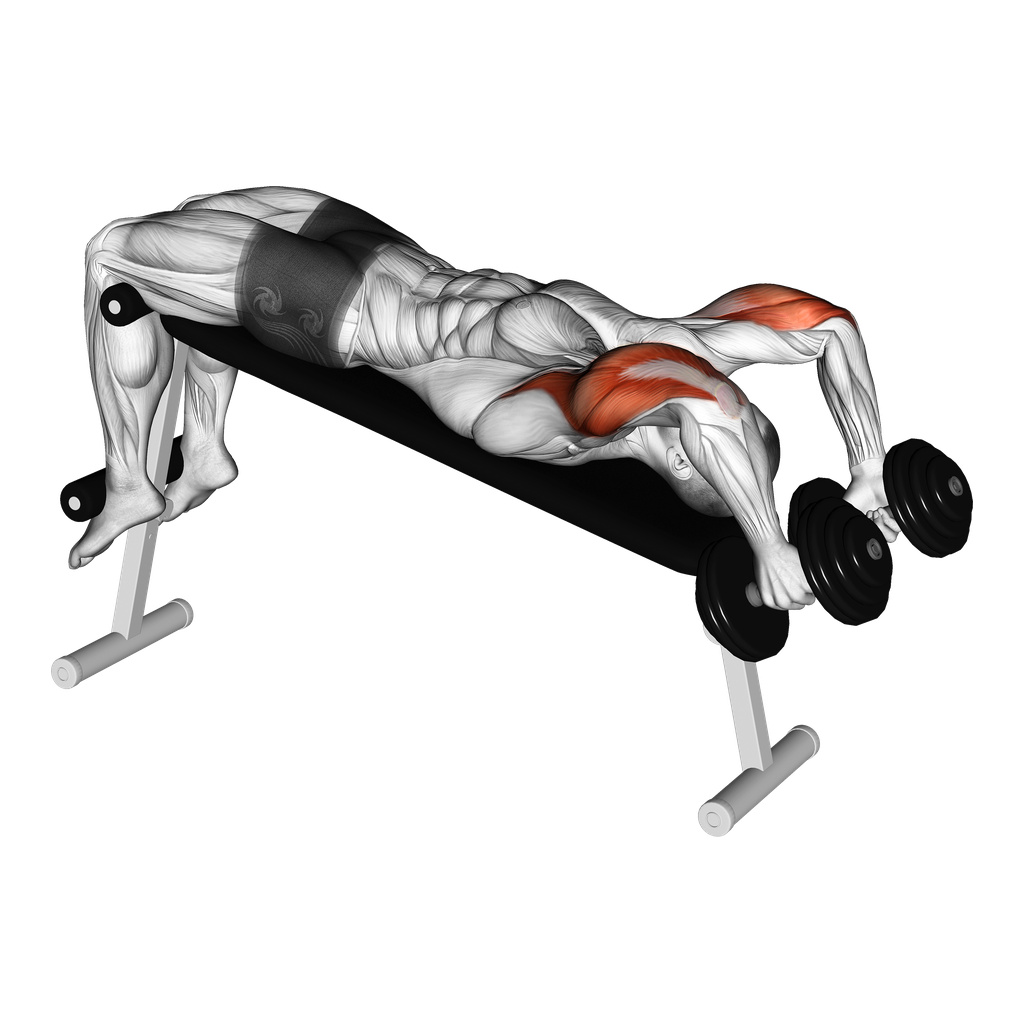 Intermediate
Dumbbell Decline Triceps Extension
Dumbbell · Bench
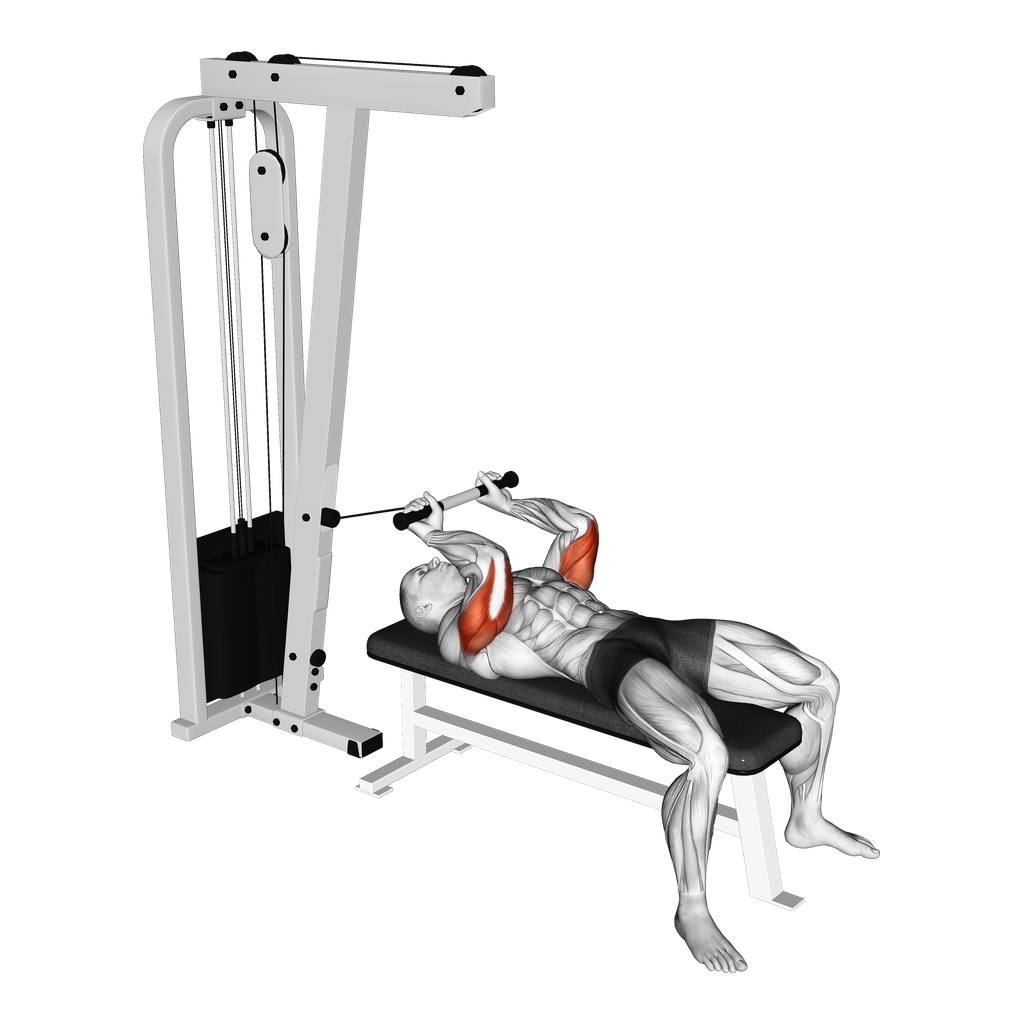 Intermediate
Cable Lying Triceps Extension
Cable · Bench
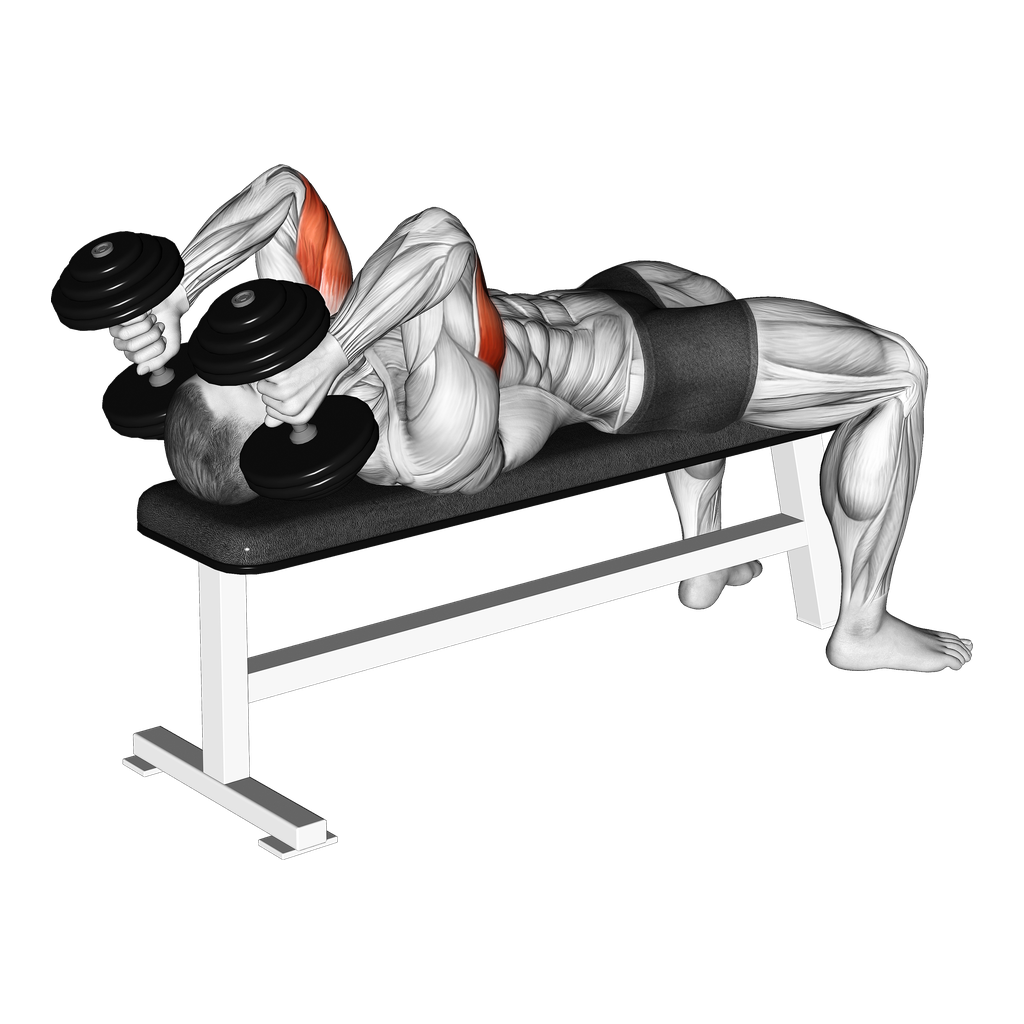 Intermediate
Dumbbell Lying Triceps Extension
Dumbbell · Bench
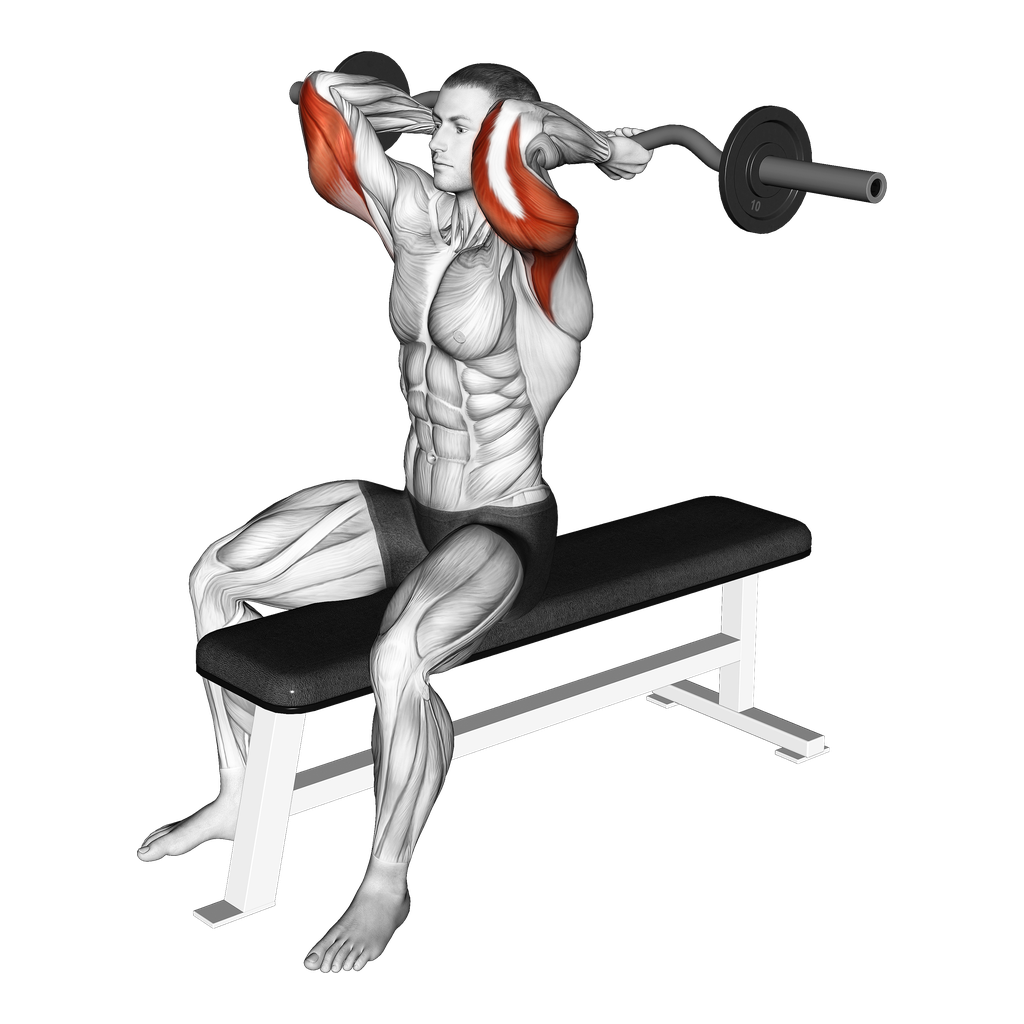 Intermediate
EZ Bar Seated Overhead Triceps Extension
EZ Bar · Bench
 Intermediate
Barbell Lying Triceps Extension
Barbell · Bench


Frequently Asked Questions
- Q: How is this different from a decline skull crusher?
A skull crusher lowers the bar to the forehead with the upper arms held more upright. Here the bar goes behind the head, so the elbows bend further and the triceps finish in a longer stretch. The forehead version is covered by the Barbell Skull Crusher.
- Q: Does the decline work the long head harder than a flat bench?
Not on its own. The long head's stretch depends on how close to overhead the upper arms sit relative to the torso, and on a decline with the arms angled back that is about the same as on a flat bench. A 12-week study of cable elbow extensions found that training with the arm overhead grew the long head more than training with the arm at the side, so the EZ Bar Incline Triceps Extension or Cable Overhead Triceps Extension suit that goal better.
- Q: Why angle the arms back instead of holding them straight up?
With the arms angled back toward the head, the bar never sits directly over the elbows, so the triceps keep working near the top instead of resting at lockout. Keep that angle fixed through the set, because letting the arms swing toward the hips turns the rep into a pullover.
- Q: How steep should the decline be?
A slight decline of about 15 to 30 degrees, as shown, is enough. A steeper bench adds head-down pressure without changing how the triceps work.
- Q: Do I need a spotter?
A spotter helps, because handing off a bar while lying head-down is awkward. If you train alone, use a load you can bring back to your chest and sit up with, and stop a rep or two short of failure, since a failed rep leaves the bar stuck behind your head.